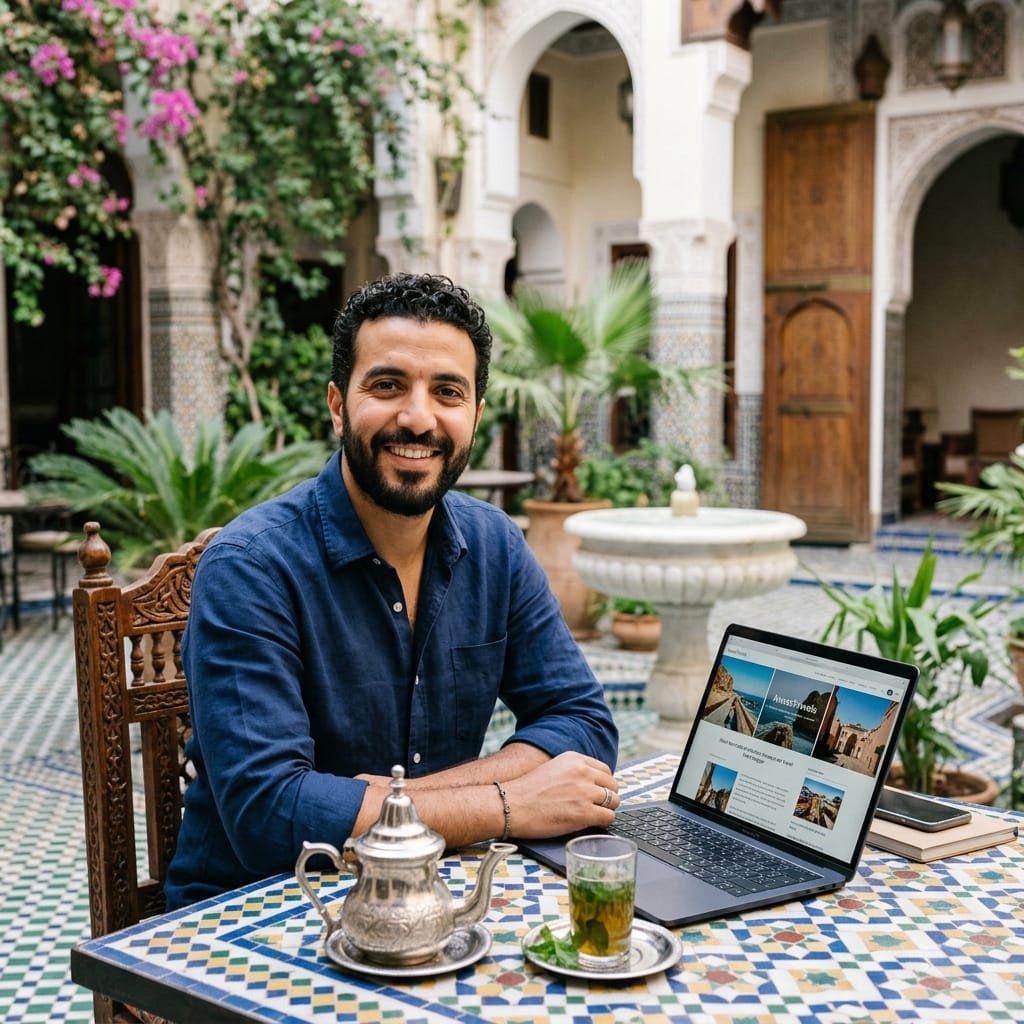

Buying a Moroccan carpet is one of the great tests of traveller resolve. You’re sat in a dimly lit shop, mint tea in hand, while a salesman unfurls rug after rug with theatrical flourish. The prices being quoted seem to have no relationship to any reality you understand. You don’t know if what you’re looking at is handmade or machine-made, Berber or Beni Ourain, genuine wool or synthetic. After twenty minutes you’ve either bought something on complete impulse or fled into the medina feeling guilty about a cup of tea.
This guide exists to change that. Morocco’s craft tradition is genuinely extraordinary — among the finest in the world — and understanding what you’re looking at transforms the shopping experience from stressful to deeply satisfying.
Moroccan Rugs & Carpets
Morocco produces several distinct rug traditions, each with its own aesthetic, technique, and region of origin. Knowing the difference lets you buy something specific and meaningful rather than just “a Moroccan rug.”
Beni Ourain Rugs
The most internationally recognised Moroccan rug: natural undyed wool (cream or ivory) with geometric black patterns. Woven by Berber women of the Beni Ourain tribe in the Middle Atlas. They became famous in interior design circles through Corbusier and have been widely copied. Authentic Beni Ourain rugs are hand-knotted, irregular, and heavy. The pile is deep and soft. Machine copies are perfectly uniform with thin pile — easy to spot once you know what you’re feeling for.
Boucherouite Rugs
Recycled-fabric rugs made from cut strips of old clothing and textiles. Bright, chaotic, uniquely individual. No two boucherouite rugs are the same. They’re not “luxury” items but they’re wonderful — accessible in price and full of personality. Excellent for adding colour to a room.
Kilim (Flat-Weave) Rugs
Flat-woven without pile. Lighter, more portable than knotted rugs. The geometric patterns are bold and graphic. Often less expensive than pile rugs and easier to carry home.
Mrirt Rugs
From the Middle Atlas town of Mrirt, these are high-quality knotted pile rugs with deep, luxurious wool and subtle geometric patterns. Less famous internationally than Beni Ourain but considered by many connoisseurs to be superior quality.
How to Assess Rug Quality
- Hand-knotted vs. machine-made: Turn the rug over. Hand-knotted rugs show slight irregularity in knot density and pattern on the reverse. Machine-made rugs are perfectly uniform. The “knot test”: count knots per square inch — higher count generally means finer quality.
- Wool quality: Genuine wool has a slight lanolin smell and recovers shape when compressed. Synthetic fibres spring back differently and feel slick.
- Natural vs. chemical dyes: Natural dyes (from plants and minerals) produce slightly uneven, soft tones that age beautifully. Chemical dyes are more uniform and can bleed when wet. Ask; some sellers will demonstrate by wetting a corner.
- Size and shipping: Large rugs need freight shipping — factor this cost in. Many shops offer shipping services. (Shipping arrangements may involve referral fees — worth noting as a potential affiliate opportunity.)
Zellige Tilework
Morocco’s hand-cut geometric tile tradition produces some of the most beautiful decorative art in the world. Individual zellige tiles are cut by hand from fired, glazed terracotta — a craft centred in Fes that has changed little in centuries. As a souvenir, small zellige pieces (decorative panels, individual tiles, table tops) are beautiful and relatively portable.
Larger zellige commissions can be ordered and shipped internationally — architects and interior designers do this regularly. A genuine zellige artisan workshop in Fes will usually allow visits if you express serious interest.
Woodwork: Cedar & Thuya
- Cedar woodwork: Carved ceiling panels, doors, and decorative screens in the medinas of Fes and Marrakech are largely cedar. Smaller cedar items (boxes, frames) carry the distinctive warm, spicy scent of Atlas cedar.
- Thuya burl wood: Unique to Morocco, thuya is a fragrant root-burl wood found in Essaouira. The swirling grain is extraordinary. Essaouira’s woodworking tradition produces boxes, frames, chess sets, and larger furniture. Genuine thuya smells distinctively of cedar-mint when sanded — ask a craftsperson to show you.
Embroidery and Textiles
Fes is the capital of Moroccan embroidery — specifically the Fassi tradition of elaborate threadwork on household linens, cushion covers, and caftans. Traditional Fassi embroidery uses a single dominant colour (deep red, blue, or black) on white or natural linen. It’s extraordinarily time-consuming to produce and priced accordingly.
Simpler embroidered textiles — cushion covers, table runners, bread baskets — make practical and beautiful gifts. Check that the embroidery is hand-done (slightly irregular, shows on the reverse) rather than machine-embroidered (perfectly uniform, clean reverse).
What to Pay: Price Benchmarks (2026)
| Item | Honest Range (MAD) |
|---|---|
| Small Beni Ourain rug (90x150cm) | 1,200–2,500 |
| Large Beni Ourain rug (200x300cm) | 4,000–10,000+ |
| Boucherouite rug (medium) | 400–900 |
| Thuya wood box (small) | 150–350 |
| Ceramic tagine (functional) | 120–300 |
| Fes embroidered cushion cover | 300–700 |
| Babouche leather slippers (quality) | 150–300 |
Frequently Asked Questions
How do I know if a rug is genuinely handmade?
Check the back — hand-knotted rugs show slight irregularity in pattern and knot spacing. Ask the seller to point out the knots. If they can’t or won’t, that tells you something. Also, genuine handmade rugs from Berber cooperatives often come with a certificate of origin.
Can I bring a Moroccan rug home in my luggage?
Small kilims and boucherouite rugs can be rolled and strapped to a bag. Larger pile rugs usually need to be shipped. Reputable shops can arrange export documentation and freight shipping.
Is it worth visiting the cooperatives before the souks?
Yes, genuinely. It’s the single best way to calibrate your eye and your price expectations before entering a souk negotiation.
Final Thoughts
Morocco’s craft tradition is one of the genuine wonders of the country — a living heritage that supports thousands of artisans working by hand in methods unchanged for centuries. Buying thoughtfully — from cooperatives, certified artisans, or vendors who can tell you the story of what they’re selling — supports that tradition and sends you home with something genuinely meaningful.
For the negotiation side of buying, read our Haggling Guide. For the broader shopping picture, see What to Buy in Morocco.
Suggested photos: (1) Beni Ourain rug detail showing hand-knotted texture — alt: “Beni Ourain rug authentic Moroccan hand knotted wool”; (2) Fes zellige tile workshop artisan cutting tiles — alt: “Zellige tile artisan workshop Fes Morocco”; (3) Thuya wood items in Essaouira craft shop — alt: “Thuya burl wood boxes Essaouira Moroccan crafts”