
Essaouira-Mogador Travel Guide
Morocco’s Windswept Coastal Haven
Introduction
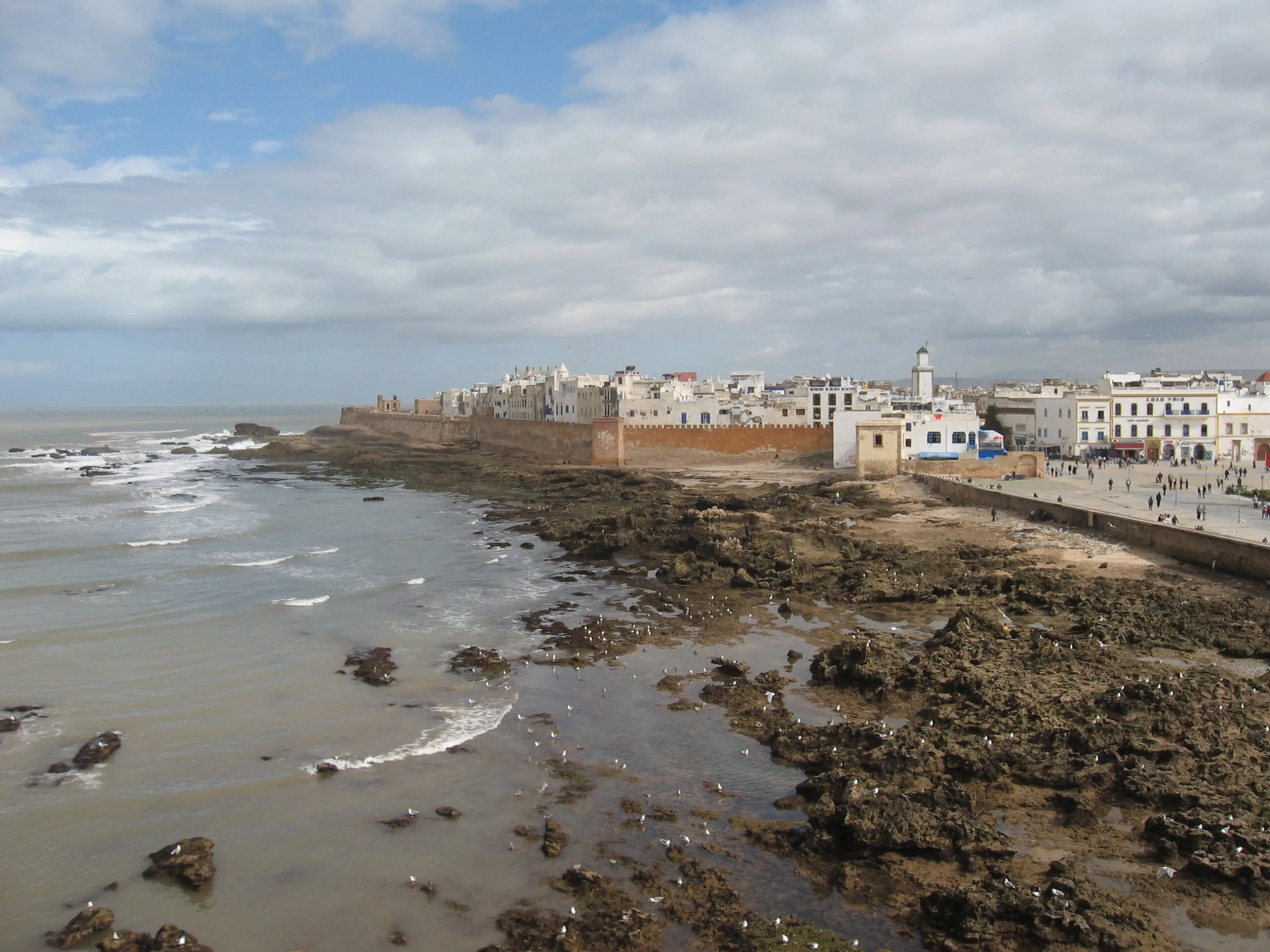
Swept by the strong, cooling Alizé trade winds of the Atlantic, Essaouira stands as a fortified port city where whitewashed houses with bright blue shutters sit within golden stone ramparts. Historically known as Mogador, this coastal haven offers a relaxed, artistic escape that feels worlds away from the scorching inland heat of nearby Marrakech. Designed in the 18th century by a French architect for Sultan Sidi Mohammed ben Abdallah, its grid-like medina blends European military architecture with Moroccan craftsmanship, boasting clean, pedestrian-friendly streets that are exceptionally easy to navigate.
This breezy enclave is perfect for surfers, art collectors, families, and travelers who prefer a slow-paced, atmospheric coastal escape over commercial resort strips. The vibe is bohemian, relaxed, and distinctly maritime, filled with the cries of seagulls, the scent of cedar wood, and the blue wooden fishing boats bobbing in the busy harbor. While the powerful winds make it less suitable for typical sunbathing, they create a paradise for windsurfers, kiteboarders, and travelers seeking a refreshing coastal retreat.
Quick Facts
| Region | Marrakech-Safi |
| Best time to visit | September to November (warm sea, calm winds) or May to June (pleasant weather, Gnaoua Festival) |
| Language | Moroccan Arabic (Darija), Tashelhit (Shilha Berber), French, English |
| Currency | Moroccan Dirham (MAD) |
| Known for | Windsurfing, stone ramparts, thuya wood carving, Gnaoua World Music Festival |
| Day trips | Sidi Kaouki surf village (**25 km**), Diabat Jimi Hendrix village (**5 km**), Had Draa Sunday market (**30 km**) |
Top Things To Do in Essaouira
The Medina Ramparts & Scala de la Ville
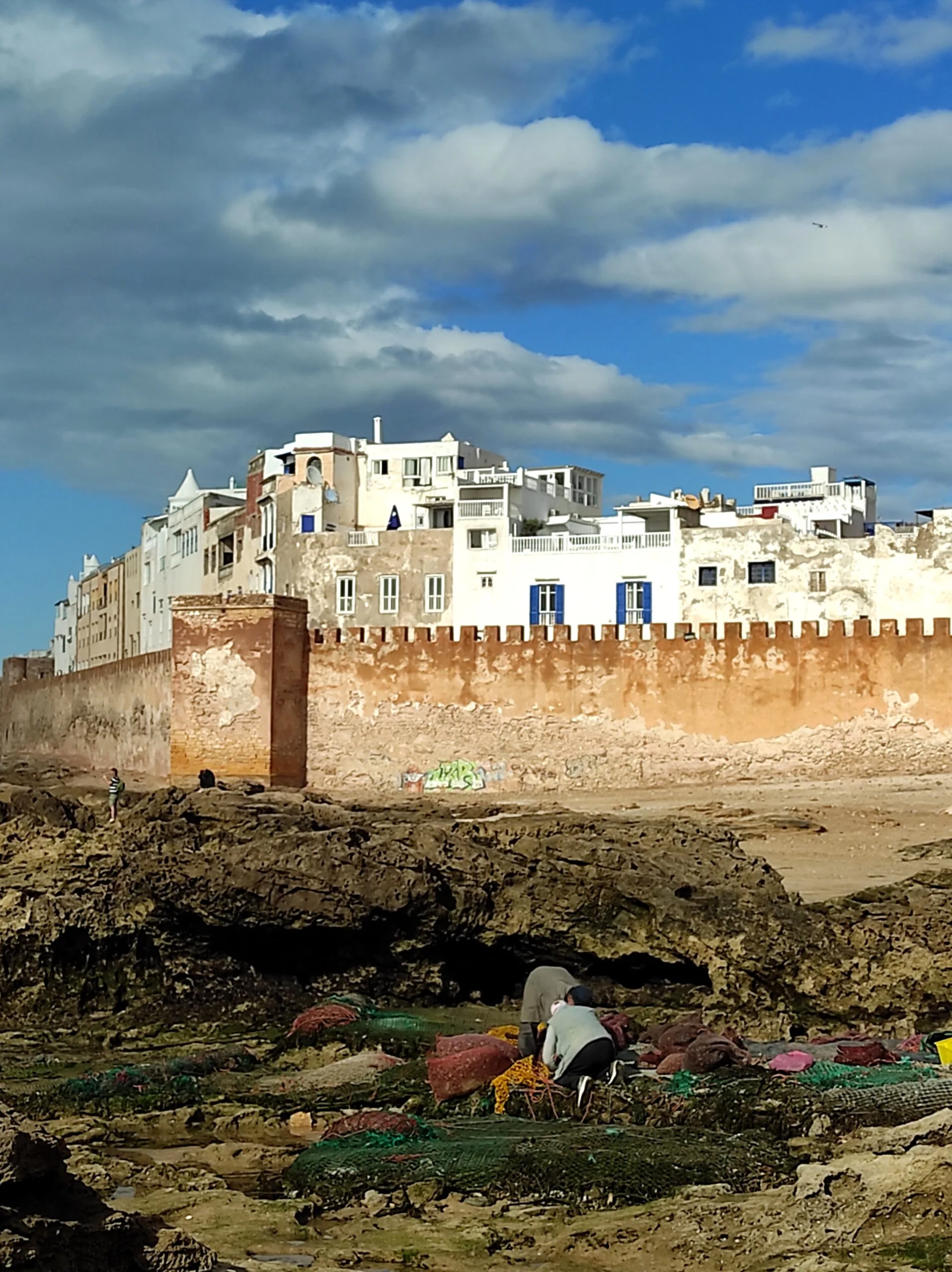
These massive stone fortifications were constructed in the 18th century to protect the city from naval attacks. Walking along the battlements reveals a long line of historic brass cannons pointing out toward the rocky Atlantic shoreline. The site offers stunning views of the waves crashing against the rocks and served as a filming location for the TV series Game of Thrones.
Insider tip: Walk to the northwestern corner of the Scala at sunset to watch the sun dip below the ocean through the stone archways.
Essaouira Fishing Port
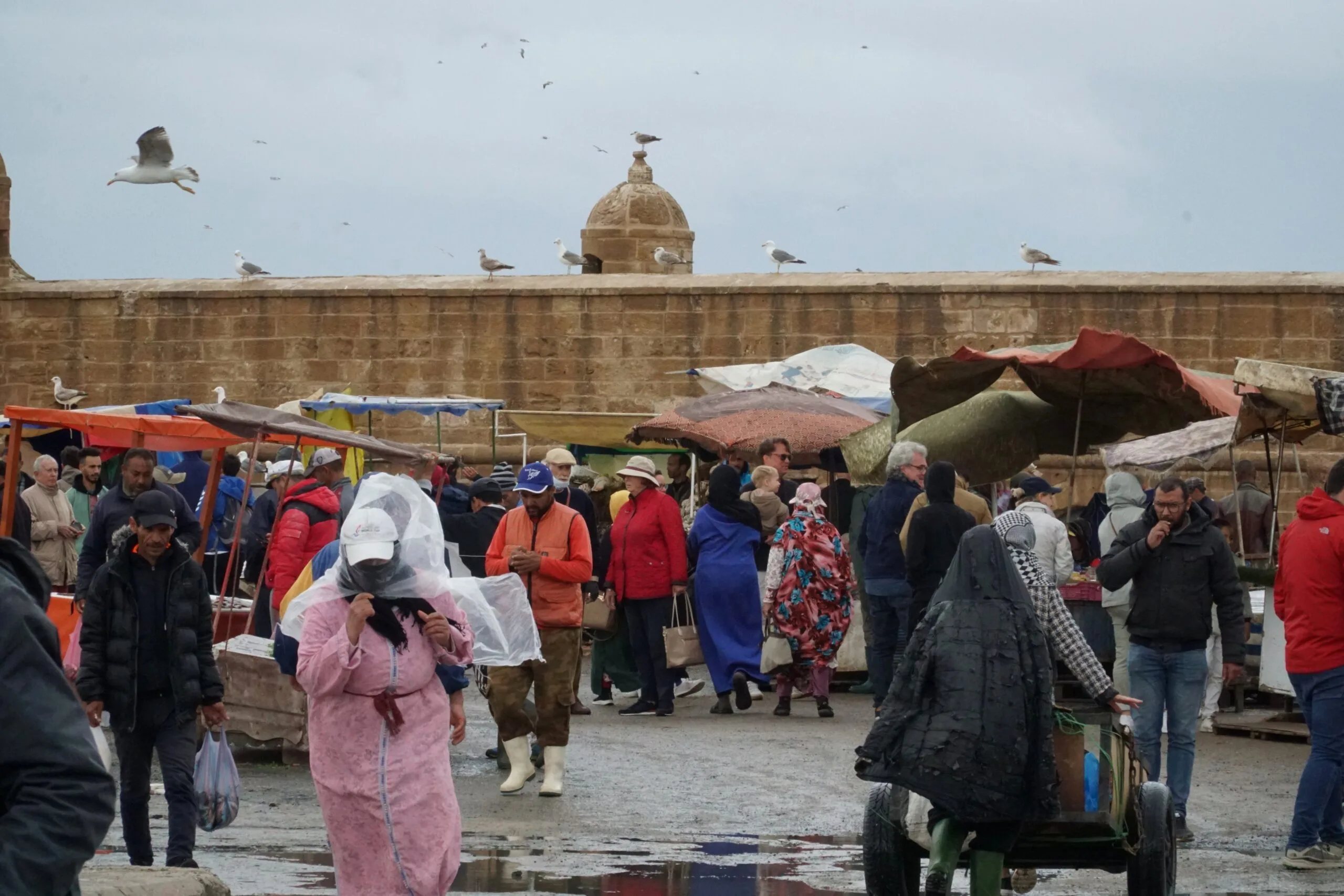
This bustling, historic harbor is a sensory feast filled with traditional blue wooden boats, menders repairing fishing nets, and active fishmongers. Seagulls circle overhead in massive numbers as fishermen land their daily catch of sardines, sea bass, and conger eels. Visitors can walk up to the old port bastion (Scala du Port) for the most iconic view of the city.
Insider tip: Buy fresh sardines directly from a wooden fishing boat in the morning, and pay a small fee of **20 MAD** to have a nearby stall owner grill them for you.
Sidi Kaouki Beach
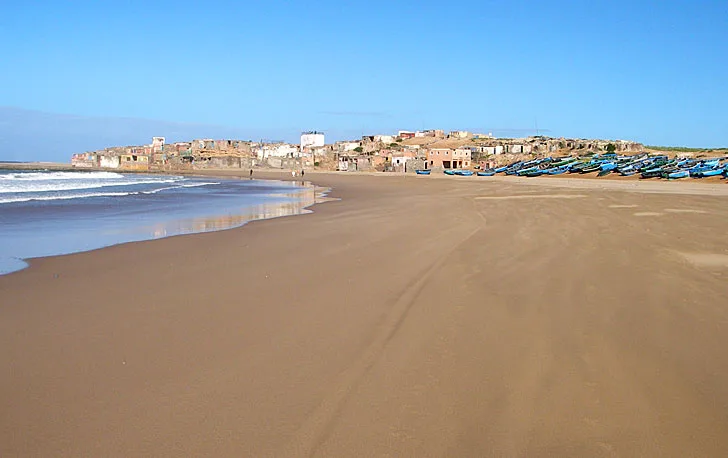
Located **25 km** south of Essaouira, this wild, windswept beach is a legendary spot for surfers, windsurfers, and kiteboarders. The tiny village features a laid-back, bohemian surf vibe with rustic cafes, surf schools, and sandy dunes. It offers a wilder, less crowded alternative to the main town beach.
Insider tip: Take a local blue bus or shared grand taxi from Essaouira for **15 MAD**, and enjoy a cheap, authentic tagine at one of the beachside shacks.
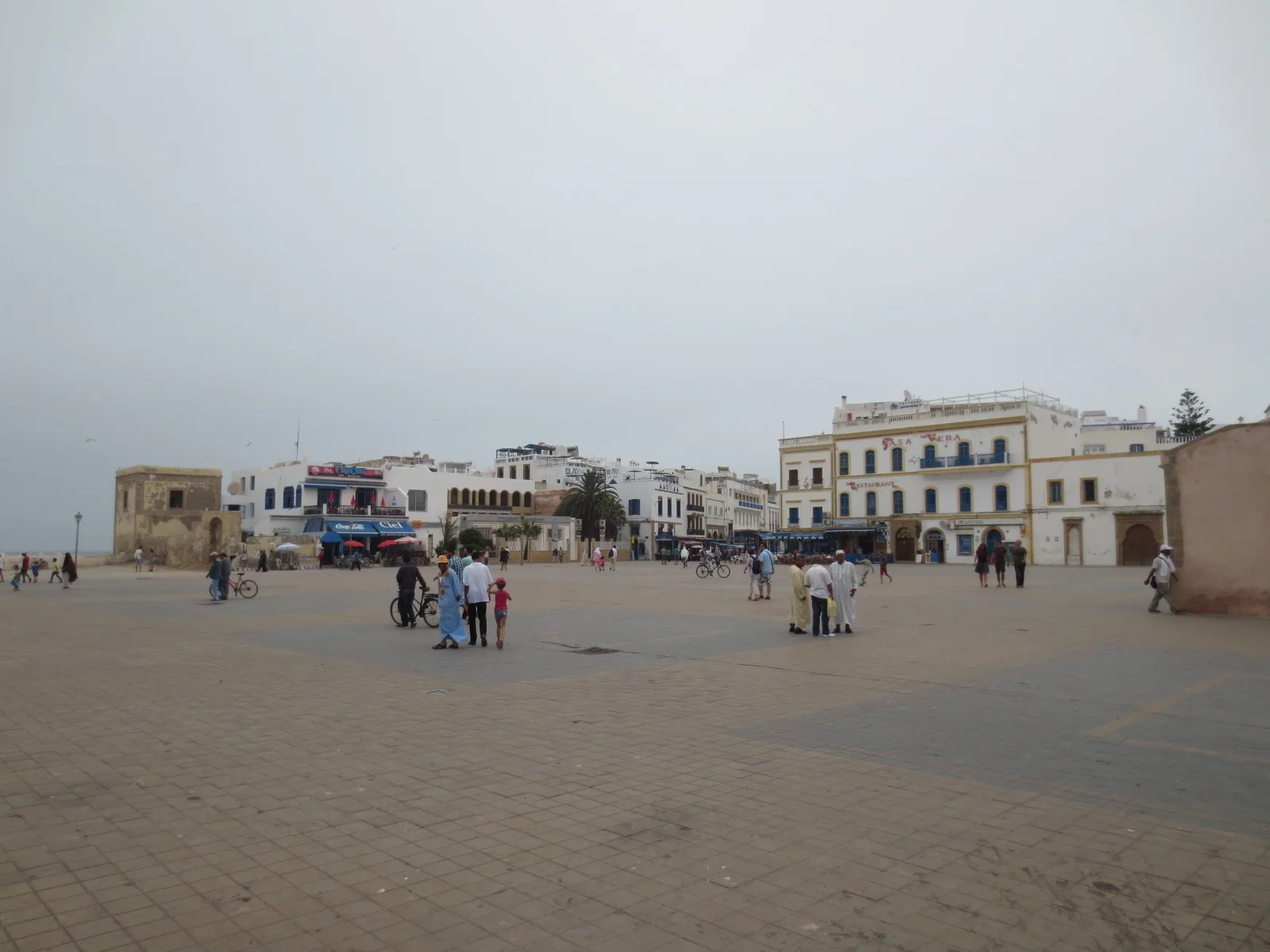
Plaza Moulay Hassan
This wide pedestrian square sits between the historic medina walls and the fishing harbor, serving as the city’s primary social hub. It is lined with shade trees, outdoor cafes, and local musicians playing traditional Gnaoua music. It is a fantastic spot to enjoy a morning coffee and watch daily local life unfold.
Insider tip: Sit at one of the cafes on the north side of the square to enjoy views of the ramparts while avoiding the direct wind.
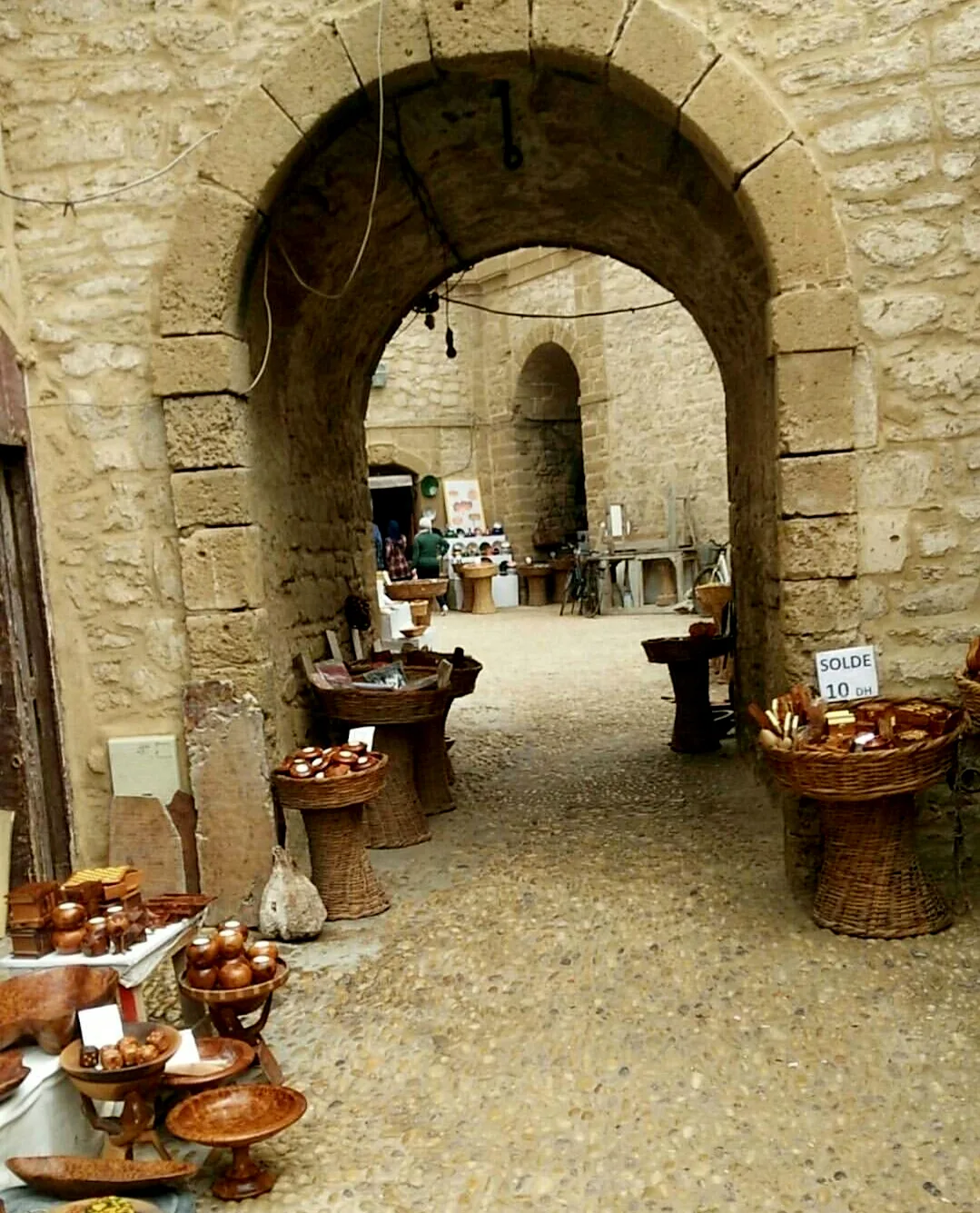
Thuya Wood & Artisan Workshops
Essaouira is globally famous for its skilled woodworkers who carve intricate boxes, tables, and chess sets from the aromatic roots of the local Thuya tree. Walking through the arched workshops built into the base of the ramparts reveals craftsmen using traditional hand tools to inlay ebony, mother-of-pearl, and lemon wood. The scent of the resinous wood fills the surrounding lanes.
Insider tip: Knock on the wood to check for quality; genuine, high-quality Thuya wood is dense, heavy, and has a strong, pleasant cedar-like scent.
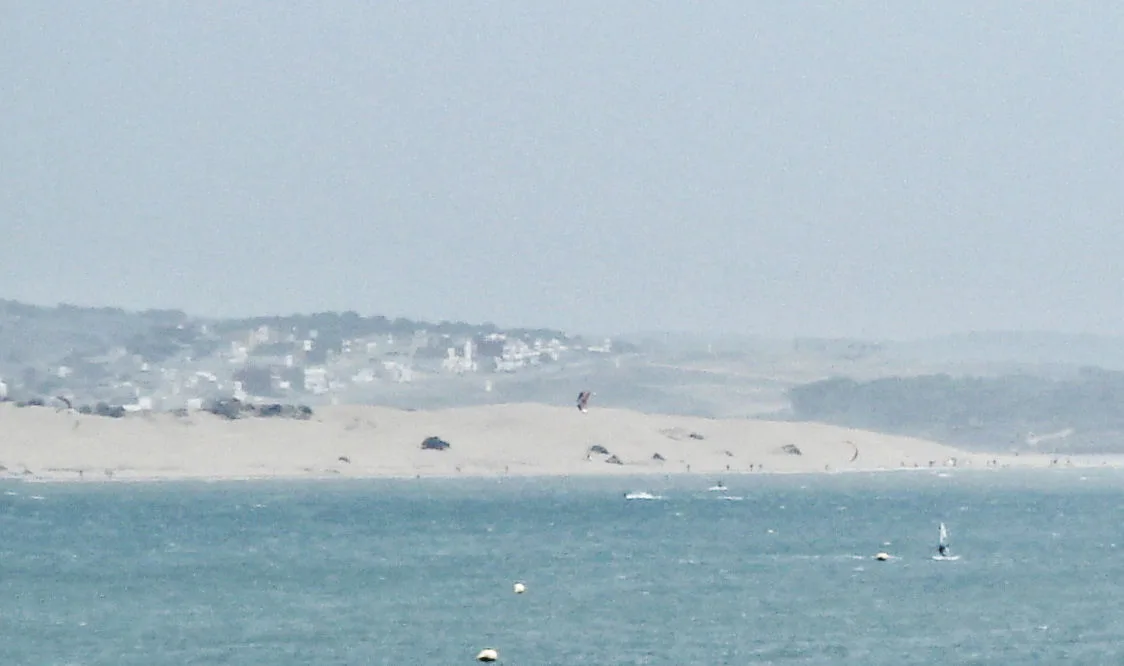
Diabat & Dar Sultan Ruins
This quiet village located **5 km** south of the city is famous for its associations with Jimi Hendrix, who visited in 1969. Nearby, the half-buried ruins of the Dar Sultan palace sit among the sand dunes, offering a mysterious and peaceful place to explore. The surrounding estuary is also popular for horseback riding and birdwatching.
Insider tip: Walk to the ruins along the beach at low tide to avoid crossing the river, and stop at the Jimi Hendrix Cafe in the village for a mint tea.
Best Time To Visit
Essaouira enjoys a highly temperate climate year-round, with temperatures rarely rising above 25°C in summer or dropping below 15°C in winter. Autumn (September to November) is the absolute best time to visit. During these months, the high summer trade winds (Alizés) drop, the Atlantic ocean is at its warmest, and daytime temperatures hover at a pleasant 22°C, making it ideal for swimming and walking the medina.
Spring (April to June) is another popular season, bringing mild weather and the famous Gnaoua World Music Festival in June. The festival attracts over 300,000 visitors, causing hotel prices to double and requiring bookings months in advance. Summer (July to August) is warm and extremely windy, with trade winds blowing consistently. While it is perfect for windsurfers, typical beachgoers may find the flying sand uncomfortable. However, it attracts thousands of domestic tourists escaping the intense heat of Marrakech. Winter (December to February) is mild but cool and occasionally rainy, though it offers quiet streets and the lowest accommodation prices. We recommend visiting in October to enjoy calm wind conditions, warm sea waters, and peaceful medina lanes.
How To Get There
By Plane
Essaouira is served by **Essaouira-Mogador Airport (ESU)**, located **16 km** southeast of the city center. The airport receives direct flights from major European cities like London, Paris, and Brussels. A licensed grand taxi from the airport to the medina costs a flat rate of **150 MAD** and takes **20 minutes**. Alternatively, a local bus runs from the main road outside the airport gate to the city center for **7 MAD**.
By Train
There are **no rail lines** leading to Essaouira. The national rail network terminates in Marrakech. If you travel by train from northern cities like Casablanca or Tangier, buy a combined “Supratours” ticket that includes a train ride to Marrakech and a direct connecting bus from Marrakech station to Essaouira.
By Bus
Buses serve as the primary public transport link. Premium operators **Supratours** and **CTM** run multiple daily departures. A Supratours bus from Marrakech takes **3 hours** and costs **80 MAD to 110 MAD**, arriving right outside the medina gate. CTM buses from Agadir take **3 hours** (costing **80 MAD**), while the bus from Casablanca takes **6 hours** and costs **160 MAD**.
By Car
If you drive, Essaouira is connected to Marrakech by the modern **R207 regional road**. The drive covers **175 km** of flat, well-maintained highway, taking approximately **2.5 hours**. Along the way, you will pass through the argan forest where you can spot the famous “tree-climbing goats.” Driving from Agadir along the scenic coastal road (**N1**) takes **3 hours** over a distance of **175 km**.
Where To Stay
Budget (under 300 MAD/night)
For budget accommodations, explore the southern lanes of the **Medina** near Bab Doukkala. This area offers beautiful, rustic Riads and hostels with shared spaces and sunny rooftops. Look for family-run guesthouses (Dars) that include traditional breakfast.
- Dar Nafoura: A charming, budget-friendly guest house inside the medina, featuring a peaceful inner courtyard and clean rooms starting around **260 MAD** per night.
- Essaouira Gliss House: A laid-back surf hostel offering clean rooms, cozy communal lounges, and a great rooftop terrace starting at **180 MAD** per night.
Mid-range (300-800 MAD/night)
The best area for mid-range stays is the **residential quarter** just outside the medina walls (known as the **Quartier des Dunes**) or the streets surrounding **Bab Sbaa**. These areas are close to both the beach and the old city, offering modern amenities like private bathrooms, Wi-Fi, and beautiful terraces.
- Riad Zahra: Located near the beach, this family-run riad features comfortable rooms, an outdoor swimming pool, and an excellent on-site restaurant starting at **550 MAD** per night.
- Riad Mimouna: Positioned directly on the seafront cliffs of the medina, offering spacious rooms with ocean views and traditional Moroccan decor starting around **680 MAD** per night.
Luxury (800+ MAD/night)
For luxury, seek out boutique Riads located in the **historical heart of the medina** or luxury estates in the **surrounding countryside** of Ghazoua. Staying here guarantees high-end wellness spas, heated pools, private ocean-view terraces, and gourmet dining.
- Heure Bleue Palais: A magnificent Relais & Châteaux property built inside a historic palace, featuring a heated rooftop pool, a luxury spa, and a cinema room starting at **1,800 MAD** per night.
- Le Jardin des Douars: A stunning boutique hotel nestled in the hills of the Ksob River valley, featuring lush gardens, heated pools, and absolute peace starting at **1,400 MAD** per night.
Where To Eat & Local Food
Essaouira’s culinary scene is heavily focused on fresh Atlantic seafood and pure argan oil. Do not miss these local specialties:
- Grilled Sardines: Grilled fresh over charcoal right at the port, served with local bread, tomatoes, and sea salt.
- Fish Tagine with Argan Oil: A rich, slow-cooked tagine featuring fresh sea bass or conger eel, seasonal vegetables, spices, and a generous drizzle of culinary argan oil.
- Gnaoua Salad: A refreshing local salad combining tomatoes, cucumbers, onions, and fresh Northern goat cheese, dressed with olive oil and cumin.
- Sfenj: Traditional Moroccan donuts fried to a light crisp, served hot and dusted with sugar alongside mint tea.
For dining, avoid the tourist-heavy restaurants directly lining Plaza Moulay Hassan, which charge high prices for average food. Instead, head to the local grill stalls located near the **fish market** in the medina, or explore the simple eateries in the **Chabanat district**, which serve authentic tajines and steaming bowls of harira soup. Always check if the restaurant uses authentic argan oil, and buy fresh almond pastries from local neighborhood bakeries.
Practical Tips
- Safety: Essaouira is exceptionally safe and has a very low crime rate. Solo travelers and families will feel completely secure walking the medina at night. Be aware of beach hawkers selling camel rides, but a polite “no, thank you” (La, Shokran) is always respected.
- Dress Code: While the city has a relaxed beach culture, it remains a traditional Moroccan town. Cover your shoulders and knees when exploring the medina or local markets; keep swimwear for the beach.
- Best Neighborhoods: Stroll the historic **Medina** for art galleries, explore the **Chabanat** neighborhood for artisan textiles, and walk the **Beach Zone** for windsurfing.
- Getting Around: The medina is entirely pedestrian-only and flat, making it perfect for walking. To travel to the new town or airport, use the blue **Petit Taxis** which charge a flat rate of **7 MAD to 10 MAD** within the city.
- Tipping: Tipping is common. Leave **5% to 10%** at casual cafes and restaurants, and round up the fare for taxi drivers.
- Useful Phrases: Use **”Shokran”** (Thank you), **”Bshal hada?”** (How much is this?), and **”Zween”** (Beautiful) to communicate with locals.
- What to Avoid: Avoid swimming in unmonitored beach zones along the southern coast due to dangerous ocean currents. Avoid purchasing Thuya wood products from street vendors; buy from established cooperatives to ensure quality.
Planning Your First Trip with Klook?
Use the link below to sign up and book your activities with Klook to claim exclusive discounts and promo offers on your tours.
Claim Discount & Book NowFrequently Asked Questions
Q: Is essaouira safe for tourists?
A: Yes, Essaouira is widely considered one of the safest cities in Morocco for international travelers. Violent crime is extremely rare, and visitors can comfortably walk through the medina lanes at night without safety concerns.
Q: How many days do I need in essaouira?
A: You need two to three days to explore the historic medina, walk the ramparts, visit the fishing port, and relax on the beach. If you plan to take day trips to Sidi Kaouki or Had Draa, extend your stay to four days.
Q: What is essaouira known for?
A: Essaouira is famous for its 18th-century stone ramparts, its blue-and-white medina, and its strong Atlantic trade winds that attract windsurfers from around the world. It is also well-known for Thuya wood carving and Gnaoua music.
Q: What is the best time to visit essaouira?
A: The best time to visit Essaouira is from September to November, when the strong summer winds calm down and the ocean water is at its warmest. Spring is also a great season, especially during the Gnaoua Music Festival in June.
Q: How do I get from Marrakech to essaouira?
A: The most convenient way is to take a premium Supratours or CTM bus directly from Marrakech, which takes three hours and costs 80 MAD to 110 MAD. Alternatively, you can drive via the regional R207 road.
Q: Is essaouira worth visiting?
A: Yes, Essaouira is highly worth visiting, offering a relaxed, bohemian coastal vibe that contrasts with the hectic imperial cities. It is a favorite destination for art lovers, photographers, surfers, and families seeking a peaceful retreat.