
Meknes Travel Guide
Morocco’s Historic Imperial Palace City
Introduction
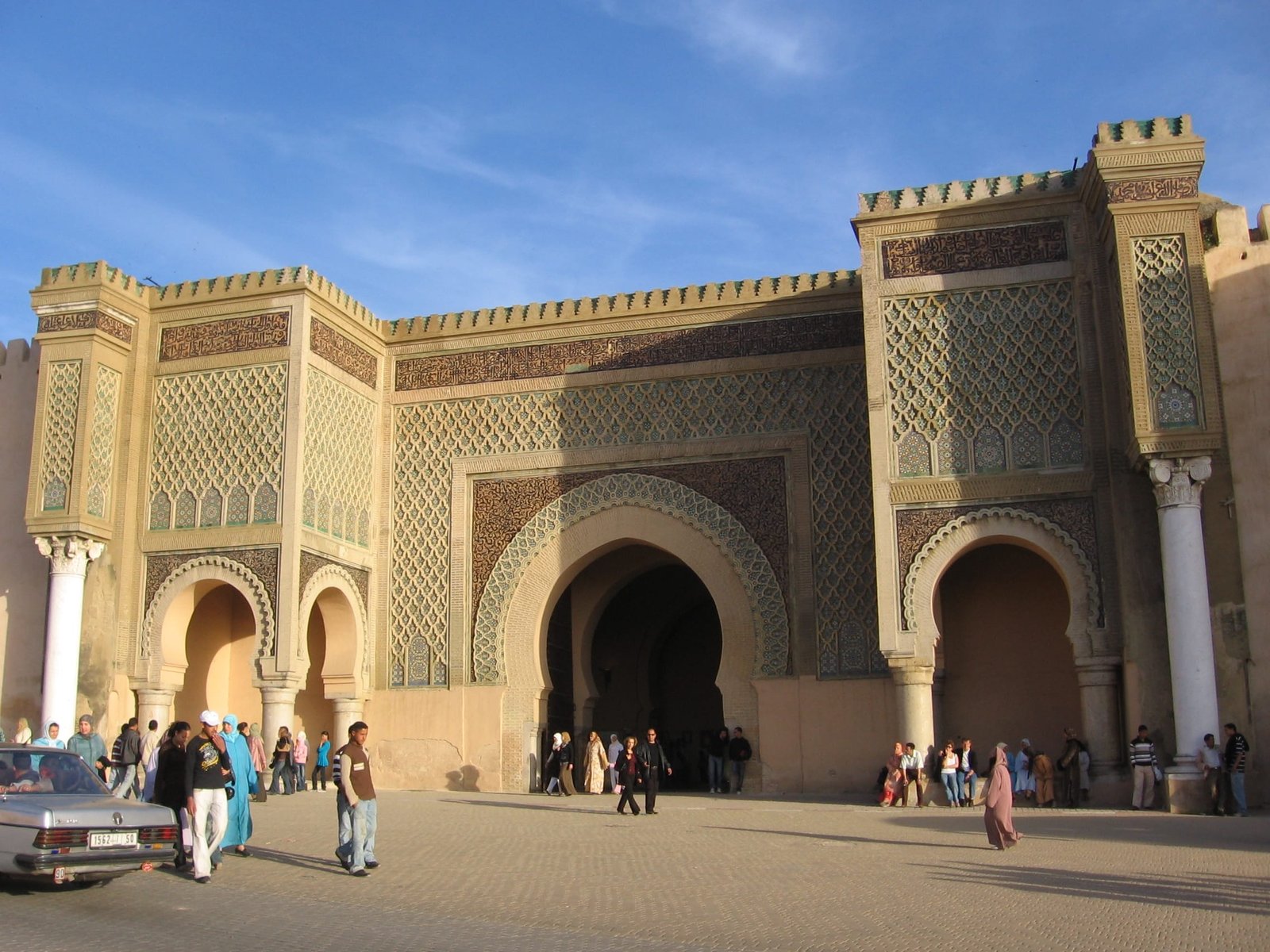
Walk through the colossal, mosaic-encrusted archway of Bab Mansour in Meknes, where massive stone walls guard the legacy of Sultan Moulay Ismail’s grand imperial dream. Located in northern Morocco just **60 kilometers** west of Fes, this historic capital offers a quiet, relaxed alternative to the busier tourist tracks. Rebuilt in the late 17th century as a magnificent royal city, its pedestrian-friendly medina features Spanish-Moorish architecture, large public squares, and massive underground monuments that reflect the power of the Alaouite dynasty.
This cultural enclave is perfect for history buffs, architectural enthusiasts, and travelers looking for an authentic Moroccan experience without the high-pressure sales of larger cities. The atmosphere feels local, historic, and exceptionally laid-back, with wide public plazas where local families meet to watch street performers in the evenings. While many visitors treat Meknes as a brief stopover, those who stay will discover a grand royal palace complex, historic stables, and a perfect base for exploring the ancient Roman ruins of Volubilis.
Quick Facts
| Region | Fes-Meknes |
| Best time to visit | September to November (pleasant autumn weather) or March to May (mild spring temperatures for exploring) |
| Language | Moroccan Arabic (Darija), French |
| Currency | Moroccan Dirham (MAD) |
| Known for | Bab Mansour, Royal Stables, Moulay Ismail Mausoleum, Volubilis Roman ruins |
| Day trips | Volubilis Roman ruins (**30 km**), Moulay Idriss Zerhoun (**28 km**), Fes medina (**60 km**) |
Top Things To Do in Meknes
Bab Mansour Gateway
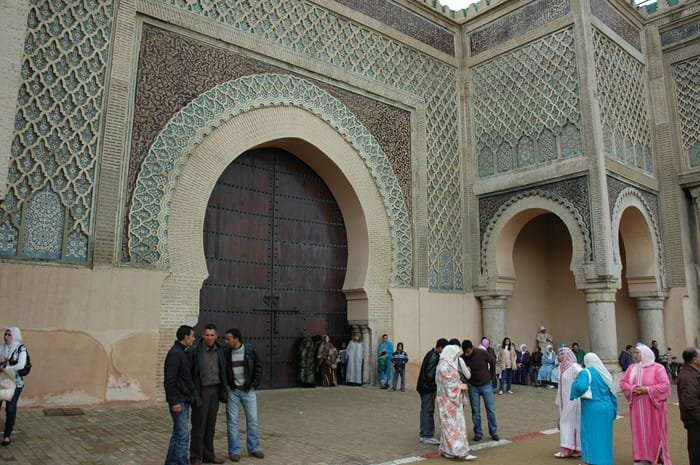
Completed in **1732**, this monumental gateway is widely considered the most beautiful and grand archway in North Africa. The structure features marble columns stolen from the nearby Roman ruins of Volubilis, flanked by detailed blue and green zellige mosaic tilework and Quranic calligraphy. It serves as the primary entrance dividing the old medina from the royal imperial city.
Insider tip: Walk to the gateway in the late afternoon when the warm sunlight shines directly onto the tiles, highlighting the gold and green patterns.
Mausoleum of Moulay Ismail
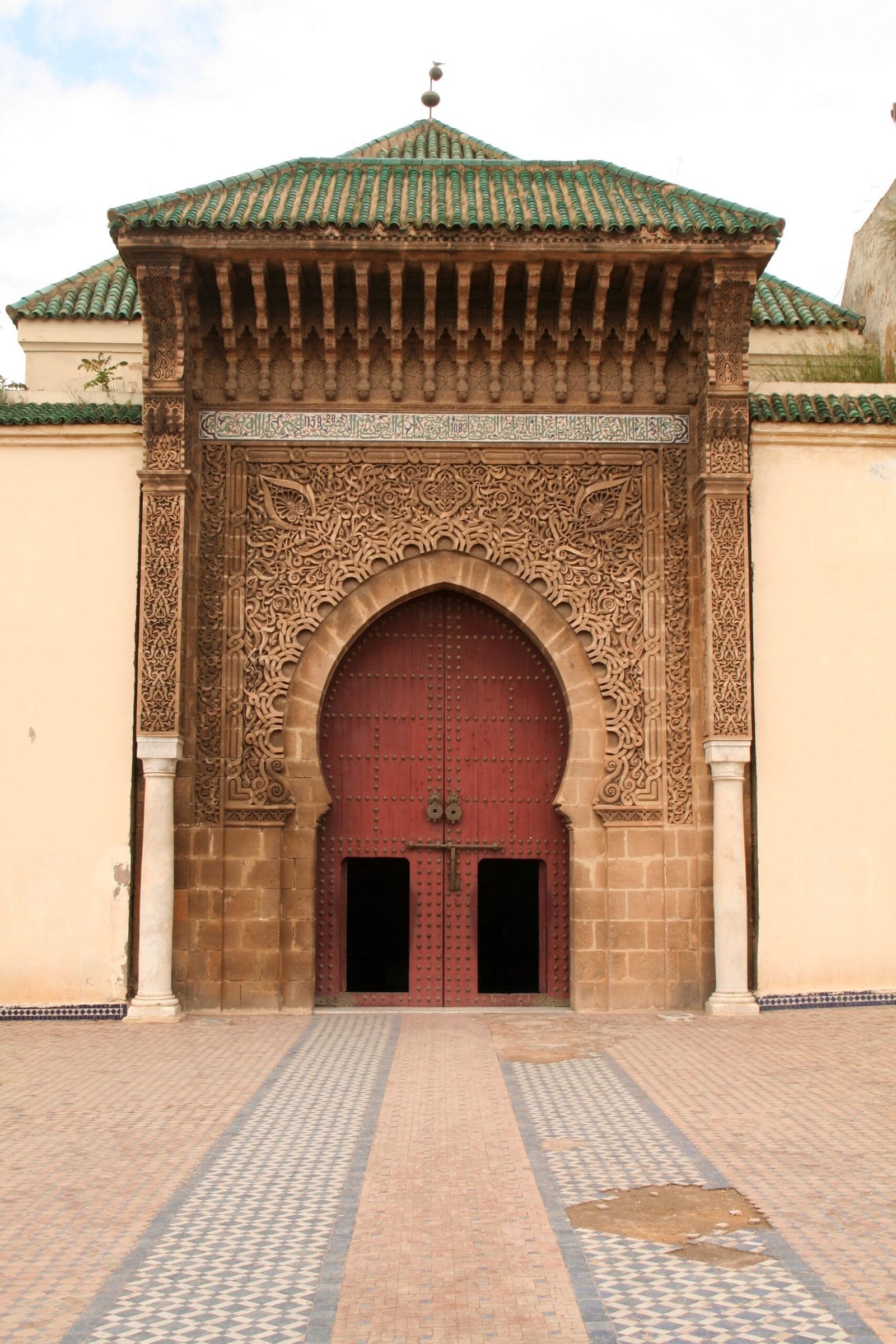
This historic sanctuary is the final resting place of the Sultan who made Meknes his imperial capital, offering a quiet space of religious art. The interior courtyards feature quiet marble fountains, detailed carved plasterwork, and some of the finest zellige mosaics in Morocco. Unlike most active mosques, the mausoleum is open to non-Muslim visitors.
Insider tip: Dress respectfully by covering your shoulders and knees to enter, and you must remove your shoes before stepping onto the carpets in the main tomb chamber.
The Royal Stables & Granaries (Heri es-Souani)
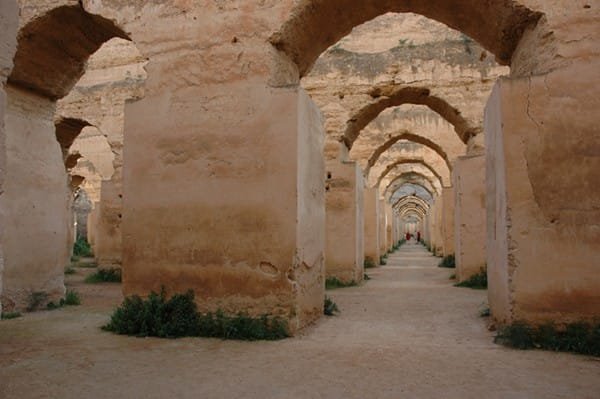
This massive architectural complex was built to store grain and house up to **12,000 royal horses**, reflecting the Sultan’s military power. The structures feature massive stone arches, thick walls designed to keep the interior cool, and an adjacent deep water reservoir (Agdal Basin) used to water the horses. Walking through the roofless ruins of the stables offers a spectacular look at historical engineering.
Insider tip: Walk along the edge of the Agdal Basin in the evening to enjoy a quiet sunset stroll alongside local residents.
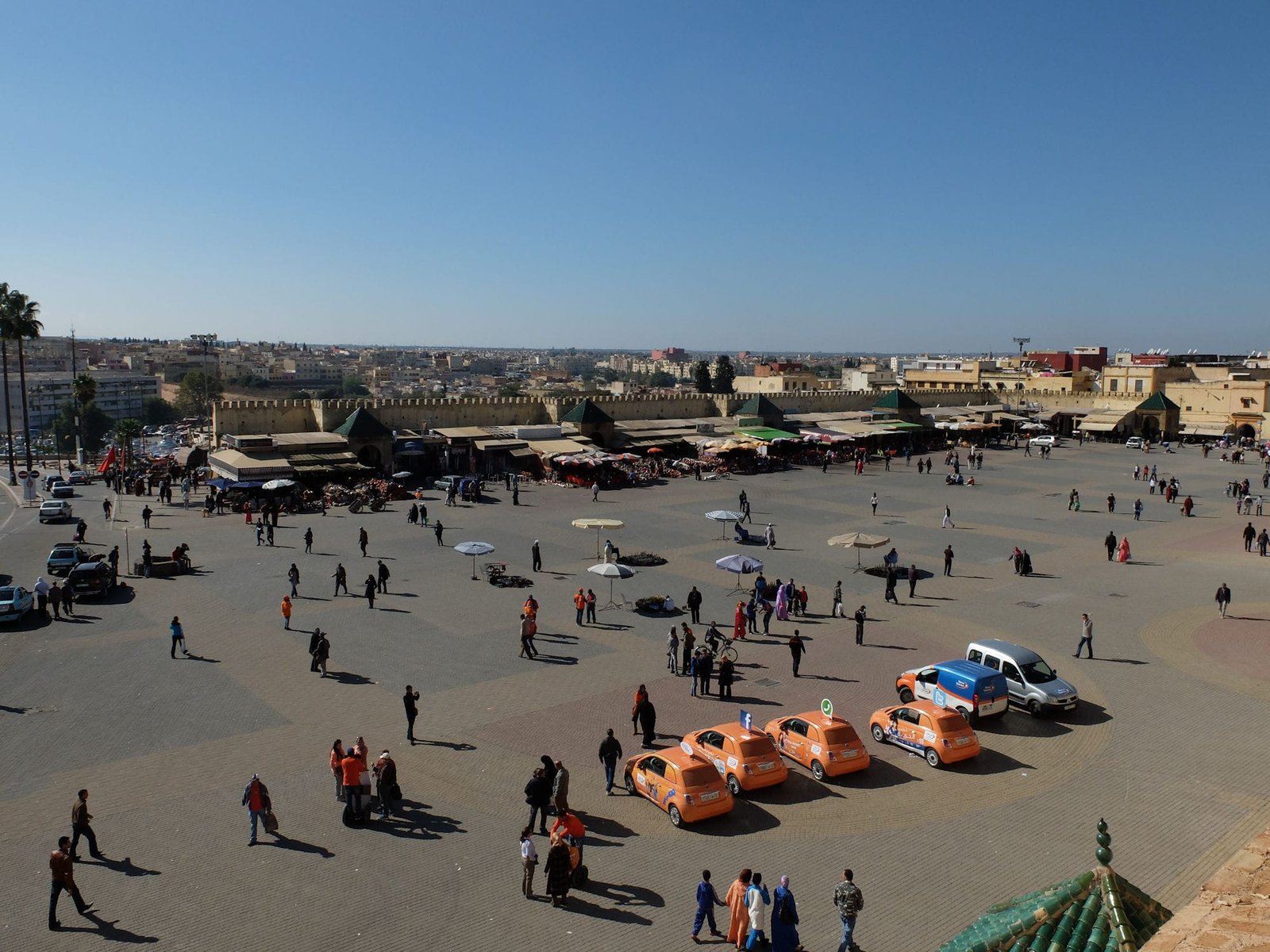
Lahdim Square (Place El Hedim)
This wide public plaza sits at the center of Meknes, serving as a social hub that resembles Marrakech’s Jemaa el-Fnaa on a smaller scale. In the evening, the square fills with local food stalls, street musicians, and families enjoying the fresh evening air. It is bordered by busy local markets selling fresh produce and crafts.
Insider tip: Sit at a second-story cafe balcony overlooking the square to enjoy a mint tea while watching the evening street life unfold without the tourist crowds.
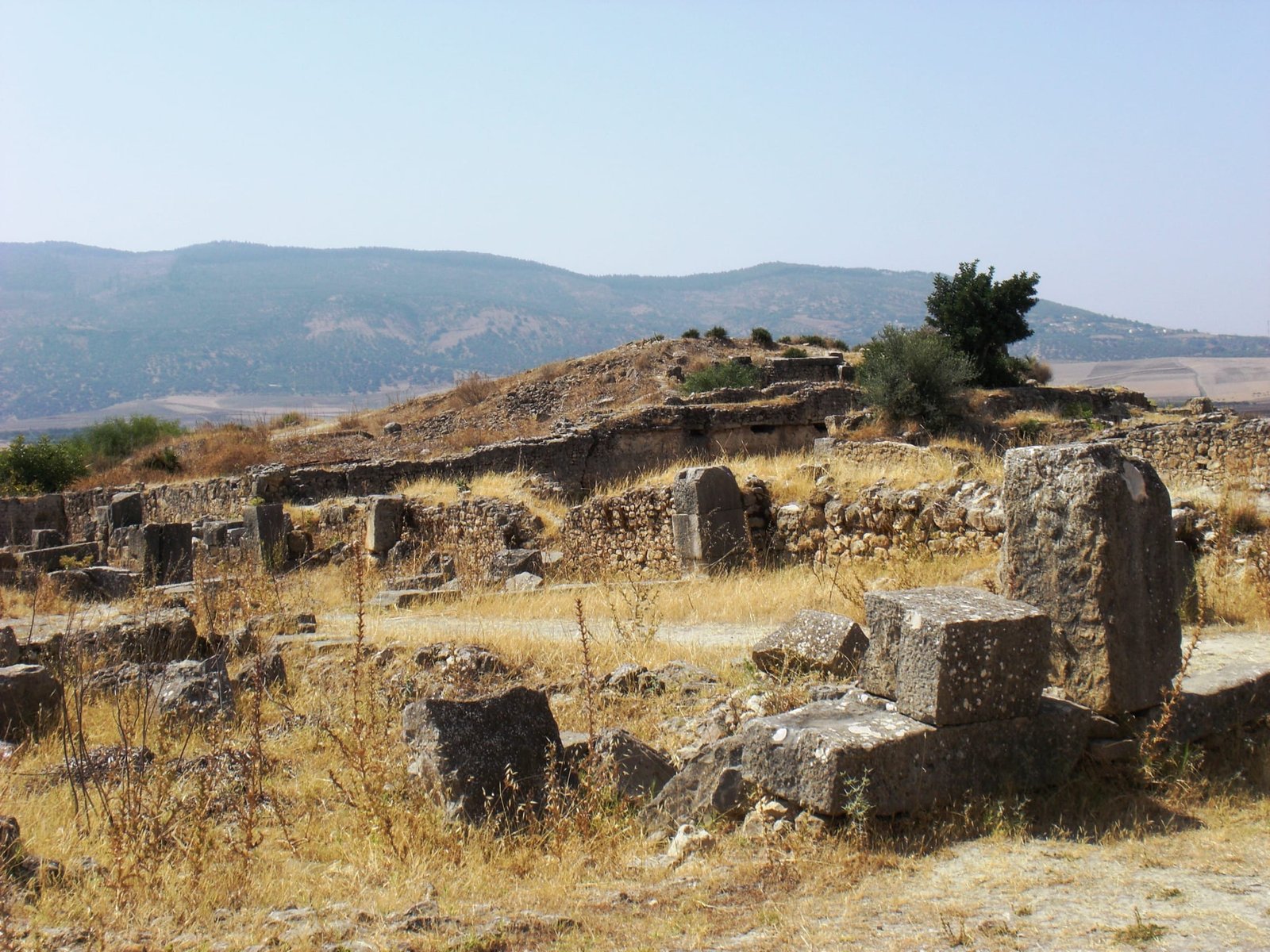
Volubilis Roman Ruins (Day Trip)
Located **30 km** north of Meknes, this UNESCO World Heritage site preserves the ancient capital of the Roman province of Mauritania Tingitana. The ruins feature well-preserved triumphal arches, a basilica, temples, and spectacular colorful mosaics still sitting in their original floors. The site offers a fascinating look at the southern boundary of the Roman Empire.
Insider tip: Hire a shared grand taxi from the Meknes taxi stand near the Mellah for about **30 MAD** per seat, and arrive early in the morning to beat the mid-day heat.
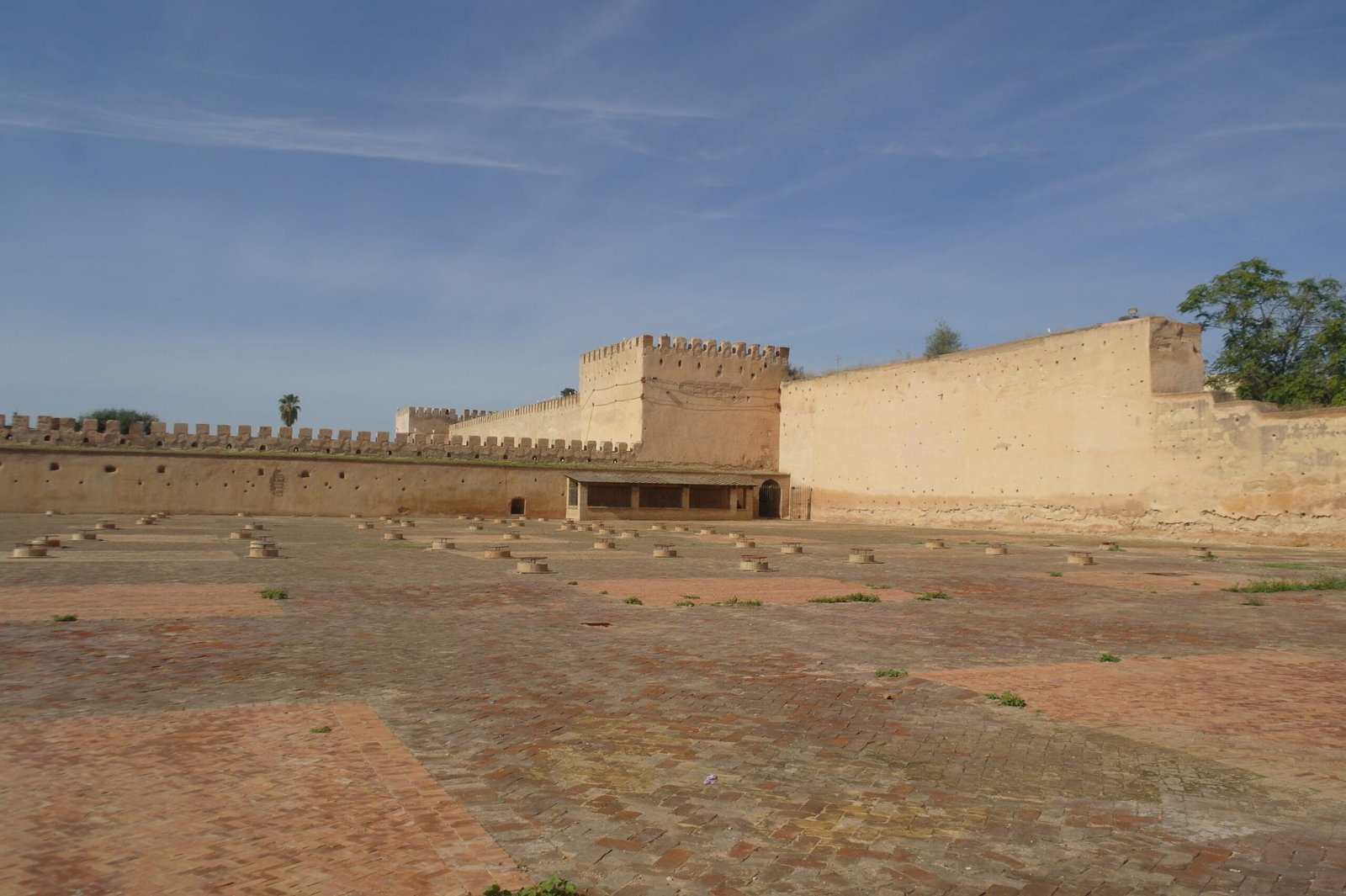
Prison de Cara (Habs Qara)
This massive, underground stone chamber was built by Sultan Moulay Ismail to house thousands of Christian slaves and prisoners of war. The prison is entirely underground, consisting of endless vaulted stone arches that run beneath the imperial city gardens. The atmospheric, dark space offers a chilling look at the Sultan’s military history.
Insider tip: Bring a small flashlight or use your phone light, as the interior is very poorly lit and has uneven stone floors.
Best Time To Visit
Meknes experiences a continental climate with hot summers and cold winters, making seasonal planning crucial for a comfortable visit. Autumn (September to November) is the ideal season, bringing warm, sunny days averaging 22°C to 26°C and cool evenings, perfect for walking the imperial ruins. Spring (March to May) is another beautiful window, with temperatures averaging 20°C and the surrounding Saïss plains covered in green, ideal for day trips to Volubilis.
Summer (June to August) is extremely hot, with temperatures often exceeding 40°C. Sightseeing during mid-day is not recommended, though hotels with pools offer discounts. Winter (December to February) is cool and damp, with daytime temperatures averaging 12°C and dropping to 5°C at night, requiring warm clothing. We recommend visiting in October to enjoy mild temperatures, pleasant sunny days, and comfortable conditions for sightseeing.
How To Get There
By Plane
Meknes has **no commercial airport**. The closest aviation hub is **Fes-Saïss Airport (FEZ)**, located **60 km** east of the city. A licensed grand taxi from Fes airport to Meknes costs a fixed rate of **350 MAD** and takes **1 hour**. Alternatively, take Bus Line 16 from the airport to Fes train station, then catch a train to Meknes.
By Train
Meknes has two train stations, with **Gare de Meknes** being the primary station for long-distance trains. The national rail network (**ONCF**) connects Meknes to major cities daily. A train from Casablanca takes **2.5 hours** and costs **90 MAD to 130 MAD**, while the journey from Fes takes only **35 minutes** (costing **20-30 MAD**). Trains from Rabat take **2 hours** and cost **60-80 MAD**.
By Bus
The main bus terminal is located near Bab el-Khemis, while the premium **CTM** bus company operates from its own private terminal in the Ville Nouvelle. CTM buses run daily from Marrakech (**7 hours**, **150 MAD**), Tangier (**4 hours**, **100 MAD**), and Rabat (**2 hours**, **50 MAD**).
By Car
If you drive, Meknes is connected to Rabat and Fes by the modern **A2 toll highway (Auto-route)**. The drive from Fes covers **60 km** of excellent highway, taking approximately **45 minutes**. Driving from Rabat covers **140 km** and takes **1.5 hours**. Tolls from Rabat cost **35 MAD**.
Where To Stay
Budget (under 300 MAD/night)
For budget accommodations, explore the neighborhood of **Rouamzine** inside the medina or look for pensions near **Place El Hedim**. Staying close to the main square offers easy access to local markets and cafes. Look for properties that offer traditional Moroccan breakfasts and rooftop terraces.
- Riad Baba: A friendly, budget-friendly riad inside the medina, featuring clean rooms, traditional zellige tiles, and a nice rooftop terrace starting around **250 MAD** per night.
- Hotel Regina: Positioned near the medina entrance, offering simple private rooms, hot water, and a central location starting at **220 MAD** per night.
Mid-range (300-800 MAD/night)
The best area for mid-range stays is the **Ziat** or **Mellah** districts. Here, you will find beautifully restored Riads featuring private bathrooms, air conditioning, traditional courtyards, and cooked breakfasts.
- Riad Yacout: A beautifully restored 18th-century riad located near the main square, featuring traditional carvings, a pool, and excellent service starting at **550 MAD** per night.
- Riad Bahia: Positioned in a quiet medina lane, offering comfortable rooms, a traditional spa, and a pool starting around **650 MAD** per night.
Luxury (800+ MAD/night)
For luxury, seek out grand Riads located in the **royal imperial city** quarter or near the **Ville Nouvelle**. Staying here guarantees spacious suites, heated swimming pools, world-class spas offering hammam treatments, and fine dining.
- Riad Chateau Aniba: A stunning luxury Riad featuring spacious suites, a swimming pool, and views over the medina starting at **1,400 MAD** per night.
- Riad Dar Meknes Tresor: An upscale Riad located in the historic center, offering customized service, panoramic terraces, and premium spa facilities starting at **1,100 MAD** per night.
Where To Eat & Local Food
Meknes’ cuisine is heavily focused on fresh regional produce, olive oil, and Middle Atlas Berber dishes. Do not miss:
- Tajine Meknassi: A unique regional tagine featuring tender beef or lamb cooked with seasonal olives, preserved lemons, and local olive oil.
- Poisson Grillé (Grilled Fish): Fresh Atlantic fish brought daily from the coast, grilled simple with cumin and garlic.
- Harira and Sfenj: A traditional combination of hearty soup and crispy donuts, popular for quick dinners.
- Zaalouk: A delicious cooked salad of eggplant, tomatoes, garlic, and spices, served with fresh flatbread.
For dining, avoid the tourist-heavy restaurants directly lining Lahdim Square, which charge high prices for average food. Instead, head to the local food stalls inside the **medina markets** for authentic tajines, or explore the simple grill cafes in the **Ville Nouvelle**, which serve fresh beef skewers and salads. Always buy fresh olives and olive oil from the local Meknes market stalls, which are famous throughout Morocco.
Practical Tips
- Safety: Meknes is exceptionally safe for tourists, with a very low crime rate. Solo travelers and families can comfortably walk the medina at night. Ignore unofficial parking attendants who demand high fees near the medina gates.
- Dress Code: Meknes is a deeply traditional city. Dress conservatively by covering your shoulders and knees when exploring the medina; avoid tight or revealing clothing.
- Best Neighborhoods: Stroll the historic **Medina** for markets, explore the **royal imperial city** for architecture, and walk the **Ville Nouvelle** for modern cafes.
- Getting Around: The medina is pedestrian-only and compact, so you must walk. To travel to the train station or Ville Nouvelle, use the blue **Petit Taxis** which run on fixed fares around **10 MAD to 15 MAD**.
- Tipping: Tipping is common practice. Leave **5% to 10%** at casual cafes and restaurants, and round up the bill for taxi drivers.
- Useful Phrases: Use **”Shokran”** (Thank you), **”Bshal hada?”** (How much is this?), and **”Sbah lkhayr”** (Good morning) to communicate.
- What to Avoid: Avoid entering active mosques unless you are Muslim, as they are strictly closed to non-Muslims. Avoid buying “fossil” souvenirs from street vendors near Volubilis, as they are often painted concrete.
Planning Your First Trip with Klook?
Use the link below to sign up and book your activities with Klook to claim exclusive discounts and promo offers on your tours.
Claim Discount & Book NowFrequently Asked Questions
Q: Is meknes safe for tourists?
A: Yes, Meknes is exceptionally safe for tourists, with low crime rates and a quiet, clean atmosphere. Solo travelers and families can comfortably walk the town center at night without safety concerns.
Q: How many days do I need in meknes?
A: You need one to two days to explore the main sights, including Bab Mansour, the Royal Stables, Lahdim Square, and the medina. If you plan to take day trips to Volubilis or Moulay Idriss, extend your stay to three days.
Q: What is meknes known for?
A: Meknes is famous for the monumental Bab Mansour gateway, its role as a historic imperial capital under Sultan Moulay Ismail, and the massive Royal Stables. It is also globally recognized as the gateway to the Volubilis Roman ruins.
Q: What is the best time to visit meknes?
A: The best time to visit Meknes is from September to November or March to May when temperatures are mild and comfortable. Summer is extremely hot, with temperatures exceeding 40°C, while winter can feel cold in old stone Riads.
Q: How do I get from Marrakech to meknes?
A: The most convenient way is to take the train, which takes about six hours. Alternatively, you can drive via the A3 and A2 toll highways, covering the distance in approximately five hours.
Q: Is meknes worth visiting?
A: Yes, Meknes is highly worth visiting, offering a relaxed imperial history that contrasts with the busier cities. It offers a peaceful, historic look at Moroccan culture and serves as the best base for visiting Volubilis.