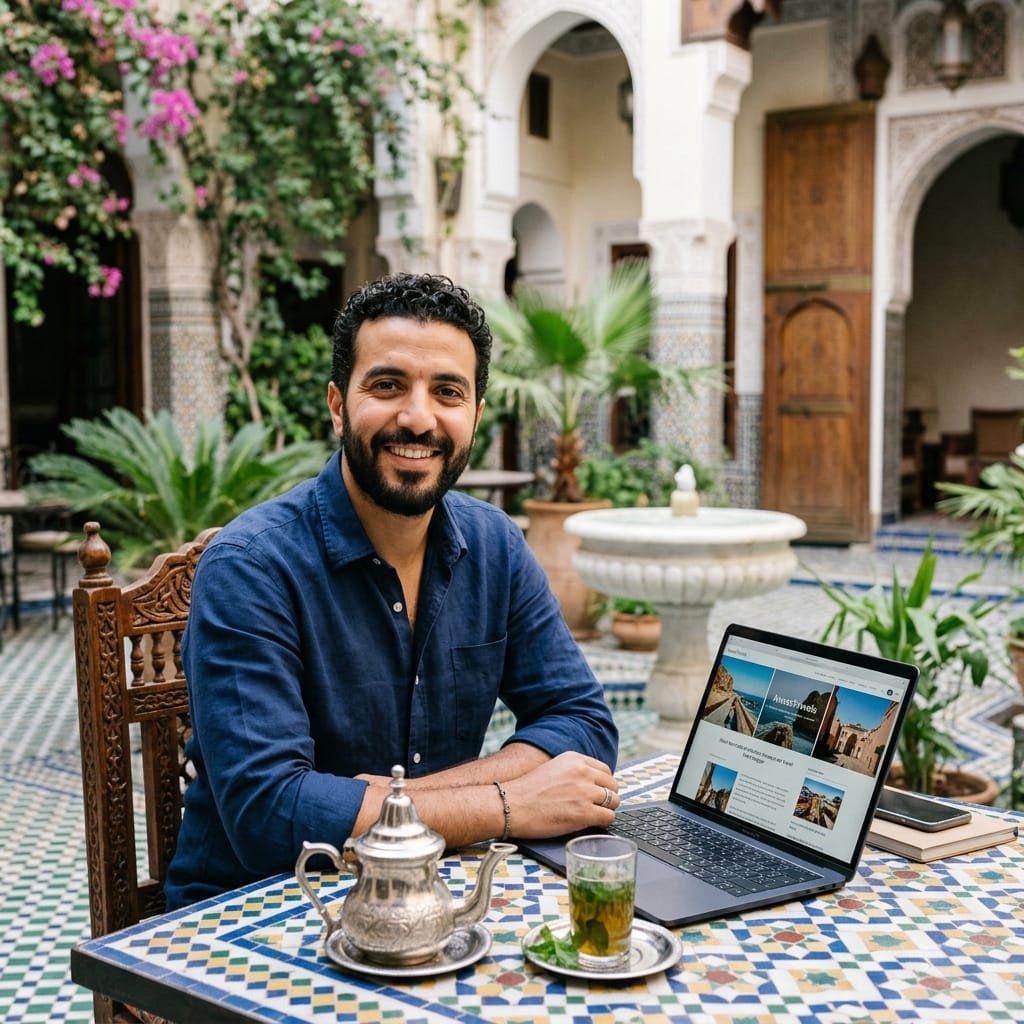

Everyone knows about Moroccan mint tea. The theatrical pour from height, the three obligatory glasses (“the first glass is as gentle as life, the second as strong as love, the third as bitter as death”, as the saying goes), the sugar and the spearmint and the gunpowder green tea base. But Morocco’s drink culture extends well beyond mint tea, and most of it is excellent.
This guide covers the full spectrum of what to drink in Morocco — from the morning coffee culture of Casablanca to the freshly-pressed juices of Marrakech’s Djemaa el-Fna, to the question every Western traveller eventually asks: where can I get a beer?
Moroccan Mint Tea: The Ritual Explained
Atay b’naanaa — Moroccan mint tea — is so central to social life that refusing it is genuinely impolite in most contexts. It’s offered in homes, shops, offices, and riads, and accepting a glass is accepting hospitality itself.
The preparation ritual matters: gunpowder green tea is brewed strongly, then poured into a teapot with fresh spearmint (naanaa) and sugar. The mixture is then poured from height — sometimes half a metre above the glass — to create froth. The froth indicates freshness and proper preparation. It’s then poured back into the pot and repeated two or three times to blend the flavours.
The result is sweet (very sweet, by most Western standards), fragrant, and warming. You can ask for less sugar (b’shwiya sukkar) and most servers will accommodate this, though it’s considered slightly eccentric.
Coffee Culture in Morocco
Morocco has a strong cafe culture, particularly in the larger cities. The default coffee drink is:
- Qahwa (espresso): Strong, small, served black. The Moroccan espresso is good — generally better than you’d expect outside a dedicated specialty cafe.
- Qahwa b’haleb (coffee with milk / café au lait): Half espresso, half warm frothy milk. The standard morning drink in most cafes. Excellent.
- Nous-nous: Literally “half-half” — half espresso, half milk. The most popular coffee order in Morocco. If you don’t know what to order, order a nous-nous.
- Qahwa mrbbda (spiced coffee): Found in some traditional cafes, particularly in the south. Coffee scented with cardamom, cinnamon, or ginger — extraordinary.
Cafe culture is male-dominated in traditional neighbourhoods — women travellers may find the all-male terrace cafes uncomfortable. Modern cafes (especially in Casablanca, Rabat, and the newer parts of Marrakech) are fully mixed.
Fresh Juices: Marrakech’s Gift to the Thirsty Traveller
The juice stalls around Djemaa el-Fna square in Marrakech are one of the great bargains of Morocco. A large glass of fresh-pressed orange juice costs around 4–7 MAD — less than a euro. The oranges come from the surrounding Haouz plain and are extraordinary.
Beyond orange juice, you’ll find:
- Avocado shake (avocat): Thick blended avocado with milk and sugar. Rich, filling, and delicious. Available at juice bars across the country.
- Almond milk (leben louz): Freshly made almond milk, lightly sweetened. Extraordinary in the Atlas region where almonds are grown.
- Argan oil smoothies: Found in health-oriented cafes in larger cities. Argan oil blended with fruit, honey, and milk.
- Seasonal fruit juices: Pomegranate (ruman), watermelon (dellah), and fig (karmous) in season. Each extraordinary when fresh.
Ayran & Lben
Fermented dairy drinks are popular, particularly in rural areas and with traditional meals.
- Lben: Moroccan buttermilk — thin, slightly sour, refreshing. Sold cold in plastic bags at local shops. Excellent with msemen flatbread for breakfast.
- Ayran: Yogurt diluted with water and lightly salted. More commonly found in the north of Morocco near the Spanish influence zone.
Alcohol in Morocco
Morocco is a Muslim-majority country where alcohol is legal but regulated. Here’s the honest picture:
- Where you can drink: Licensed hotels, upscale restaurants, Western-oriented bars in major cities (Casablanca, Marrakech, Agadir), and tourist-oriented riads that serve wine with dinner.
- Where you cannot drink: Traditional cafes, street settings, medina restaurants (unless licensed), public spaces. Not during Ramadan in unlicensed venues.
- What’s available: Casablanca and Flag are the main local beers — both decent lagers. Moroccan wine (particularly from the Meknes and Benslimane regions) is improving rapidly and some are excellent. Mahia — a traditional fig brandy from the Jewish-Moroccan tradition — is harder to find but worth seeking out.
- Prices: Beer in a licensed bar: 35–60 MAD. Wine in a restaurant: 120–300 MAD per bottle.
Rose Water & Orange Blossom Water
These floral waters are used extensively in Moroccan cooking and pastry-making, but they’re also served as drinks — diluted with cold water and a little sugar — particularly in the Dades Valley (rose water capital of Morocco) and during Ramadan. Light, fragrant, and refreshing in summer.
What to Drink with Moroccan Food
- With tagine: mint tea is traditional. Lben works beautifully with lamb tagines.
- With couscous (Friday lunch): traditionally water or lben.
- With street food (sandwiches, brochettes): fresh orange juice.
- With pastilla: sweet mint tea.
- With a formal riad dinner: Moroccan rosé or a light red.
Frequently Asked Questions
Is water safe to drink in Morocco?
Tap water is treated and technically safe in major cities, but most visitors and residents drink bottled water. A 1.5 litre bottle costs 5–10 MAD. See our full tap water safety guide for details.
Can I find alcohol easily in Morocco?
In tourist areas, major hotels, and licensed restaurants, yes. In traditional medina areas and small towns, it requires more effort. Never openly consume alcohol in public.
Is Moroccan mint tea always sweet?
By default, very sweet. You can ask for less sugar (b’shwiya sukkar) and it will be accommodated, though not always enthusiastically.
What should I drink if I don’t like mint tea?
Fresh orange juice, coffee (qahwa b’haleb), or avocado shake are all excellent alternatives. Mineral water (Sidi Ali or Sidi Harazem are the main brands) is universally available.
Final Thoughts
Moroccan drink culture — from the ritualised mint tea ceremony to the extraordinary fresh juices of the medina stalls — is one of the sensory pleasures of travelling in this country. Slow down, accept the tea, order a nous-nous in the morning, and try an avocado shake at least once. You’ll miss them when you leave.
For more on Moroccan food and culture, read our Mint Tea Ritual guide and our Street Food Guide.
Suggested photos: (1) Moroccan mint tea being poured from height into glass — alt: “Moroccan mint tea ceremonial pour from height”; (2) Fresh orange juice stalls at Djemaa el-Fna Marrakech — alt: “Fresh orange juice stalls Djemaa el Fna Marrakech”; (3) Avocado shake in tall glass at Moroccan cafe — alt: “Moroccan avocado shake cafe drink”