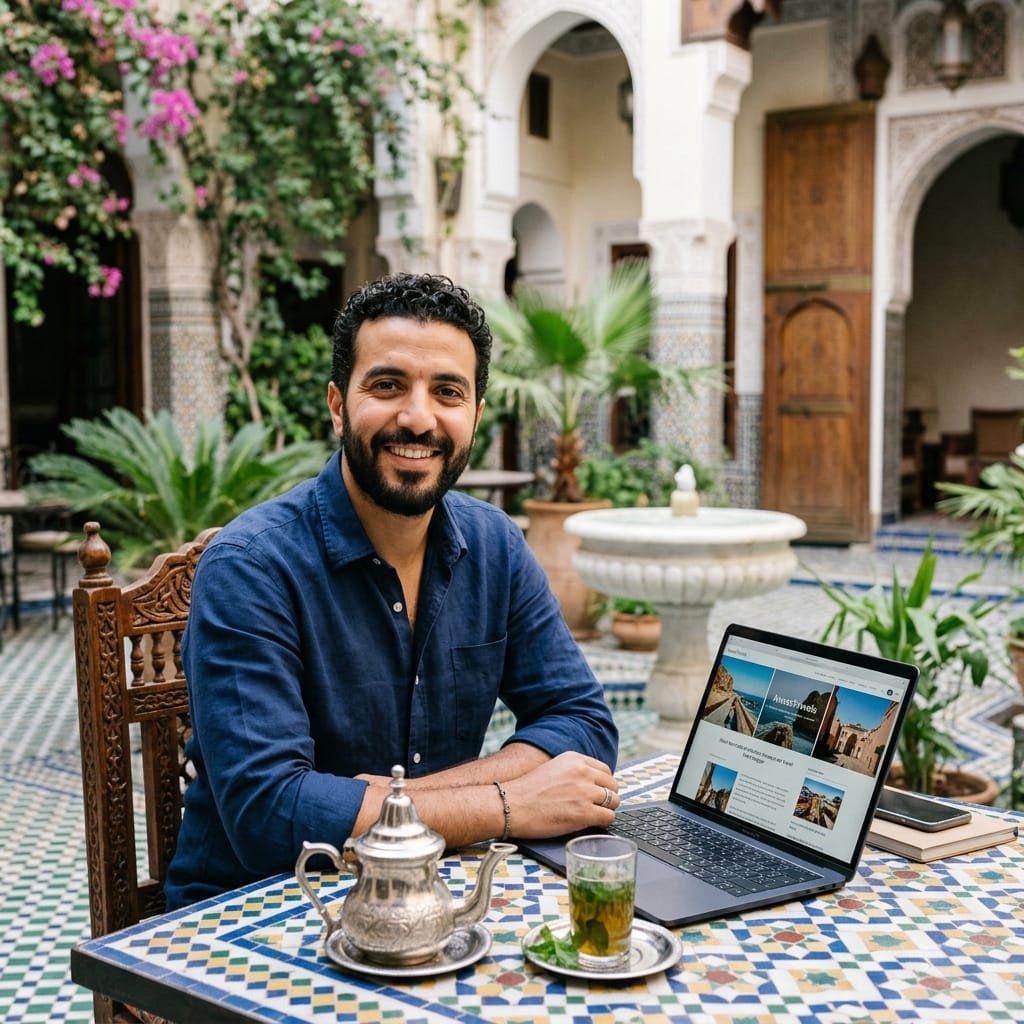

Ten days is the sweet spot for Morocco. It’s enough time to do the country seriously — to feel Marrakech properly, to lose yourself in the Fes medina, to sleep in the Sahara and come back — without rushing. I’ve done Morocco in three days (too fast) and three weeks (perhaps too slow), and ten days is where it all clicks into place.
This itinerary covers the classic imperial cities route combined with a Sahara desert extension. It’s designed for first-time visitors who want the full Moroccan experience without wasting time backtracking.
The Route Overview
Marrakech → Atlas Mountains (transit) → Dades Valley → Merzouga Sahara → Fes (via Ziz Valley) → Chefchaouen → Casablanca or Marrakech (fly home)
This route moves logically south-east to north, avoiding the frustration of doubling back. You fly in and out of different airports (Marrakech and Casablanca are both well-connected) which maximises time. If you must use the same airport, Marrakech–Marrakech works perfectly.
Day-by-Day Breakdown
Days 1–2: Marrakech
Arrive into Marrakech and check into your riad. Day 1: recover, explore the Djemaa el-Fna in the evening. Day 2: Marrakech medina properly — Bahia Palace, the tannery souks, the spice market, lunch somewhere with a terrace view. Evening: rooftop dinner at your riad. If you have energy, consider a morning Atlas day trip on Day 2 — Imlil village is stunning and an hour from Marrakech.
Day 3: Drive to Dades Valley via Aït Benhaddou
This is a long drive day (5–6 hours to the Dades Valley) but it’s one of the most scenic in Morocco: the Tizi n’Tichka mountain pass, then down through the pre-Saharan landscape to the Draa Valley and Ouarzazate. Stop at Aït Benhaddou — the UNESCO-listed ksar (fortified village) that has featured in Game of Thrones, Gladiator, and dozens of other productions. Spend the night in the Dades Valley (Boumalne Dades or a gorge guesthouse).
Day 4: Dades Gorge & Drive to Merzouga
Morning in the Dades Gorge — a spectacular canyon with rose-red walls and a winding road that gets progressively narrower and more dramatic. Then drive east through the Draa palmeraie to Merzouga (3–4 hours). Arrive in the late afternoon in time for the sunset camel ride into the Erg Chebbi dunes and your first desert camp night.
Day 5: Merzouga Desert Day
Wake before sunrise to climb the nearest dune (20–30 minute scramble in soft sand; deeply aerobic and completely worth it). Watch the light change over 45 minutes as the desert comes to life. Return to camp for breakfast. Rest during the hot midday hours. Afternoon: visit the Gnawa musicians’ village of Khamlia (unique music and tea), or hire a quad bike for a desert circuit. Second night at camp or return to the village guesthouse.
Day 6: Drive North to Fes via the Ziz Valley
A long drive (6–7 hours) but extraordinarily varied scenery: the Ziz River valley and its vast palm grove, the cedar forests above Midelt, the Moulouya Valley. Arrive in Fes in the early evening. Check into your medina riad.
Days 7–8: Fes
Two full days in Fes. Day 7: Fes el-Bali — Bou Inania Madrasa, the Chouara tanneries (best seen from the leather shops’terraces above), the Nejjarine fountain and woodworking museum, lunch at a medina rooftop restaurant. Day 8: quieter exploration — the Andalusian quarter, the Jewish mellah, a morning cooking class or hammam session, and the Merenid Tombs at sunset (best free view in Morocco).
Day 9: Chefchaouen
Chefchaouen is 3 hours from Fes. Leave in the morning and arrive in time for lunch. Afternoon: the blue medina at your own pace — this is a place to wander without a plan. The light is extraordinary in the afternoon. Evening: rooftop dinner looking out over the Rif Mountains. A single night here is enough to capture the essence; those with more flexibility might want two.
Day 10: Casablanca & Departure
Chefchaouen to Casablanca takes about 3.5–4 hours by road, passing through Tangier or via Rabat. If your flight departs in the evening, stop for lunch in Rabat — Morocco’s underrated capital deserves at least a few hours. The Hassan II Mosque in Casablanca is worth the detour if you arrive with time before your flight.
Transport Options for This Route
| Leg | Private Driver | Public Transport |
|---|---|---|
| Marrakech to Dades | Best option; 1,200–1,800 MAD | CTM bus, slow |
| Dades to Merzouga | Included with driver | Local taxis, unreliable |
| Merzouga to Fes | 1,500–2,000 MAD | CTM bus, 8+ hours |
| Fes to Chefchaouen | 400–600 MAD | CTM bus, 3.5 hours, good |
| Chefchaouen to Casablanca | 600–900 MAD | CTM bus direct, 4 hours |
Budget Estimate for 10 Days
| Category | Budget Traveller (MAD) | Mid-Range (MAD) | Comfortable (MAD) |
|---|---|---|---|
| Accommodation (10 nights) | 2,000–3,000 | 5,000–9,000 | 10,000–18,000 |
| Food & drink | 1,500–2,500 | 3,000–5,000 | 5,000–8,000 |
| Transport (all legs) | 1,500–2,500 | 4,000–6,000 | 7,000–12,000 |
| Activities & experiences | 500–1,000 | 1,500–3,000 | 3,000–6,000 |
| Total | 5,500–9,000 | 13,500–23,000 | 25,000–44,000 |
Frequently Asked Questions
Is 10 days enough for Morocco?
For this specific route (Marrakech, Sahara, Fes, Chefchaouen), ten days is sufficient if you don’t rush. It leaves no slack for unplanned rest days, so build in flexibility if you’re prone to travel fatigue.
Can I do this route without a car or private driver?
The city-to-city sections (Fes to Chefchaouen, Chefchaouen to Casablanca) are well-served by CTM buses. The southern desert section (Marrakech to Sahara to Fes) is much harder on public transport and significantly slower. A guided tour or private driver is strongly recommended for that portion.
What’s the best time of year for this route?
March to May and September to November. Spring and autumn offer the best weather for both the mountain passes and the desert. Summer is hot throughout; winter is cold in the mountains and Atlas passes can be snowed.
Do I need a guide for the full route?
Not mandatory, but a licensed guide in Fes medina (half or full day) is highly recommended — the medina is genuinely disorienting and a good guide opens doors (literally, in some cases) that solo travellers miss.
Final Thoughts
This 10-day route is Morocco at its most concentrated — imperial architecture, Atlantic coast light, Saharan silence, and mountain colour, all in a single coherent journey. Plan it carefully, leave room to slow down, and don’t try to see everything.
For deeper planning on specific sections, read our Sahara Desert Guide, our Fes Medina Guide, and our Morocco Travel Costs 2026 breakdown.
Suggested photos: (1) Aït Benhaddou ksar at golden hour with Atlas Mountains behind — alt: “Ait Benhaddou UNESCO ksar Morocco golden hour”; (2) Fes medina rooftop view over terracotta rooftops at dusk — alt: “Fes medina rooftop view Morocco at dusk”; (3) Chefchaouen blue medina alley with flower pots — alt: “Chefchaouen blue alley medina Morocco flowers”