Merzouga Travel Guide
Morocco’s Gateway to the Sahara Desert
Introduction
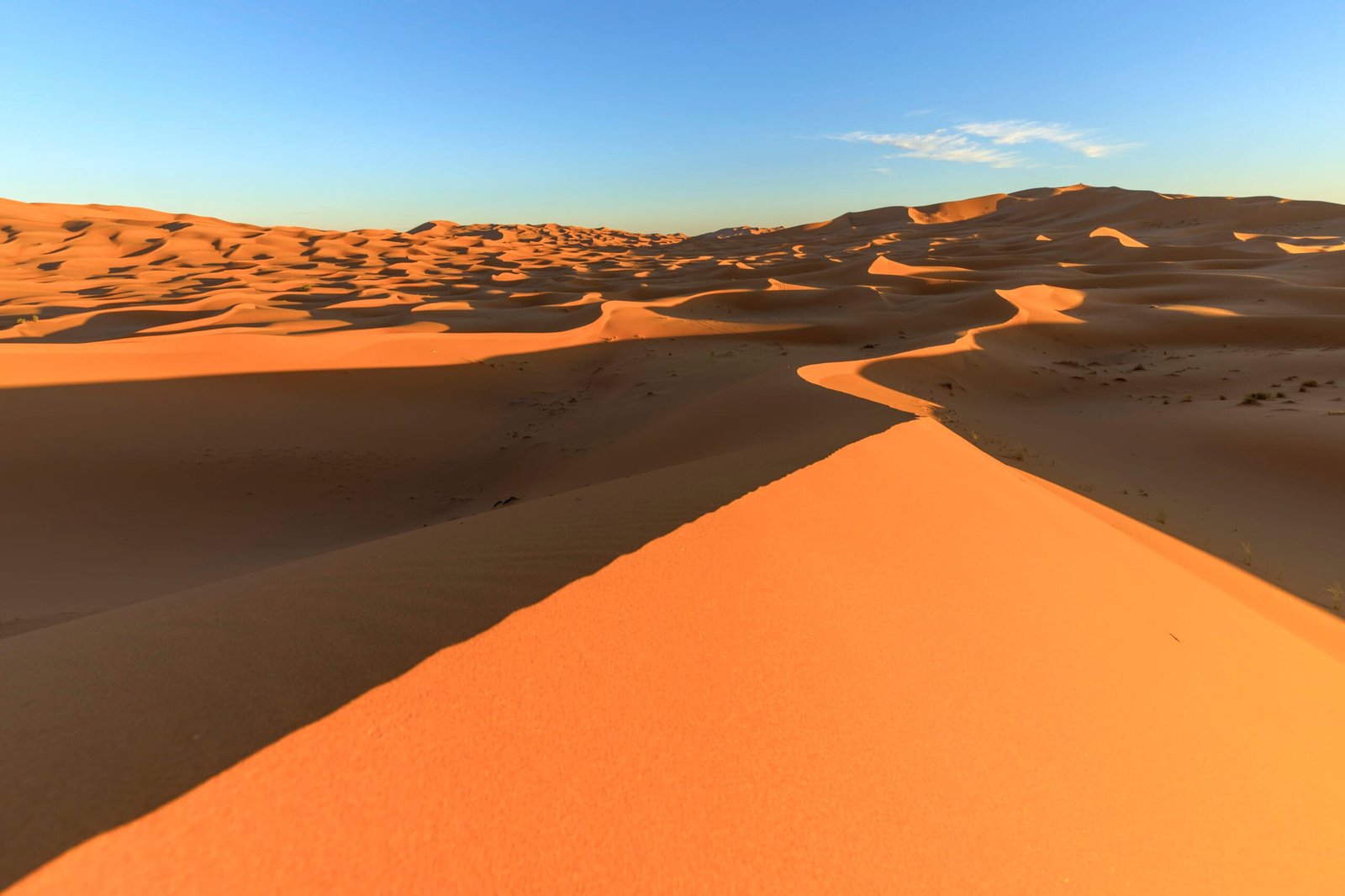
Gaze upon the colossal, wind-sculpted orange waves of the Erg Chebbi dunes in Merzouga, where the silent expanse of the Sahara Desert meets the horizon in a breathtaking display of color. Located in southeastern Morocco close to the Algerian border, this tiny desert outpost serves as the ultimate gateway to the sands of the Sahara. It is a destination characterized by shifting peach-colored dunes rising up to **150 meters** high, where the rhythmic sway of camel caravans and the crackle of campfire music under a brilliant canopy of stars create a magical, timeless atmosphere.
This remote wilderness is perfect for adventure seekers, couples, and stargazers who want to experience the quiet beauty of the desert. The atmosphere feels silent, vast, and mystical, dominated by the changing colors of the sand and the ancient nomadic hospitality of the local Berber and Gnawa residents. While reaching this remote village requires a long overland journey, travelers who make the trip will discover a landscape of sand surfing, nomadic encampments, and unforgettable desert sunrises.
Quick Facts
| Region | Drâa-Tafilalet |
| Best time to visit | October to November or March to May (mild daytime temperatures, warm desert nights) |
| Language | Darija, Hassaniya, Shilha Berber, French |
| Currency | Moroccan Dirham (MAD) |
| Known for | Erg Chebbi dunes, camel trekking, Berber desert camps, stargazing, Gnawa music |
| Day trips | Rissani holy town (**40 km**), Erfoud fossil town (**55 km**), Khamlia Gnawa village (**7 km**) |
Top Things To Do in Merzouga
Erg Chebbi Dunes
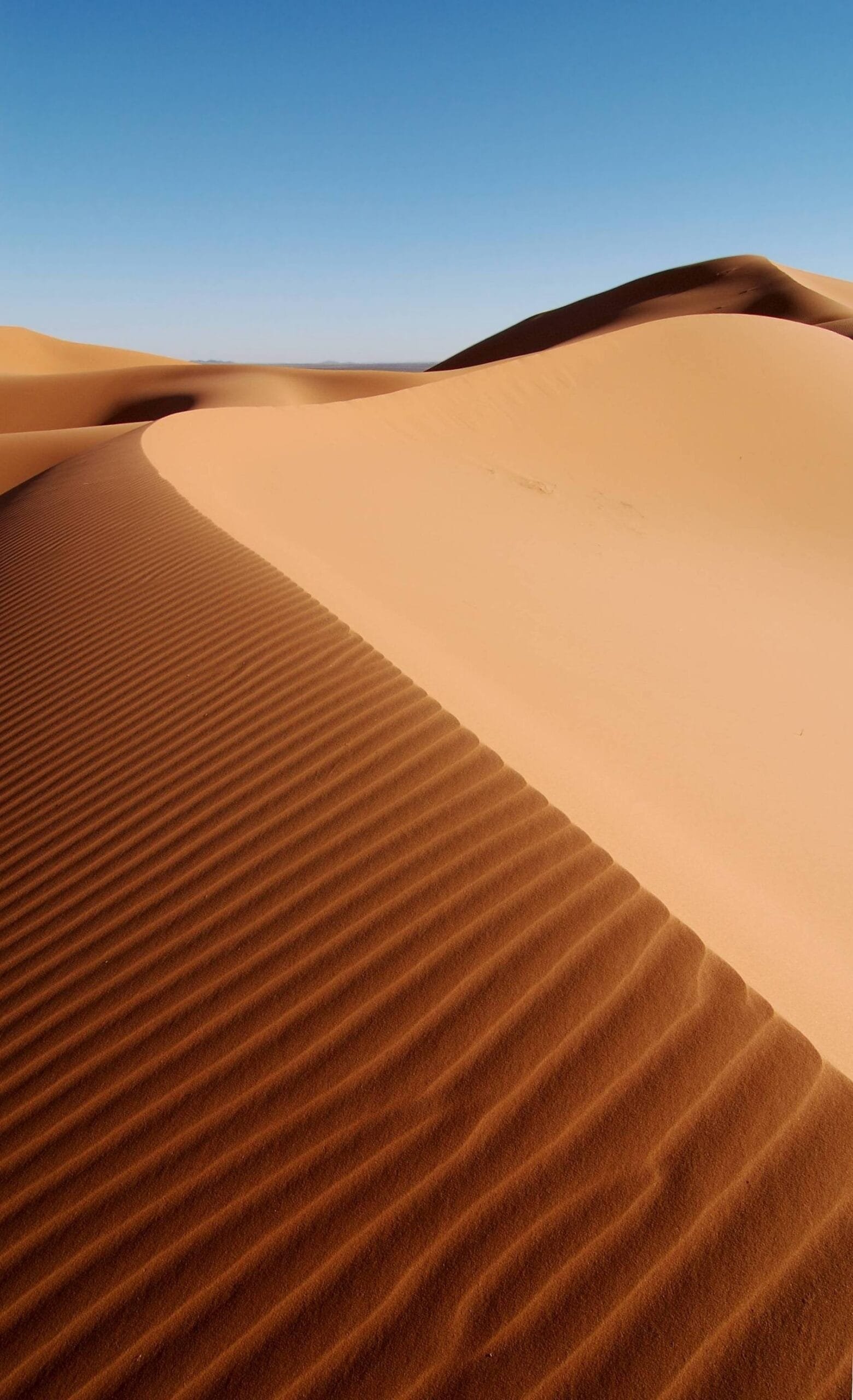
This spectacular dune field stretches **28 km** from north to south and rises to heights of **150 meters**, offering the most iconic desert landscapes in Morocco. The sand changes color constantly throughout the day, shifting from pale yellow at noon to deep orange and crimson at sunset. Climbing to the top of the highest dunes offers panoramic views over the vast Saharan landscape.
Insider tip: Begin your climb to the highest dune at least 45 minutes before sunrise to watch the shadow line sweep across the orange dunes.
Camel Trekking at Sunset
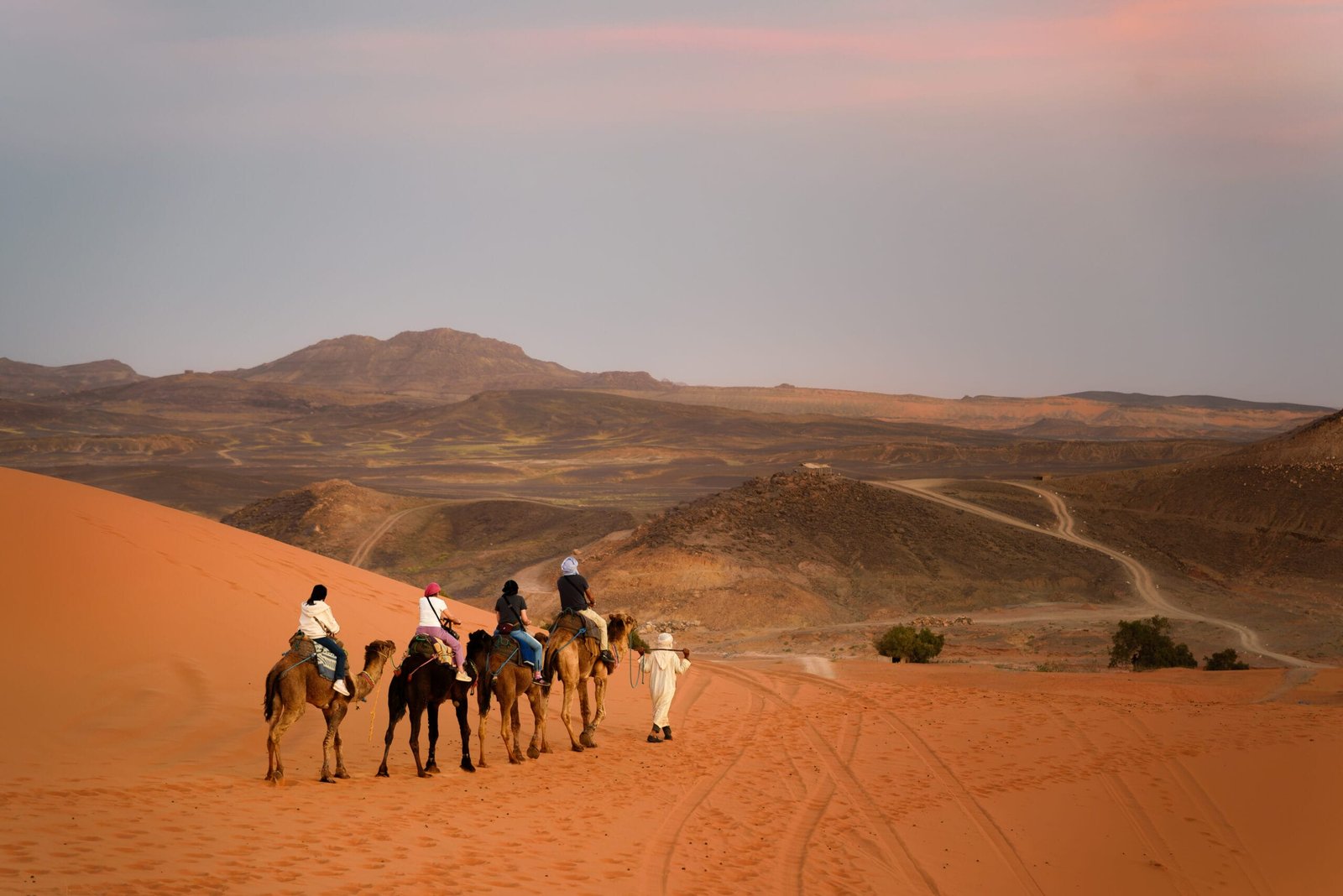
Riding a camel caravan into the Erg Chebbi dunes is the classic way to experience the scale and peace of the Sahara. The slow, rhythmic pace of the camels allows you to appreciate the silence of the desert as the sun drops below the sandy horizon. The trek typically takes you from the village hotels to your overnight desert camp.
Insider tip: Wear loose, long pants and bring a traditional cotton nomad scarf (cheche) to wrap around your face to protect against sun and wind-blown sand.
Overnight in a Berber Desert Camp
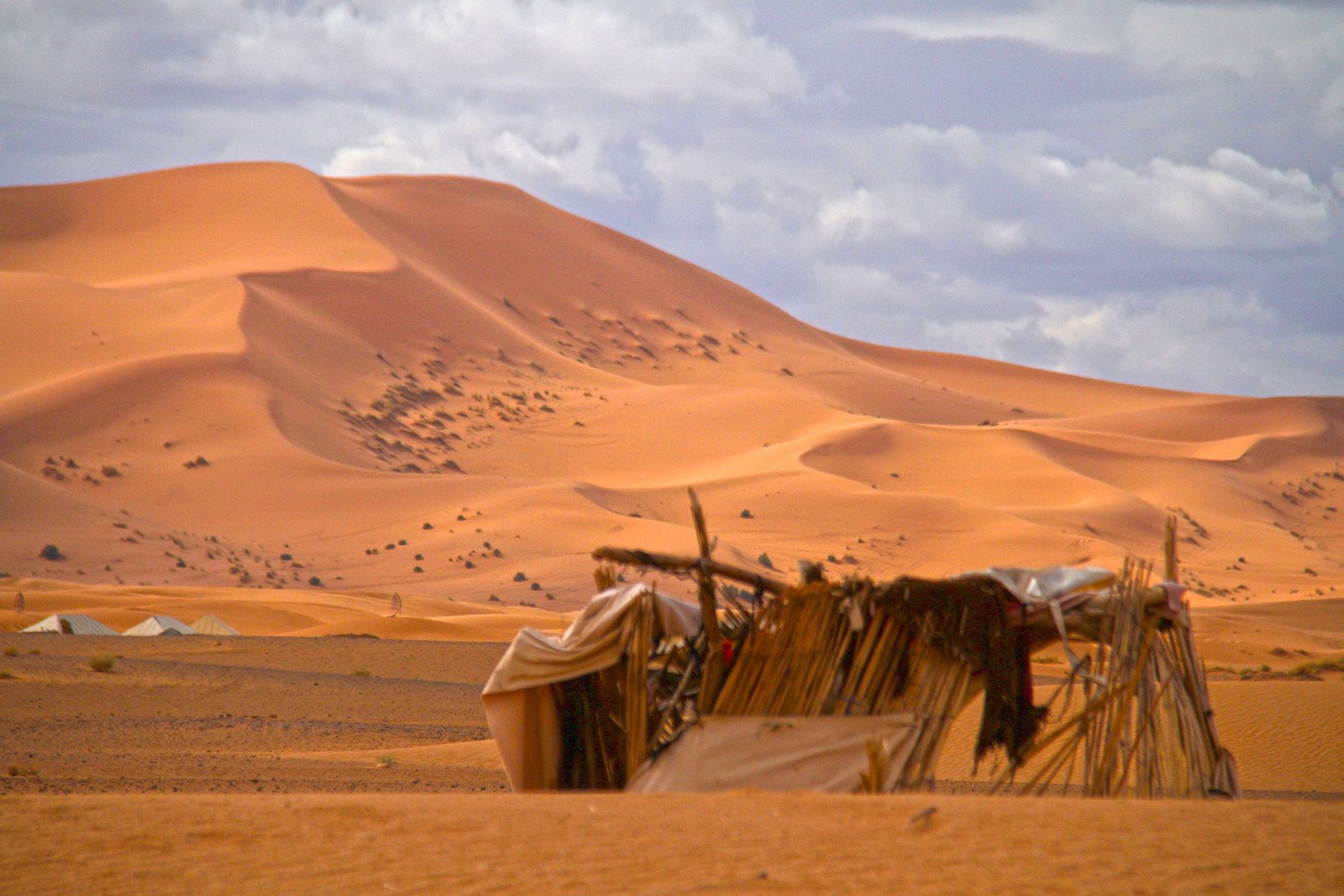
Staying in a traditional desert camp allows you to experience nomadic life under a dark, starry sky. The camps range from rustic wool tents to luxury glamping setups featuring private bathrooms, hot water, and king-size beds. The evenings feature traditional Berber music around a central campfire, followed by incredible stargazing away from all light pollution.
Insider tip: Choose a luxury camp if you prefer private toilet facilities, as standard budget camps typically have shared dry toilets outside the tents.
Khamlia Gnawa Village
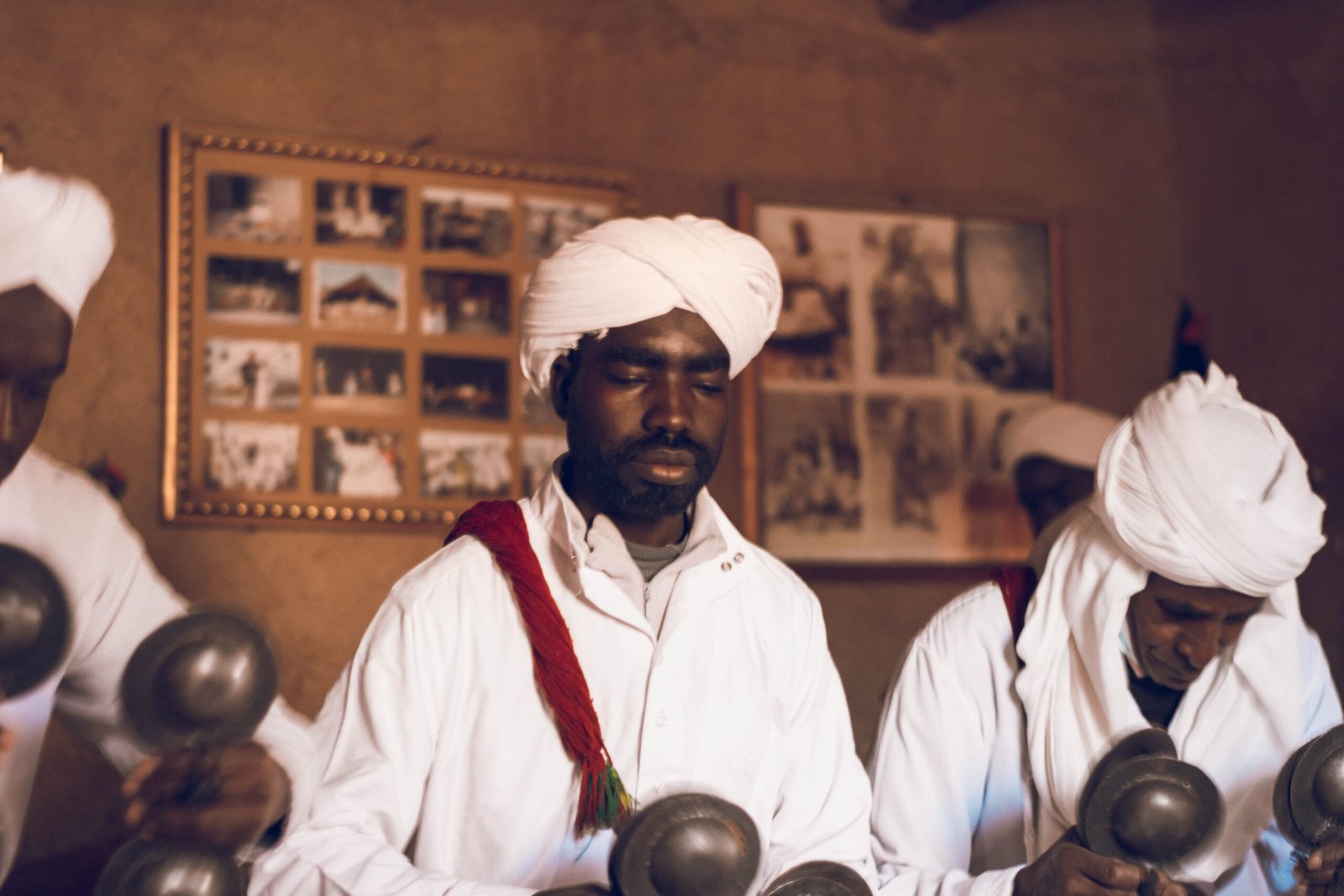
Located just **7 km** south of Merzouga, this tiny desert village is inhabited by descendants of former slaves who maintain their unique musical traditions. Visitors can sit in their communal house to enjoy the hypnotic, rhythmic sounds of Gnawa music played with metal castanets (qraqeb) and three-stringed lutes (gimbri). It offers a wonderful, welcoming cultural experience.
Insider tip: While the musical performances are free, it is customary to leave a tip of 50-100 MAD in the contribution box to support the village school.
Sandboarding down the Dunes
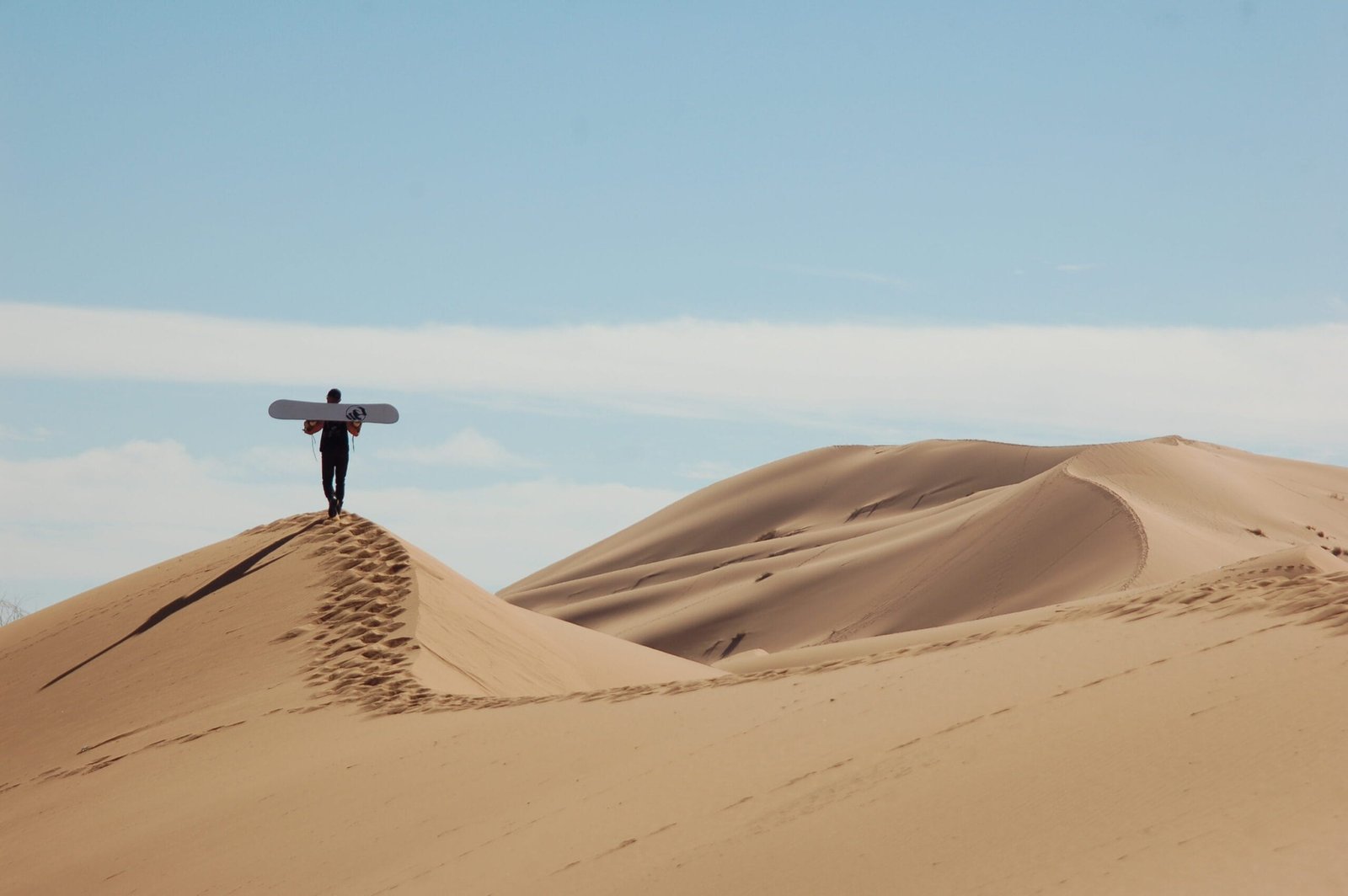
For active travelers, sliding down the steep faces of the Erg Chebbi dunes on a wooden snowboard offers a thrilling desert sport. Most desert camps and hotels rent out sandboards, allowing you to climb the peaks and glide down the fine orange sand. It is a fun activity that requires no previous snowboarding experience.
Insider tip: Apply wax to the bottom of the board to slide faster, and make sure to wear tight sunglasses to keep flying sand out of your eyes.
4×4 Desert Safari & Nomadic Encounters
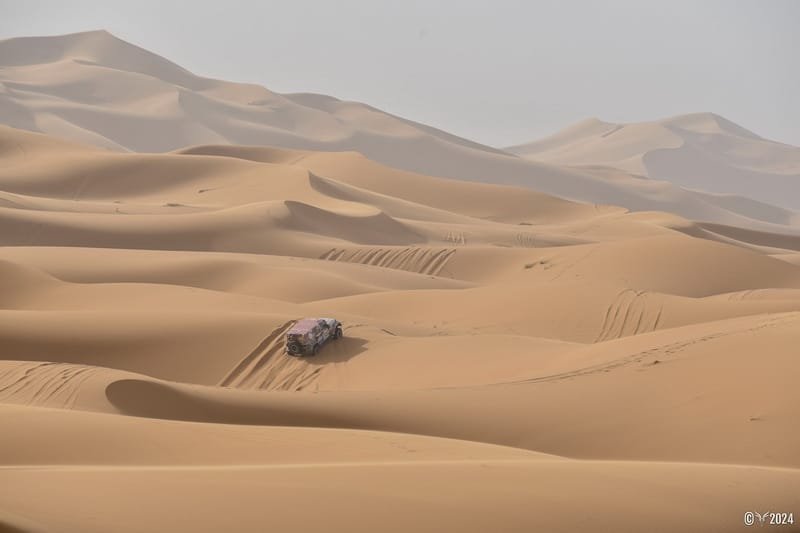
Taking a guided 4×4 tour allows you to explore the vast stony plains (reg) and dry salt lakes surrounding the Erg Chebbi dunes. The tours typically include stops at abandoned coal mines (M’Fis), meetings with nomadic families living in tents, and views of the desert boundaries. The off-road driving offers an exciting desert adventure.
Insider tip: Book a driver who is a native Berber from the area, as they know the best off-road tracks and can facilitate respectful visits to nomad families.
Best Time To Visit
Merzouga experiences extreme desert weather, with scorching summers and cold winter nights, making seasonal planning vital. Autumn (October to November) and Spring (March to May) are the best times to visit. Daytime temperatures average a comfortable 24°C to 28°C, and nighttime temperatures hover around 12°C, making camel rides and sleeping in tents very pleasant.
Winter (December to February) brings clear, sunny days averaging 16°C, but temperatures drop dramatically to 2°C to 5°C at night. Because desert tents are often unheated, winter nights require heavy sleeping bags and thermal clothing. Summer (June to August) is extremely hot, with daytime temperatures regularly exceeding 45°C. Many desert camps close during these months, and camel trekking is only possible in the early morning or late evening. We recommend visiting in October to enjoy warm, pleasant days, comfortable tent sleeping conditions, and clear night skies for stargazing.
How To Get There
By Plane
Merzouga has **no airport**. The closest airport is **Errachidia Moulay Ali Cherif Airport (ERH)**, located **125 km** north of the village center. The airport receives domestic flights from Casablanca. A grand taxi from Errachidia airport to Merzouga costs a flat rate of around **400 MAD to 500 MAD** and takes **1.5 hours**.
By Train
There are **no rail lines** leading to the southeastern desert region. The nearest train station is located in **Fes** or Marrakech. From these hubs, you must complete the journey by long-distance bus or rental car.
By Bus
Long-distance buses run daily from major cities. The premium operator **Supratours** runs a direct daily bus from Marrakech (**12 hours**, **240 MAD**) and Fes (**10 hours**, **200 MAD**). The bus drops you directly in Merzouga village, where your desert guide will meet you.
By Car
If you drive, Merzouga is reached via the **N13 national road** from Midelt and Errachidia. The drive from Fes covers **460 km** of scenic mountain and desert roads, taking approximately **7.5 hours**. Driving from Marrakech covers **560 km** via the N9 and N10 highways, taking **9 hours** over the High Atlas Mountains.
Where To Stay
Budget (under 300 MAD/night)
For budget accommodations, explore the guesthouses (Auberges) located in **Merzouga village** along the edge of the dunes. These properties offer traditional mud-brick design, clean rooms, and immediate access to the sand. Look for properties that offer rooftop terraces and include dinner and breakfast.
- Auberge Kasbah Hassilabied: Located in the quiet village of Hassilabied, this kasbah hotel offers clean double rooms, a pool, and local hospitality starting around **260 MAD** per night.
- Dar Merzouga: A friendly budget guest house inside the village, offering cozy rooms, desert tours, and excellent home-cooked tagines starting at **180 MAD** per night.
Mid-range (300-800 MAD/night)
The best area for mid-range stays is the **Hassilabied** district or the beachfront auberges along the western edge of the Erg Chebbi dunes. Properties in this bracket offer private bathrooms, air conditioning, swimming pools, and desert views.
- Kasbah Mohayut: Positioned directly at the edge of the dunes, this kasbah features a beautiful swimming pool, traditional decor, and excellent dining starting at **550 MAD** per night.
- Riad Madu: A stylish riad featuring spacious rooms, beautiful courtyard design, and immediate dune access starting around **720 MAD** per night.
Luxury (800+ MAD/night)
For luxury, choose premium **desert camps** located deep in the Erg Chebbi dunes, or 5-star Kasbah resorts along the dune edge. Staying here guarantees private luxury tents with en-suite bathrooms, hot running water, heated pools, and fine dining.
- Merzouga Luxury Desert Camp: A spectacular camp nestled deep in the dunes, featuring private canvas tents, king-size beds, hot showers, and gourmet dinners starting at **1,600 MAD** per night.
- Kasbah Tombouctou: A luxury hotel constructed like a desert fortress, featuring a large pool, high-end spa, and views over the sand starting at **1,200 MAD** per night.
Where To Eat & Local Food
Merzouga’s culinary scene features hearty Berber dishes designed for desert travel. Do not miss:
- Madfouna (Berber Pizza): The local specialty, consisting of a double-layered flatbread stuffed with spiced beef, eggs, almonds, onions, and fat, baked in a traditional clay oven.
- Desert Lamb Tagine: A rich, slow-cooked lamb tagine prepared with prunes, almonds, and desert spices.
- Nomadic Flatbread: Traditional unleavened bread baked directly on hot sand and coals, brushed with olive oil and cumin.
- Harira: A rich, tomato-based soup loaded with lentils, chickpeas, and fresh herbs, served with sweet dates.
For dining, avoid the expensive hotel dining rooms, which often charge high prices for average buffet food. Instead, head to the local cafes in **Merzouga village center** for fresh grilled skewers, or try the simple restaurants in **Rissani** for authentic Madfouna. Always buy fresh dates from the Rissani market in autumn, and try the local desert mint tea, which is stronger than the northern version.
Practical Tips
- Safety: Merzouga is exceptionally safe for tourists, with a very welcoming local community. The primary hazards are sun exposure and dehydration. Always carry at least 2 liters of water when walking in the dunes, and use high-factor sunscreen.
- Dress Code: The desert region is traditional. Dress conservatively when exploring the villages by covering your shoulders and knees. On camel treks, wear long pants to prevent saddle chafing.
- Best Neighborhoods: Stroll the quiet lanes of **Hassilabied** for local gardens, explore **Khamlia** for music, and walk the **Dune Edge** for sand views.
- Getting Around: The village is small and easily walked. To travel to the dunes or camps, you will use camels or 4×4 vehicles. For local travel between villages, hire a blue grand taxi from the main stand.
- Tipping: Tipping is common. Leave **5% to 10%** at casual cafes and restaurants, and tip your camel guide **50-100 MAD** at the end of the trek.
- Useful Phrases: Use **”Shokran”** (Thank you), **”Bshal hada?”** (How much is this?), and **”Sbah lkhayr”** (Good morning) to communicate.
- What to Avoid: Avoid walking into the dunes alone without a guide in the late afternoon, as wind can erase footprints and lead to disorientation. Avoid buying “fossil” souvenirs from roadside vendors without negotiating the price first.
Planning Your First Trip with Klook?
Use the link below to sign up and book your activities with Klook to claim exclusive discounts and promo offers on your tours.
Claim Discount & Book NowFrequently Asked Questions
Q: Is merzouga safe for tourists?
A: Yes, Merzouga is exceptionally safe for tourists, with a very low crime rate and a friendly local population. The main safety concern is the desert sun, so you should always carry plenty of water and wear sun protection.
Q: How many days do I need in merzouga?
A: You need two days to take a camel trek, spend a night in a desert camp, watch the sunset, and visit the musicians in Khamlia. If you want to take a 4×4 desert safari or visit Rissani, extend your stay to three days.
Q: What is merzouga known for?
A: Merzouga is famous for being the gateway to the spectacular Erg Chebbi dunes, which are some of the tallest sand dunes in Morocco. It is also well-known for camel treks, overnight desert camps, and Gnawa music.
Q: What is the best time to visit merzouga?
A: The best time to visit Merzouga is from October to November or March to May when daytime temperatures are warm and pleasant. Summer is extremely hot, with temperatures exceeding 45°C, while winter nights can drop to freezing.
Q: How do I get from Marrakech to merzouga?
A: You can take a direct daily Supratours bus from Marrakech, which takes twelve hours and costs 240 MAD. Alternatively, you can drive via the N9 and N10 highways, taking approximately nine hours.
Q: Is merzouga worth visiting?
A: Yes, Merzouga is highly worth visiting to experience the magnificent scale and silence of the Sahara Desert. Spending a night in a desert camp under the stars is one of Morocco’s most memorable travel experiences.