
Marrakesh Travel Guide
Morocco’s Vibrant Red City
Introduction
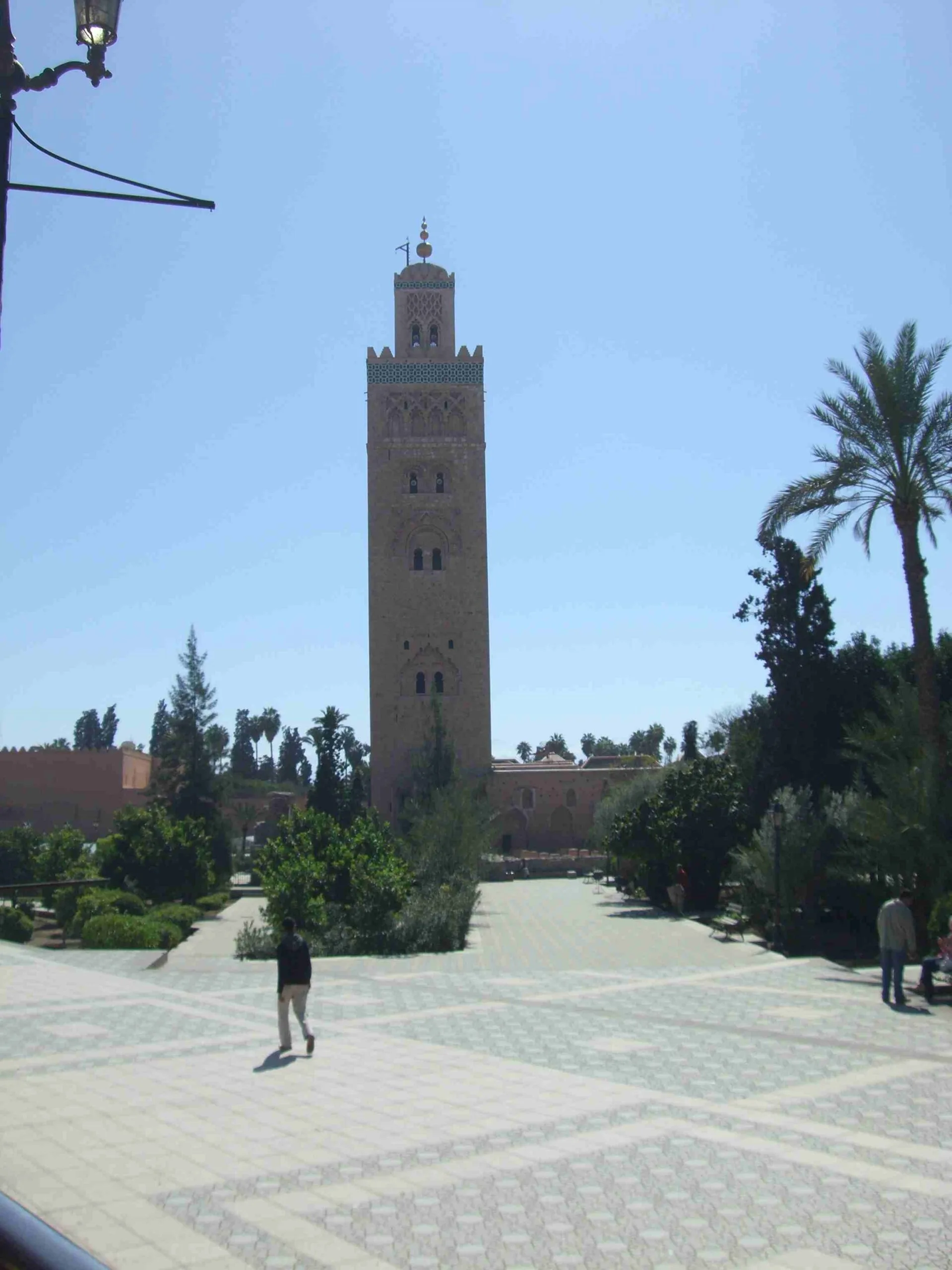
Step into the intoxicating, sensory kaleidoscope of the “Red City,” where massive pink clay ramparts enclose a roaring medieval theater of street life. As Morocco’s most famous imperial capital, Marrakesh commands attention with the chaotic energy of Jemaa el-Fnaa square, where snake charmers, acrobats, and food stalls create a nightly spectacle under the shadow of the Koutoubia minaret. It is a destination where ancient clay arches frame modern luxury boutiques, and the sound of rumbling motorbikes echoes through narrow, spice-scented alleyways.
This vibrant enclave is perfect for cultural explorers, shoppers, and luxury travelers who want to experience the dramatic, historic heart of Morocco. The atmosphere is intense, warm, and distinctly theatrical, offering a mix of Andalusian-Moroccan palaces, green courtyard gardens (Riads), and busy souks. While the hectic energy and eager street sellers can feel overwhelming, travelers who navigate the city will discover peaceful garden sanctuaries, historic tombs, and a legendary culinary scene.
Quick Facts
| Region | Marrakech-Safi |
| Best time to visit | September to November (pleasant autumn days) or March to May (warm spring temperatures, flowers) |
| Language | Moroccan Arabic (Darija), Tashelhit (Shilha Berber), French, English |
| Currency | Moroccan Dirham (MAD) |
| Known for | Jemaa el-Fnaa, Riads, Bahia Palace, spice souks, red clay architecture |
| Day trips | Ourika Valley (**45 km**), Ouzoud Waterfalls (**150 km**), Essaouira coastal town (**175 km**) |
Top Things To Do in Marrakesh
Jemaa el-Fnaa Square
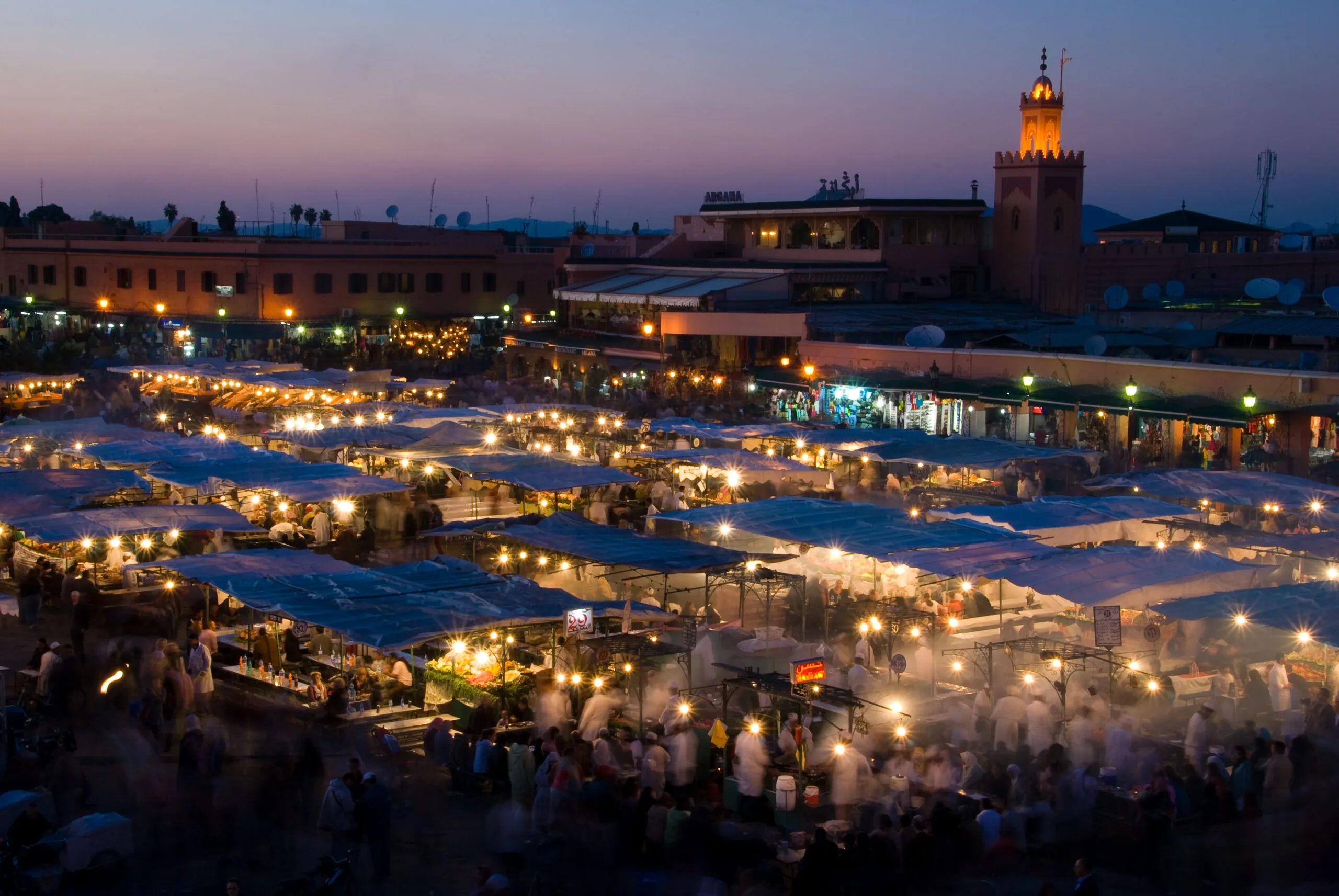
This massive public square is the cultural heart of Marrakesh, serving as an open-air theater that has functioned for over a thousand years. As the sun sets, the square fills with storytellers, musicians, henna artists, and dozens of smoking food stalls selling grilled meats. It is a UNESCO-recognized space of oral history and living culture.
Insider tip: Skip the street acts that try to put monkeys or snakes on you, and instead watch the square from a second-story cafe balcony while enjoying a fresh orange juice from Stall 4.
Bahia Palace
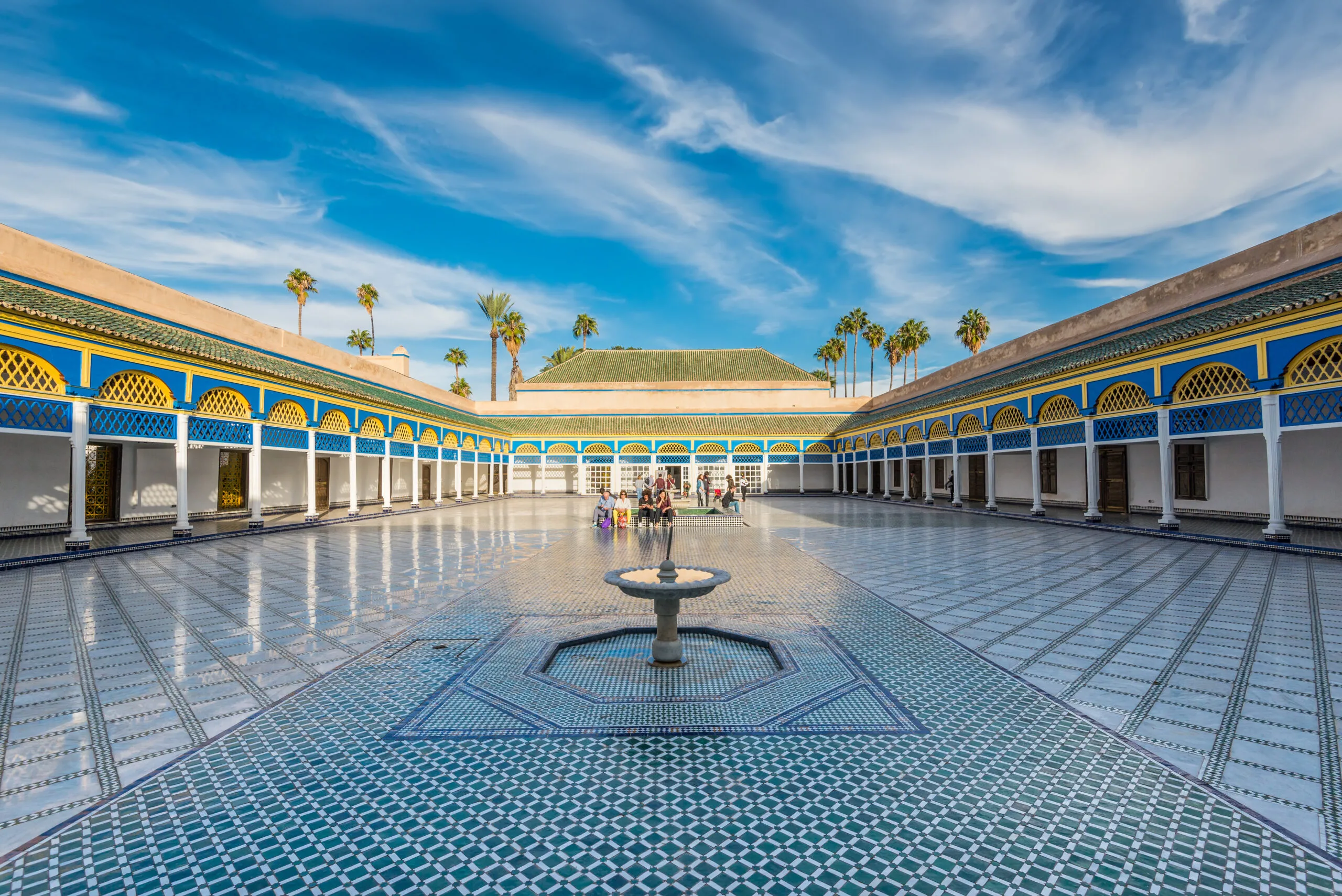
Built in the late 19th century for the Grand Vizier of the Sultan, this sprawling palace is a masterwork of Moroccan-Andalusian design. The complex covers eight hectares and features rooms decorated with painted cedarwood ceilings, carved marble, and brilliant zellige mosaic tiles. The central courtyard is paved with Italian Carrara marble and framed by blue-and-yellow arches.
Insider tip: Visit at 8:30 AM right when the gates open to explore the beautiful harem rooms in quiet isolation before the tour groups arrive.
The Souks of the Medina
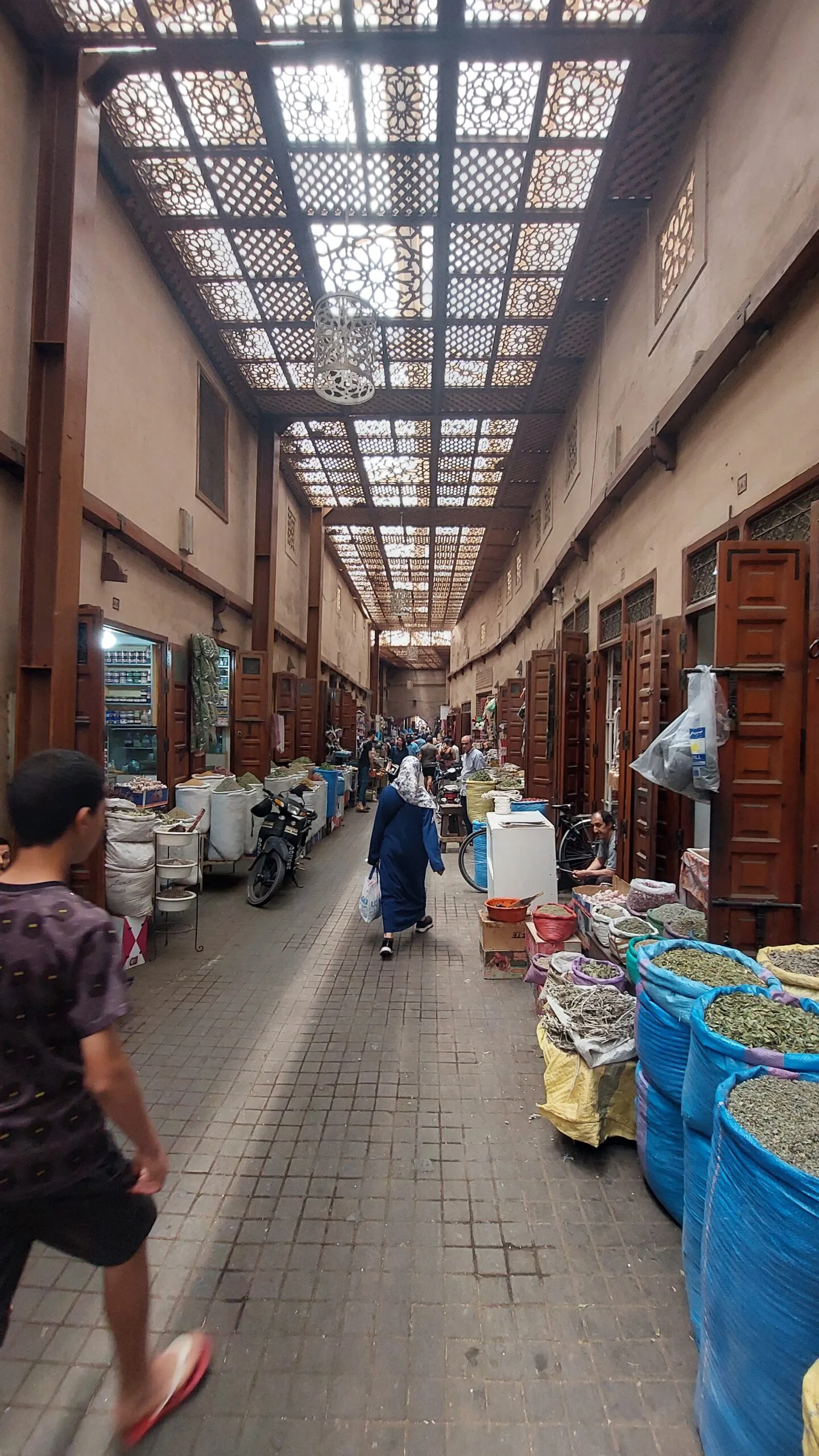
The historic markets of Marrakesh are a sprawling labyrinth of covered lanes sorted by trade, including leatherworkers, metalworkers, and spice sellers. Here, artisans continue to hammer brass lamps, dye wool skeins in bright colors, and weave traditional carpets by hand. It offers an incredible, energetic shopping experience where bargaining is a key custom.
Insider tip: If you get lost, do not panic; look for signs pointing to “Place Jemaa el-Fnaa” or ask a shopkeeper inside their stall for directions, rather than boys waiting in the alleys.
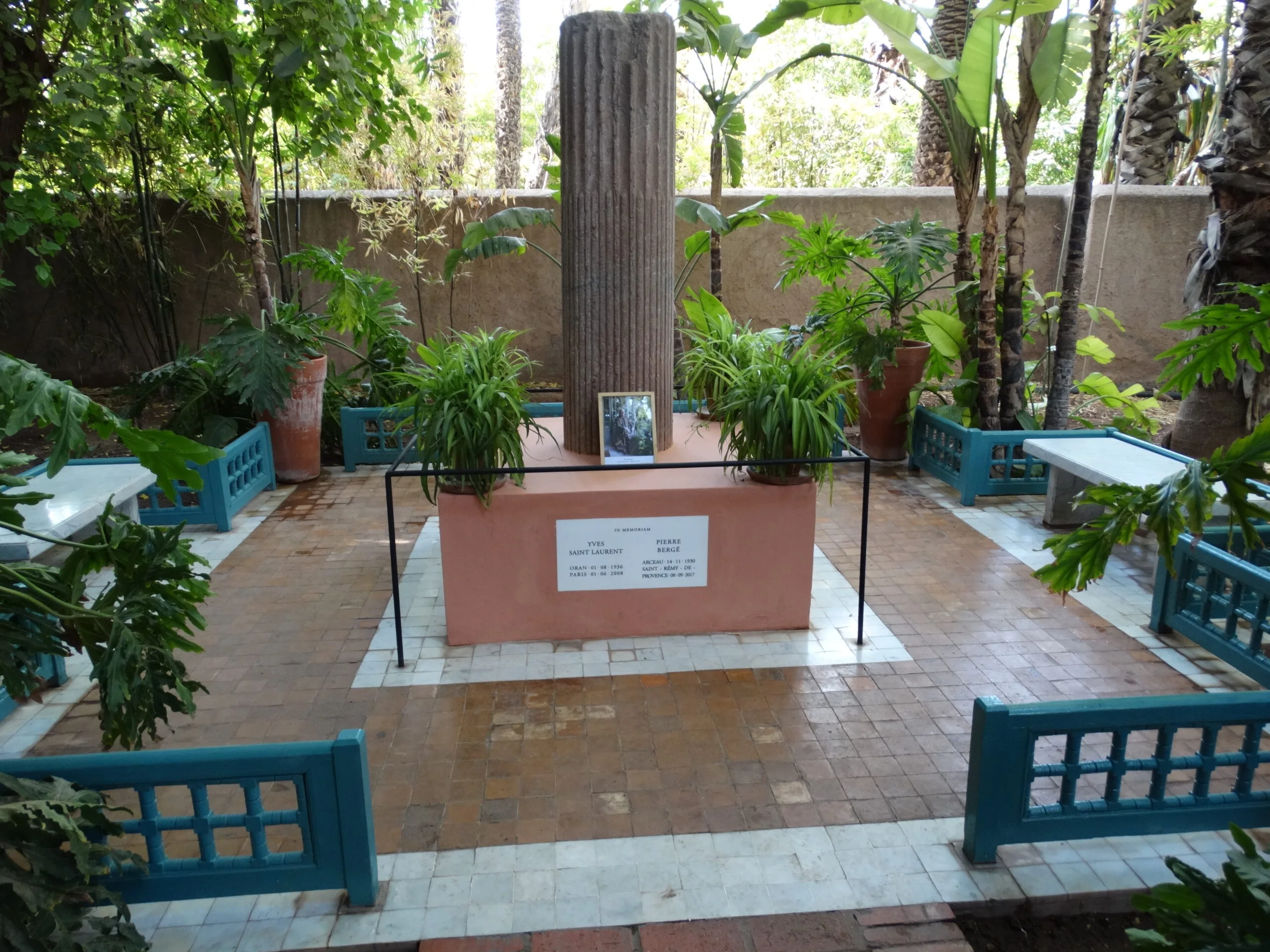
Jardin Majorelle & Yves Saint Laurent Museum
This beautiful botanical garden was created by French painter Jacques Majorelle in the 1920s and later restored by fashion designer Yves Saint Laurent. The garden features paths winding through giant bamboo, towering cacti, and water lily ponds, all framed by a striking villa painted in a cobalt shade known as Majorelle Blue. The nearby museum showcases the designer’s iconic fashion collections.
Insider tip: You must purchase tickets online in advance through their official website, as they no longer sell physical tickets at the gate.
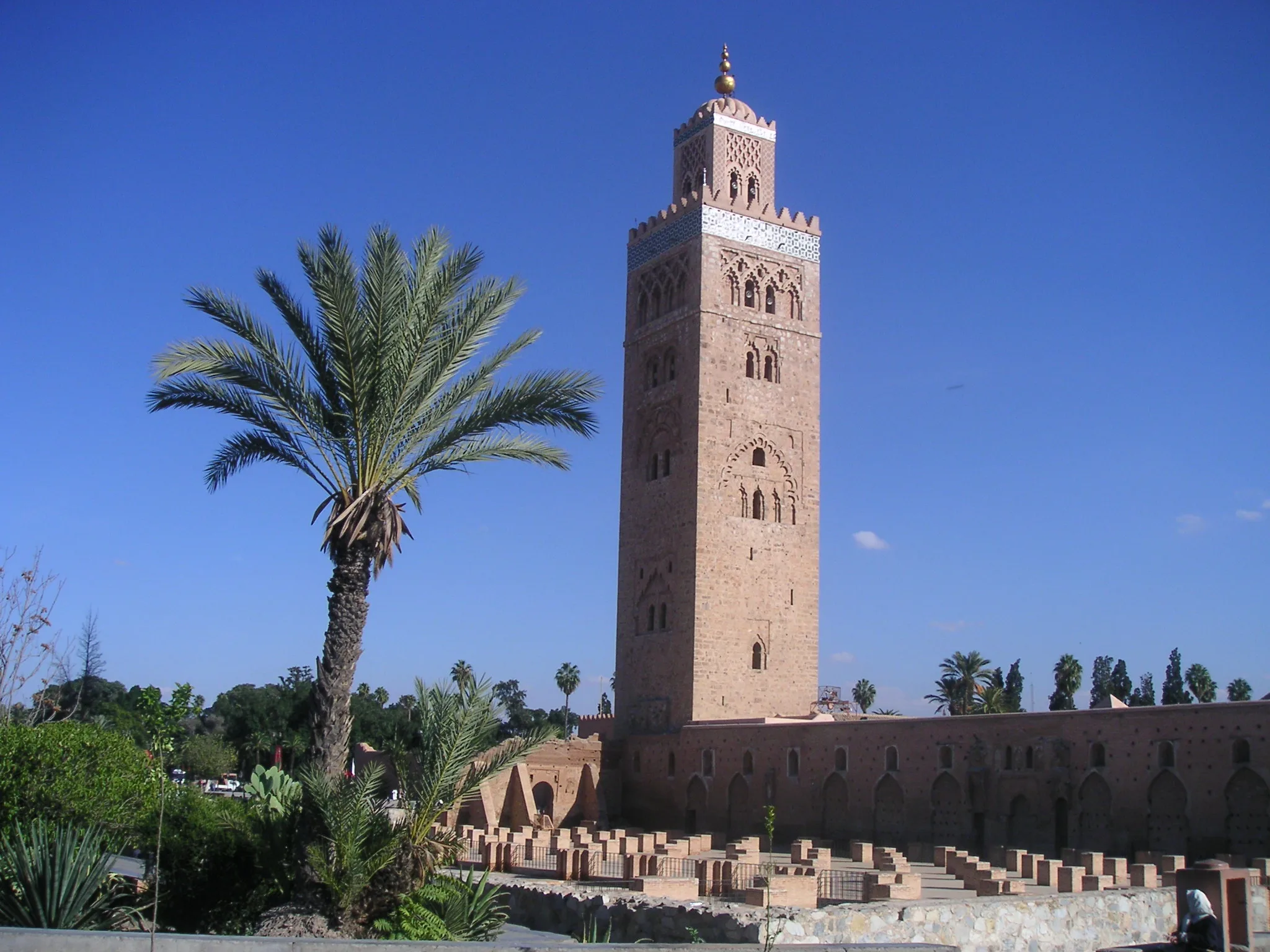
Koutoubia Mosque
The largest mosque in Marrakesh is a striking example of Almohad architecture, completed in the 12th century. Its towering minaret rises **77 meters** into the sky, serving as the city’s primary orientation point and the design model for Seville’s Giralda. While the interior is closed to non-Muslims, the surrounding rose gardens are open to all.
Insider tip: The gardens directly behind the minaret offer a beautiful, quiet spot for sunset photography when the stone minaret glows in warm red hues.
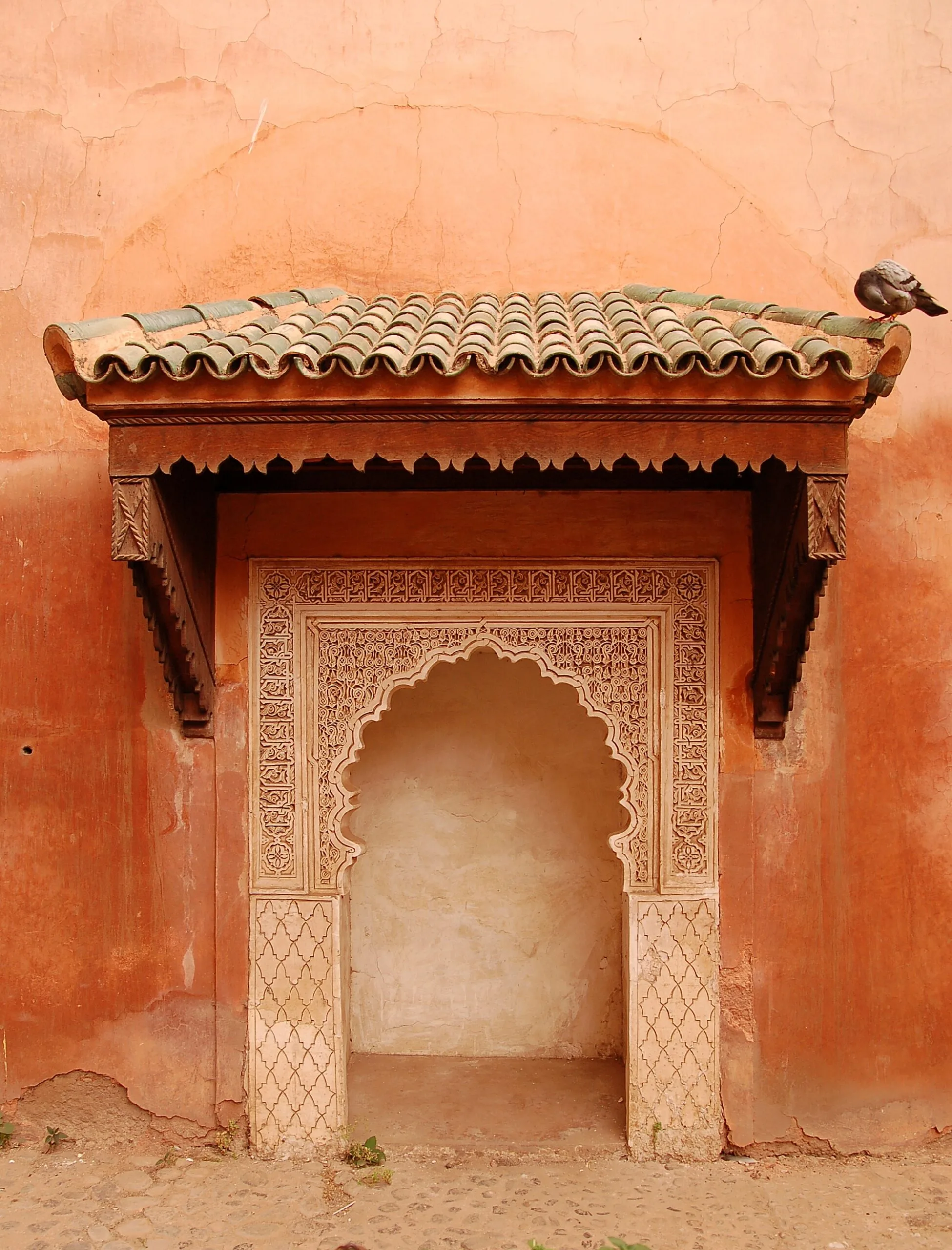
Saadian Tombs
This historic royal necropolis houses the tombs of the Saadian dynasty, sealed for centuries and rediscovered only in 1917. The complex features the spectacular Chamber of the Twelve Pillars, decorated with Italian marble columns, gilded honeycomb plasterwork, and carved cedarwood. The tombs sit in a quiet garden filled with rosemary and palm trees.
Insider tip: The queue to view the Chamber of the Twelve Pillars can be very long; visit during mid-day (1:00 PM to 2:00 PM) when most tour groups are eating lunch.
Best Time To Visit
Marrakesh experiences a semi-arid climate with extremely hot summers and mild winters, making seasonal planning essential for a comfortable visit. Spring (March to May) is the absolute best time to visit, with daytime temperatures averaging a comfortable 22°C to 26°C. The city parks are in full bloom, and the weather is perfect for walking the medina and taking day trips to the Atlas Mountains.
Autumn (September to November) is another excellent season, offering warm, sunny days (averaging 25°C) and cool evenings, with lower hotel prices after the summer rush. Summer (June to August) is extremely hot, with temperatures regularly exceeding 40°C (often reaching 45°C). Walking through the medina during mid-day is not recommended, and many traditional Riads can feel stuffy, though hotels with pools offer heavy discounts. Winter (December to February) is mild and sunny during the day (averaging 18°C), but temperatures drop to 6°C at night, requiring warm layers. We recommend visiting in October for the perfect blend of warm weather, lower crowd levels, and pleasant evenings.
How To Get There
By Plane
Marrakesh is served by **Marrakech-Menara Airport (RAK)**, located just **6 km** southwest of the city center. It is one of Morocco’s busiest airports, receiving direct flights from major European hubs. A licensed airport taxi to the medina costs a fixed rate of **100 MAD** during the day and **150 MAD** at night. Alternatively, take the **L19 Airport Express Bus** directly to Jemaa el-Fnaa for **30 MAD** round-trip, departing every 20 minutes.
By Train
The modern **Marrakech Train Station (Gare de Marrakech)** is located in the Ville Nouvelle (Gueliz). It is connected to the national ONCF rail network. While the high-speed Al Boraq train currently terminates in Casablanca, regular trains run daily from Casablanca (**2.5 hours**, **110-150 MAD**), Rabat (**3.5 hours**, **140-180 MAD**), and Fes (**6.5 hours**, **200 MAD**).
By Bus
The main bus terminal is located at Bab Doukkala, just north of the medina walls, while the premium **CTM** and **Supratours** bus companies operate from their own private terminals near the train station. Buses run daily to Essaouira (**3 hours**, **80-110 MAD**), Agadir (**3.5 hours**, **100-130 MAD**), and Ouarzazate (**4.5 hours**, **90-120 MAD**).
By Car
If you drive, Marrakesh is connected to Casablanca and Rabat by the modern **A3 toll highway (Auto-route)**. The drive from Casablanca covers **240 km** of excellent highway, taking approximately **2.5 hours**. Driving from Agadir via the A7 highway covers **250 km** and takes **3 hours** of driving. Tolls from Casablanca cost **80 MAD**.
Where To Stay
Budget (under 300 MAD/night)
For budget accommodations, look for small guest houses (Dars) in the **Kennaria** or **Bab Doukkala** neighborhoods of the medina. These residential areas are close to the main square but offer much lower rates than central Riads. Look for properties that offer traditional Moroccan breakfasts and rooftop terraces.
- Riad Dia: A lively, budget-friendly hostel located just steps from Jemaa el-Fnaa, offering clean dorms, a social courtyard pool, and free breakfast starting around **150 MAD** per night.
- Dar Yusuf: Positioned in a quiet medina lane, this guest house offers clean double rooms, traditional tilework, and a helpful local host starting at **250 MAD** per night.
Mid-range (300-800 MAD/night)
The best area for mid-range stays is the **Mouassine** or **Kasbah** quarters of the medina. These are historic, safe neighborhoods close to major attractions. Here, you will find beautifully restored Riads featuring private bathrooms, air conditioning, small plunge pools, and cooked breakfasts served on rooftop terraces.
- Riad Kniza: A beautifully restored 18th-century riad located in the medina, featuring traditional carvings, excellent service, and a cozy courtyard starting at **750 MAD** per night.
- Riad Bahia Salam: Positioned near the Bahia Palace, offering spacious rooms, an on-site hammam spa, and a pool starting around **650 MAD** per night.
Luxury (800+ MAD/night)
For luxury, choose grand Riads in the **Medina** or luxury resorts in the **Hivernage** and **Palmerie** districts. Staying here guarantees massive garden complexes, heated swimming pools, world-class spas offering private hammam treatments, and fine dining.
- La Mamounia: An iconic, historic luxury hotel located within the city walls, featuring legendary gardens, a world-class spa, and multiple fine dining restaurants starting at **5,500 MAD** per night.
- Royal Mansour: A spectacular luxury resort owned by the King of Morocco, where guests stay in private multi-story riads serviced by a network of underground tunnels, starting at **12,000 MAD** per night.
Where To Eat & Local Food
Marrakesh is famous for its unique street food and rich culinary traditions. Do not miss:
- Tanjia Marrakchia: The city’s signature dish, featuring beef or lamb seasoned with cumin, garlic, saffron, and preserved lemon, cooked slowly inside a clay jar in the ashes of a local hammam furnace.
- Mechoui: Slow-roasted whole lamb cooked in underground clay pits until the meat is exceptionally tender, served simple with cumin and salt.
- Harira: A rich, tomato-based soup loaded with lentils, chickpeas, and fresh herbs, served warm with sweet dates.
- Brochettes: Grilled skewers of spiced beef, lamb, or chicken, served hot with local flatbread and tomato-onion salad.
For dining, avoid the tourist-heavy restaurants directly lining the main square, which charge high prices for average food. Instead, head to the local grill stalls in the **Mechoui Alley** (near Jemaa el-Fnaa) for authentic roasted lamb, or explore the simple cafes in the **residential Mellah**, which serve fresh tagines and salads. Always buy fresh orange juice from the stalls in Jemaa el-Fnaa, and check if the restaurant cooks their Tanjia in a traditional hammam oven.
Practical Tips
- Safety: Marrakesh is generally safe, but pickpocketing is common in crowded souks and Jemaa el-Fnaa. Ignore aggressive street hustlers who offer to show you the way or tell you “the road is closed” to redirect you to their shops; politely but firmly decline.
- Dress Code: While the city is very international, the medina remains traditional. Dress respectfully by covering your shoulders and knees; avoid tight or revealing clothing when exploring historic areas.
- Best Neighborhoods: Stroll the historic **Mouassine** for shopping, explore the **Kasbah** for quiet cafes, and walk the **Gueliz** for modern dining and galleries.
- Getting Around: The medina is pedestrian-only and confusing, so you must walk. Wear comfortable walking shoes. For travel to the Ville Nouvelle or airport, use the red **Petit Taxis** which are metered, costing **10 MAD to 20 MAD**.
- Tipping: Tipping is common practice. Leave **5% to 10%** at casual cafes and restaurants, and round up the bill for taxi drivers.
- Useful Phrases: Use **”Shokran”** (Thank you), **”Bshal hada?”** (How much is this?), and **”La, Shokran”** (No, thank you) to communicate.
- What to Avoid: Avoid taking photos of snake charmers, monkeys, or street performers in Jemaa el-Fnaa without negotiating a price first, as they will aggressively demand large tips.
Planning Your First Trip with Klook?
Use the link below to sign up and book your activities with Klook to claim exclusive discounts and promo offers on your tours.
Claim Discount & Book NowFrequently Asked Questions
Q: Is marrakesh safe for tourists?
A: Yes, Marrakesh is generally safe for tourists, though petty scams and pickpocketing are common in Jemaa el-Fnaa and the souks. Always keep your valuables secure and politely decline aggressive street hustlers.
Q: How many days do I need in marrakesh?
A: You need two to three days to explore the main sights, including Jemaa el-Fnaa, Bahia Palace, Saadian Tombs, and the souks. If you plan to take day trips to the Atlas Mountains or Essaouira, extend your stay to five days.
Q: What is marrakesh known for?
A: Marrakesh is famous for Jemaa el-Fnaa square, its historic red clay architecture, and its sprawling spice souks. It is also well-known for its beautiful traditional Riads and the Jardin Majorelle.
Q: What is the best time to visit marrakesh?
A: The best time to visit Marrakesh is from March to May or September to November when temperatures are mild and comfortable. Summer is extremely hot, with temperatures regularly exceeding 40°C.
Q: How do I get from Marrakech to marrakesh?
A: This city is Marrakesh itself, so you are already here. If you travel from Marrakech Airport, take a licensed grand taxi for a fixed rate of 100 MAD to 150 MAD to reach the medina center.
Q: Is marrakesh worth visiting?
A: Yes, Marrakesh is highly worth visiting to experience its vibrant cultural history, historic palaces, and unique medina markets. It offers an energetic, unforgettable introduction to traditional Moroccan life.