By Abdelilah, Marrakech local guide : Last checked October 2026
This guide contains affiliate links. If you book through them, we may earn a commission at no extra cost to you. How we earn money.
Marrakech is where most trips to Morocco begin, and for good reason. Behind the pink walls of the medina you will find centuries old palaces, riads built around quiet courtyards and a main square that changes character from morning to midnight. It can also be loud, crowded and confusing on your first day. This Marrakech travel guide gives you what you need to enjoy the city on your own terms: what is worth your time, where to stay, how to get around and what things really cost.
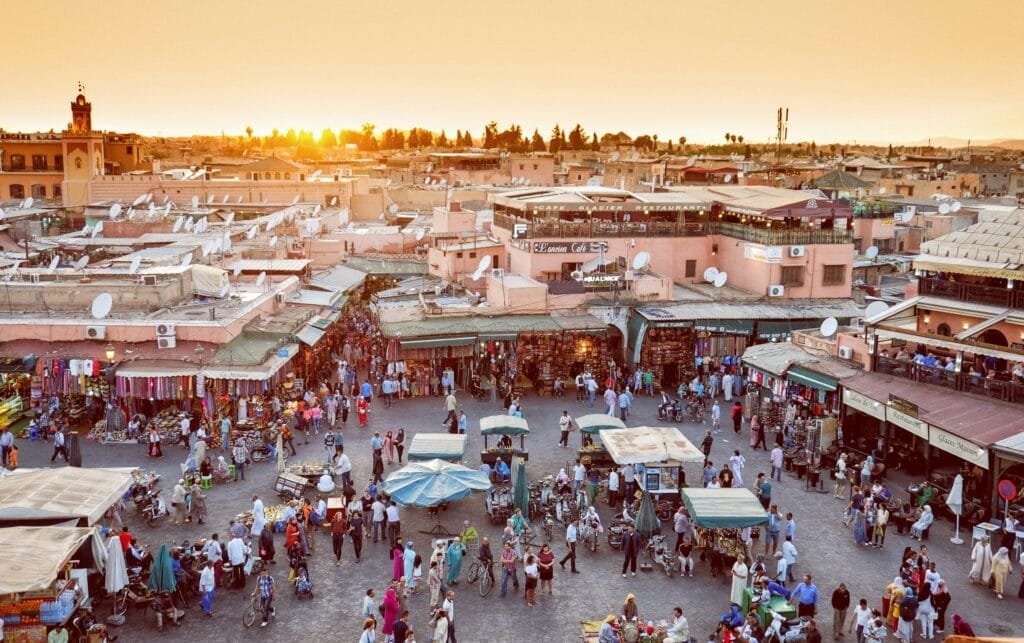
Marrakech at a glance
| Best for | First-timers, food, architecture and shopping |
| How long | 2 to 3 full days, plus day trips |
| Best time | March to May and October to November |
| Airport | Marrakech Menara (RAK), about 6 km from the medina |
| Getting around | On foot in the medina, petit taxis outside it |
| Language | Darija Arabic and Amazigh. French is widely spoken, English in tourist areas |
Why Marrakech is worth it
Marrakech packs an unusual amount into a small area. The medina, a UNESCO World Heritage site since 1985, holds most of the sights within walking distance of Jemaa el Fna, so you can see a lot without transport. Outside the walls, Gueliz and Hivernage offer modern cafes, galleries and easy taxis when you need a break from the crowds.
It is also the best base in the country for day trips. The High Atlas, the Agafay desert and the Ourika Valley are all close enough to visit and still be back for dinner.
An honest note: the first few hours can feel intense. Touts, motorbikes in narrow lanes and constant offers are normal here. Give yourself an easy first afternoon. The city gets much friendlier once you know its rhythm.
Top things to do in Marrakech
1. Jemaa el Fna
The main square is the heart of the medina. Mornings are calm, with orange juice stalls and a few performers. From late afternoon it fills with musicians, storytellers and smoke from the food stalls. Watch it from a rooftop cafe at sunset, then walk down for dinner. Skip photos with chained monkeys or snakes: you will be asked to pay, and the animals are poorly treated.
2. The souks
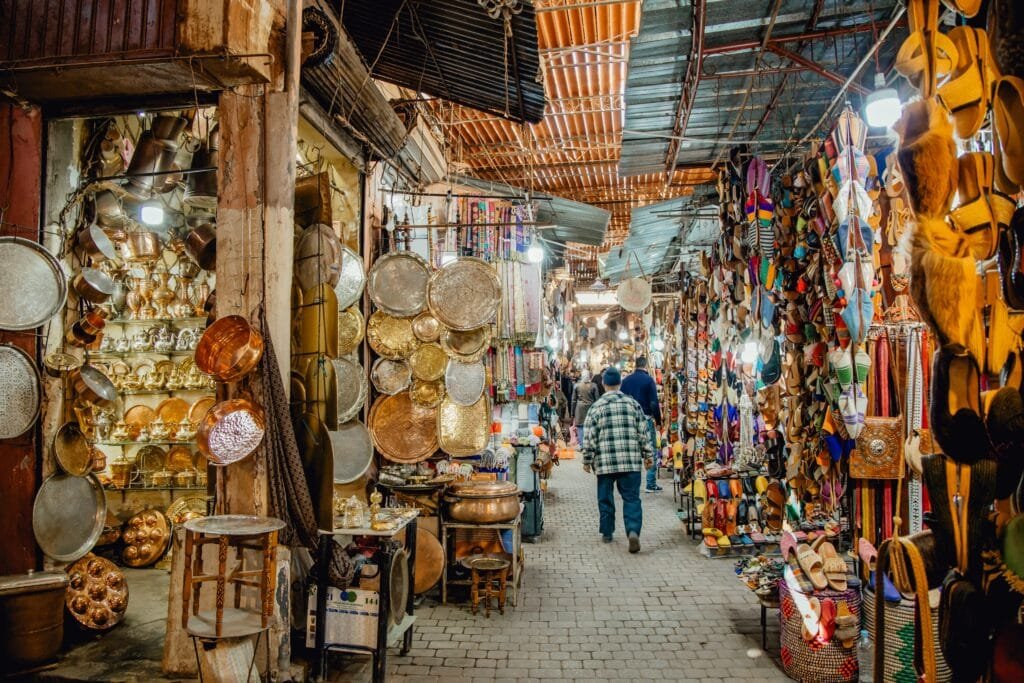
North of the square, the covered souks spread out in lanes loosely organised by craft: leather, lanterns, spices, carpets and metalwork. Getting lost is part of the experience, and phone maps work better than people expect. Look first, compare a few shops, and only start bargaining when you are ready to buy.
3. Bahia Palace
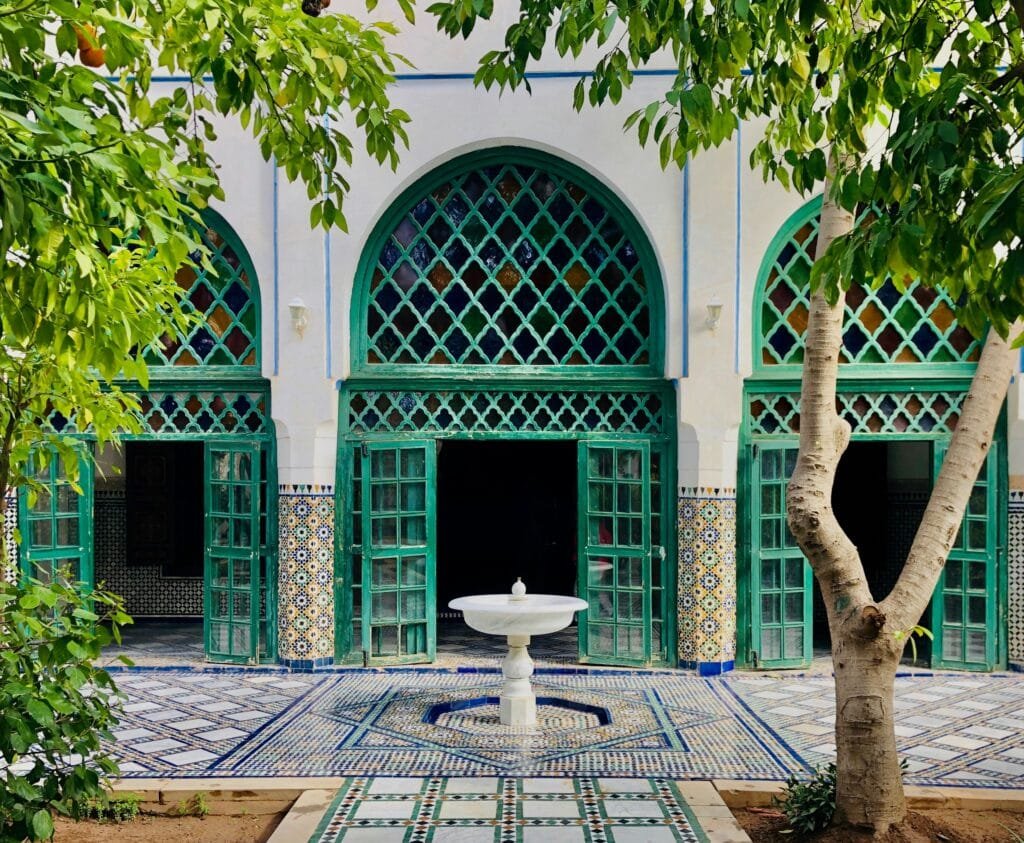
A 19th century palace of painted cedar ceilings, zellige tilework and shaded courtyards, built for the grand vizier Ba Ahmed. Arrive at opening time to see it before the tour groups. Entry is 100 MAD for foreign adults at the time of writing.
4. Ben Youssef Madrasa
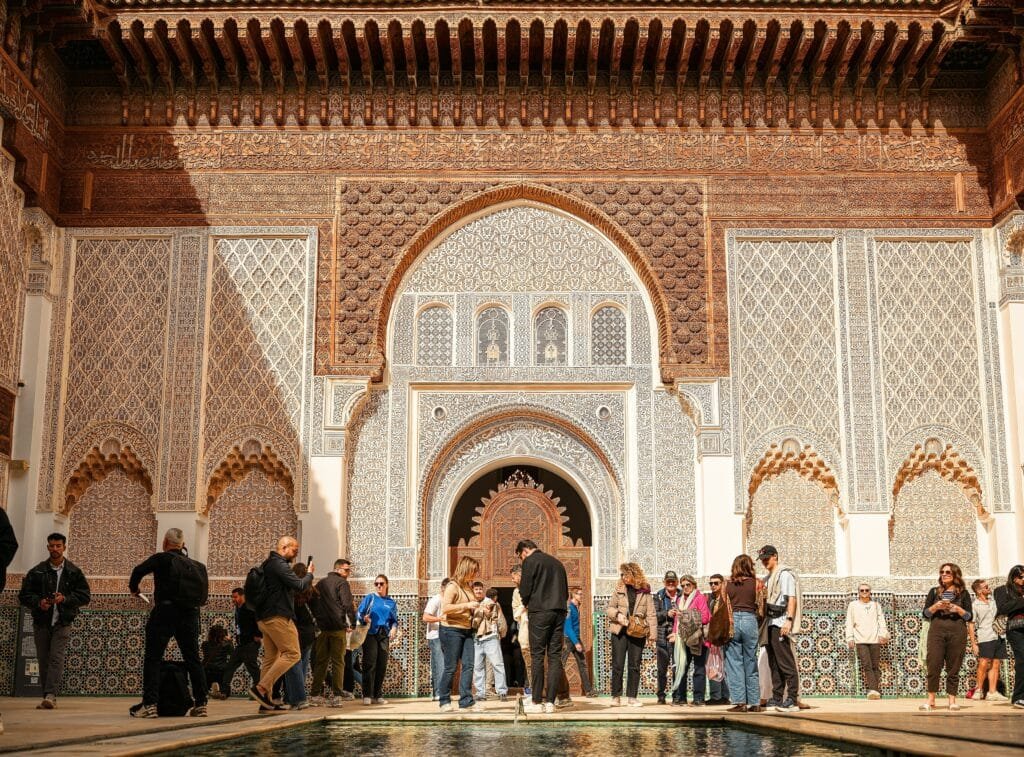
Once the largest Quranic school in Morocco, the madrasa is a masterclass in carved stucco, cedar and tile arranged around a reflecting pool. It is one of the few religious buildings in the city that non Muslims can enter. Entry is 50 MAD for foreign adults.
Prefer to explore at your own pace? Self-guided audio tours of the medina on WeGoTrip cover Bahia Palace, Ben Youssef and the souks from your phone, for around €10 at the time of writing. A good middle ground between wandering alone and hiring a guide.
5. Jardin Majorelle
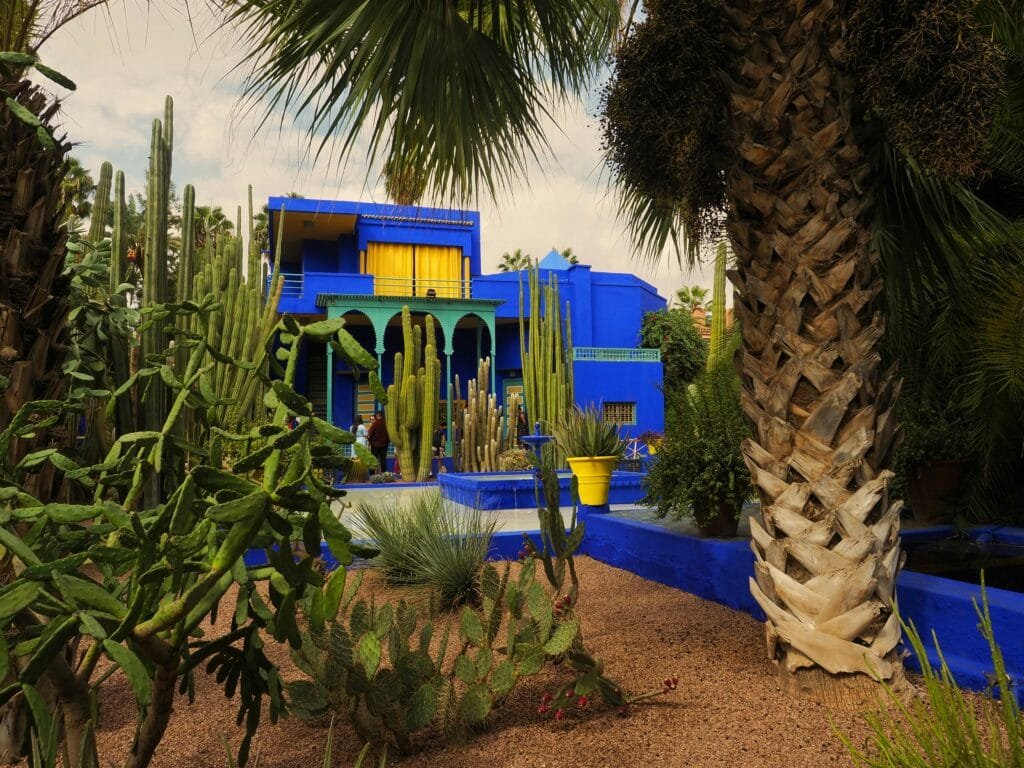
The cobalt blue garden created by painter Jacques Majorelle, and later restored by Yves Saint Laurent and Pierre Bergé, is the most visited sight in the city. Tickets are sold only online through the official Jardin Majorelle website. There is no ticket desk at the gate and time slots often sell out, so book a day or two ahead. The Yves Saint Laurent Museum next door and the Pierre Bergé Museum of Berber Arts inside the garden are worth adding.
6. Koutoubia Mosque
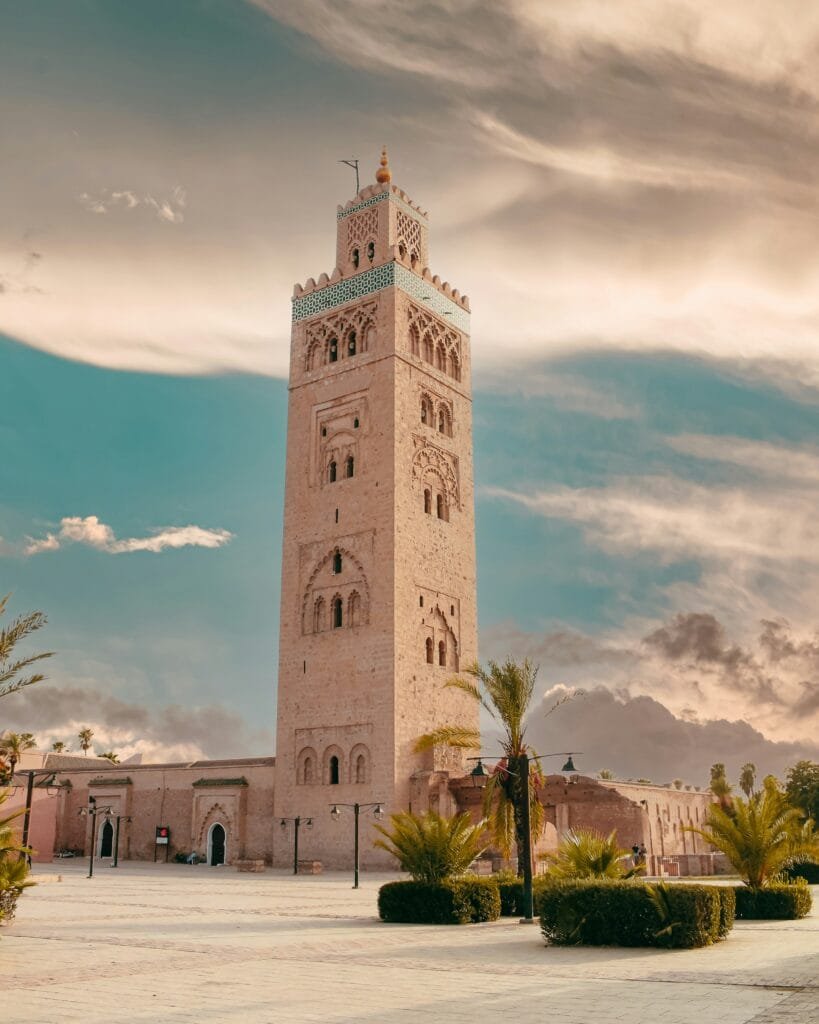
Its 12th century minaret is the landmark you will navigate by. Non Muslims cannot enter the mosque, but the gardens around it are pleasant in the late afternoon.
7. Saadian Tombs, El Badi Palace and the Mellah
Three sights in the south of the medina, a short walk apart. The tombs are small and ornate, El Badi is a vast ruined palace where storks nest on the walls, and the Mellah is the old Jewish quarter. Together they make an easy morning.
8. Le Jardin Secret
A restored garden in the middle of the medina, quieter than Majorelle and easy to combine with the souks. Climb the tower for views over the rooftops.
9. A hammam
A scrub and steam is one of the best ways to recover from a day in the souks. Neighbourhood public hammams are cheap and very local; spa hammams are more comfortable and better for a first visit. See our things to do guide.
Where to stay in Marrakech
Where you sleep shapes your trip more here than in most cities. The main choice is between the atmosphere of the medina and the convenience of the newer districts.
Medina riads: best for a first visit
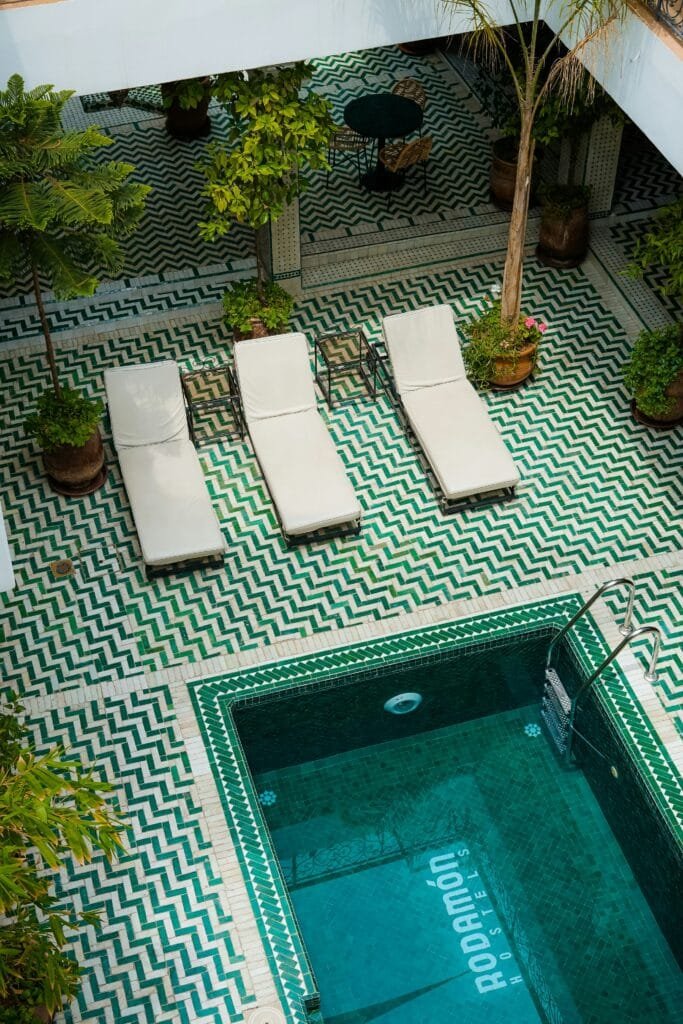
Riads are traditional houses built around an inner courtyard, and many now run as small guesthouses. Staying inside the walls puts the sights on your doorstep. Areas close to Jemaa el Fna, Mouassine and the Kasbah are the easiest to find your way around. Cars cannot reach most riads, so ask your host to meet you at the nearest drop off point.
Gueliz and Hivernage: modern and easy
The newer districts west of the medina have larger hotels, restaurants, bars and plenty of taxis. A good pick if you prefer quiet nights or travel with a lot of luggage. The medina is a short taxi ride away.
Palmeraie and Agafay: space to relax
Resort hotels and desert camps outside the city, with pools and open views. Lovely for a few slow days, less practical for sightseeing.
Booking tip: read recent reviews for noise, steep stairs and whether breakfast and an airport pickup are included.
Ready to book? Compare riads and hotels in Marrakech on Klook and filter by area, price and guest reviews.
Where to eat
Marrakech eats well and late. Lunch is the main meal for many families, and dinner rarely starts before 8pm.
- Tanjia: the city’s signature dish, beef or lamb slow cooked for hours in a clay urn. Look for it at small grills around the medina.
- Tagine and couscous: on almost every menu. Couscous is traditionally a Friday dish.
- The Jemaa el Fna food stalls: grilled meats, snail soup and harira every evening. Pick busy stalls where food is cooked in front of you, and confirm prices before you sit.
- Rooftop terraces: pricier, but sunset over the medina is worth one evening.
- Breakfast: msemen (flaky pancakes), amlou (almond and argan spread) and fresh mint tea.
Alcohol is served mainly in hotels and licensed restaurants, most of them outside the medina. More dishes in our Moroccan food guide.
Getting there and around
From the airport
Marrakech Menara Airport (RAK) is about 6 km from the medina. Bus 19 runs to Jemaa el Fna for 30 MAD and takes 30 to 45 minutes, though luggage space is limited. Taxis from the rank usually charge 100 to 150 MAD by day and more at night. Agree the fare before you get in. Many riads offer a pickup at a fixed price, the easiest option if you land late.
Trains and coaches
Marrakech station in Gueliz has trains to Casablanca, Rabat, Tangier and Fes. Work on the new high speed line to Marrakech, due before the 2030 World Cup, regularly changes the timetable, so check the ONCF Voyages app before you travel. For Essaouira, Agadir and the south, CTM and Supratours coaches are comfortable and affordable.
Inside the city
Walk inside the medina: it is the only practical way. For longer trips, the beige petit taxis are supposed to use the meter, but many drivers prefer to quote a price. Settle it before you set off. Uber does not operate in Morocco. See getting around Morocco.
Day trips from Marrakech
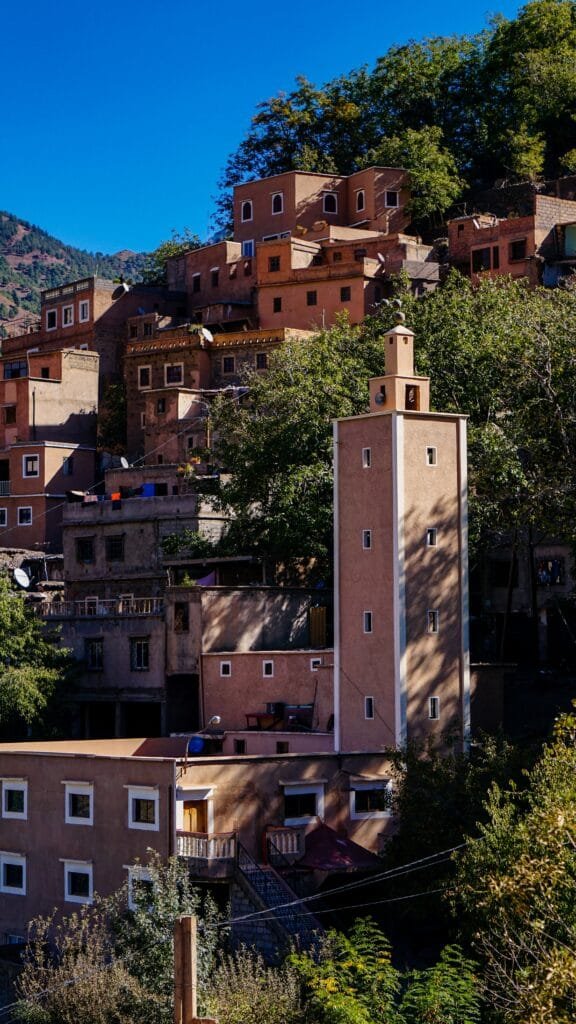
- Ourika Valley (about 1 hour): riverside villages and short waterfall walks. Busy at weekends.
- Imlil and Toubkal National Park (about 1.5 hours): mountain walks, Amazigh villages and the base for climbing Jbel Toubkal, the highest peak in North Africa.
- Agafay desert (under 1 hour): a stony desert with camps, camel rides and sunset dinners. Not the Sahara dunes, but a good taste if you are short on time.
- Essaouira (about 3 hours): a breezy Atlantic port with a relaxed medina. Better as an overnight trip.
- Ouzoud Waterfalls (about 3 hours): Morocco’s best known falls. A long but rewarding day.
- Ait Ben Haddou (about 4 hours over the Tizi n’Tichka pass): best visited on the way to the Sahara rather than as a return day trip.
Compare desert trips and tours in our things to do guide.
What things cost
| Bus 19, airport to Jemaa el-Fna | 30 MAD |
| Airport taxi to the medina (daytime) | About 100 to 150 MAD |
| Bahia Palace (foreign adult) | 100 MAD |
| Ben Youssef Madrasa (foreign adult) | 50 MAD |
| Jardin Majorelle | Online only: check the official ticket site |
Prices checked in October 2026 and subject to change. Monument ticket desks usually accept cash only. More in our Morocco costs guide.
Local tips
- Carry small notes and coins. Shops and taxis are often short of change for 200 MAD notes.
- A friendly but firm “la, shukran” (no, thank you) handles most offers. If a stranger says a street is closed or offers to show you the way, expect to be asked for money.
- Ask before photographing people, especially in the souks.
- Covering shoulders and knees in the medina is respectful and draws less attention.
- Download an offline map before you arrive. Medina lanes can confuse GPS, but a saved map still helps.
- Some shops close for a few hours around Friday midday prayers.
Marrakech FAQ
How many days do you need in Marrakech?
Two to three full days cover the main sights at a comfortable pace. Add a day for each day trip you plan.
Is Marrakech safe for tourists?
Yes, for the most part. The usual problems are pickpocketing in crowds, overcharging and persistent touts rather than serious crime. Keep valuables out of sight, especially in quiet lanes at night.
Where should I stay on a first visit?
A riad inside the medina, close to Jemaa el-Fna, Mouassine or the Kasbah, puts the main sights within walking distance. Choose Gueliz or Hivernage if you prefer modern hotels and easy taxis.
Do I need to book Jardin Majorelle in advance?
Yes. Tickets are sold only on the official website, and popular time slots sell out, especially at weekends and in high season.
Can I drink the tap water in Marrakech?
Tap water is treated, but most visitors stick to bottled or filtered water to avoid stomach upsets.
Planning the rest of your trip? Most routes pair Marrakech with the Sahara and Fes. Compare them in our itineraries, or ask Abdo a question before you book.