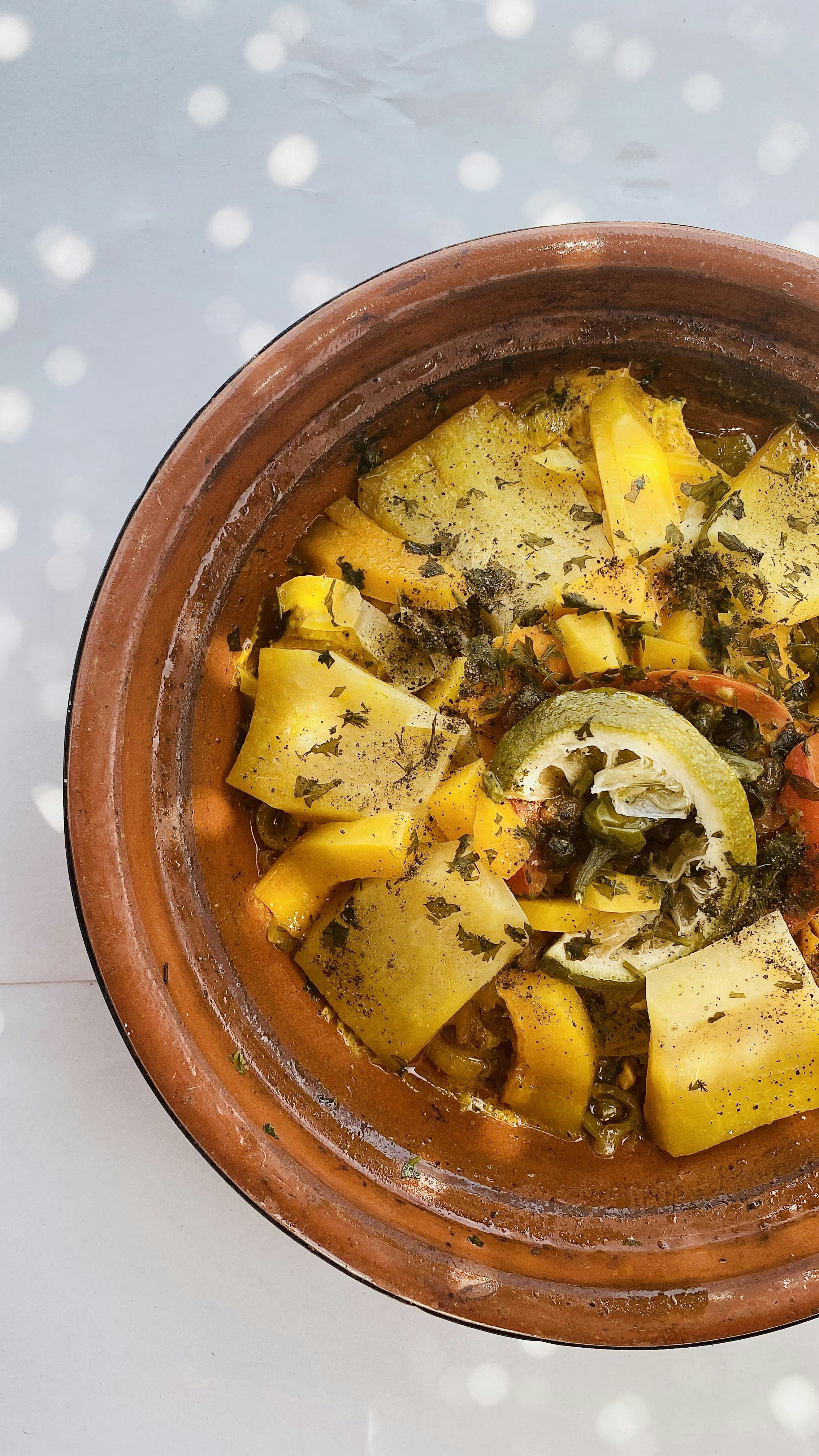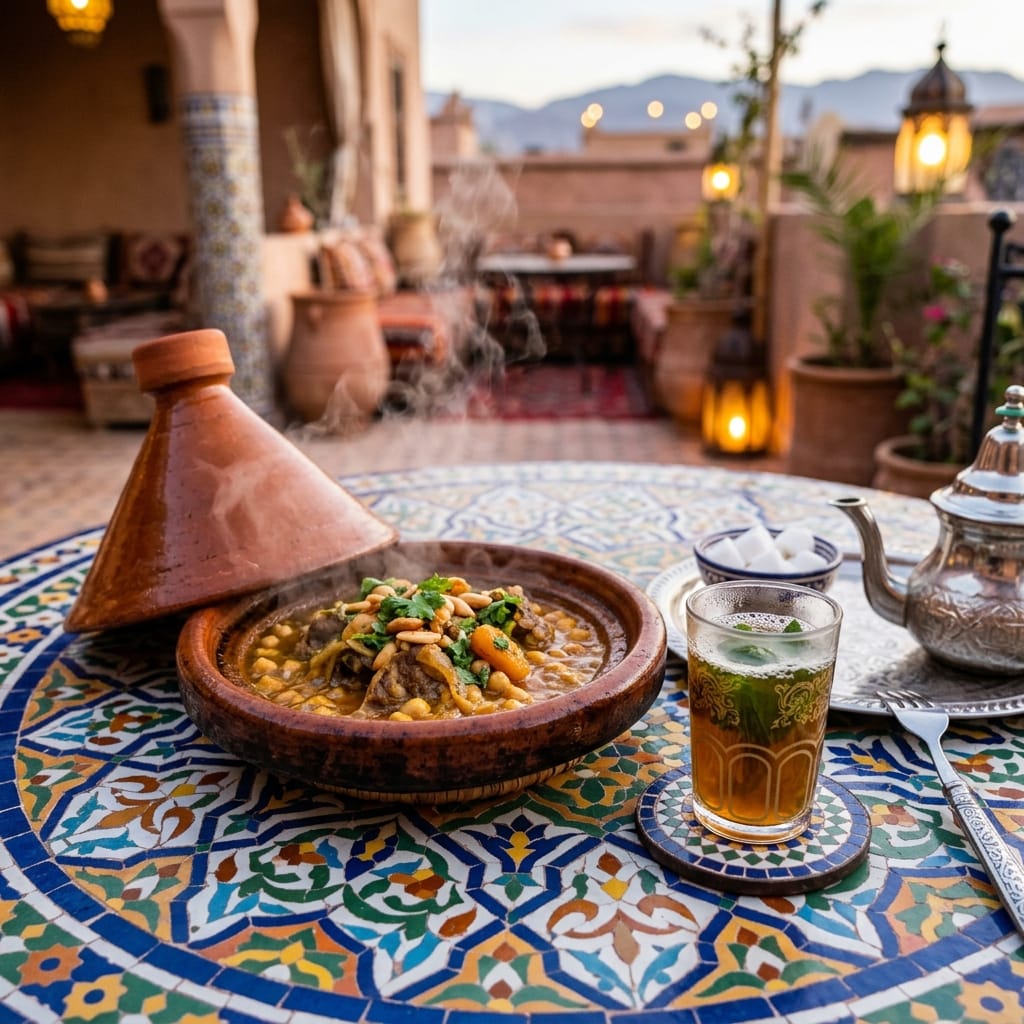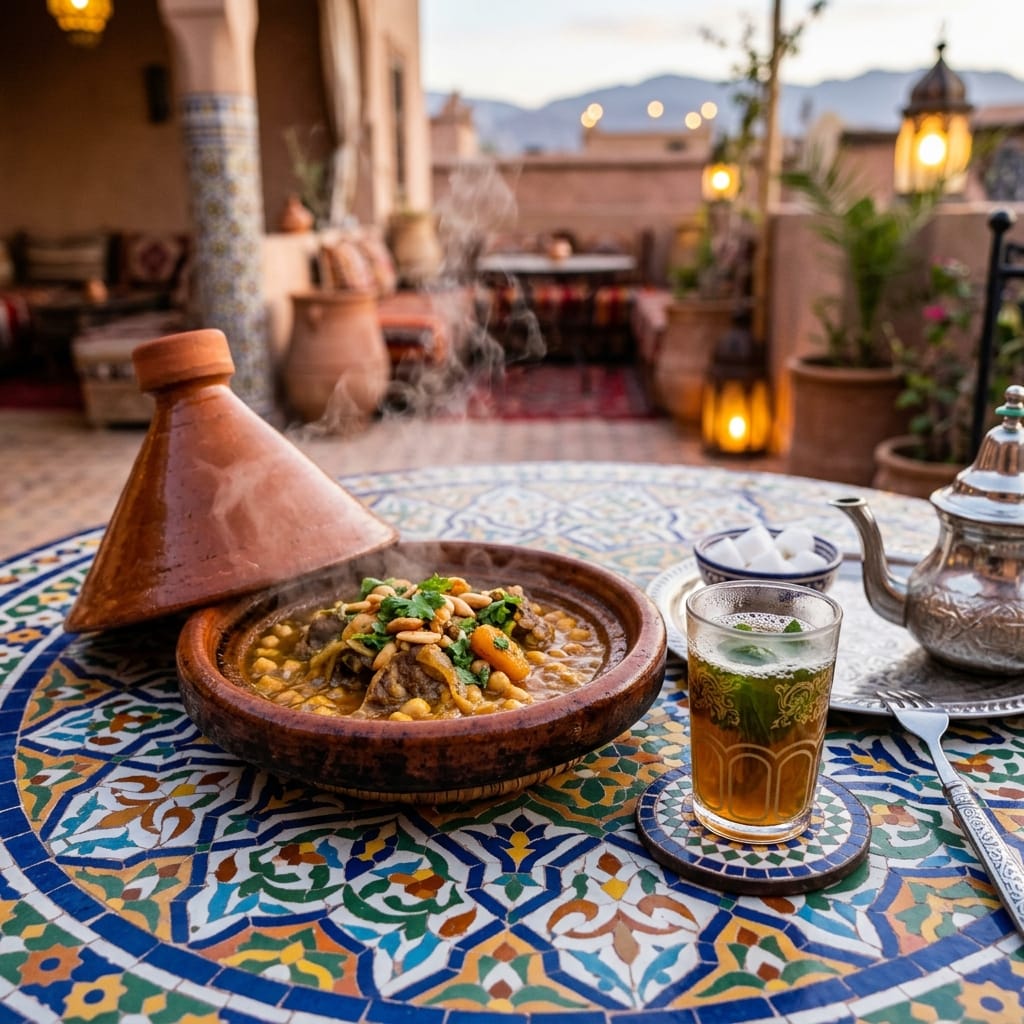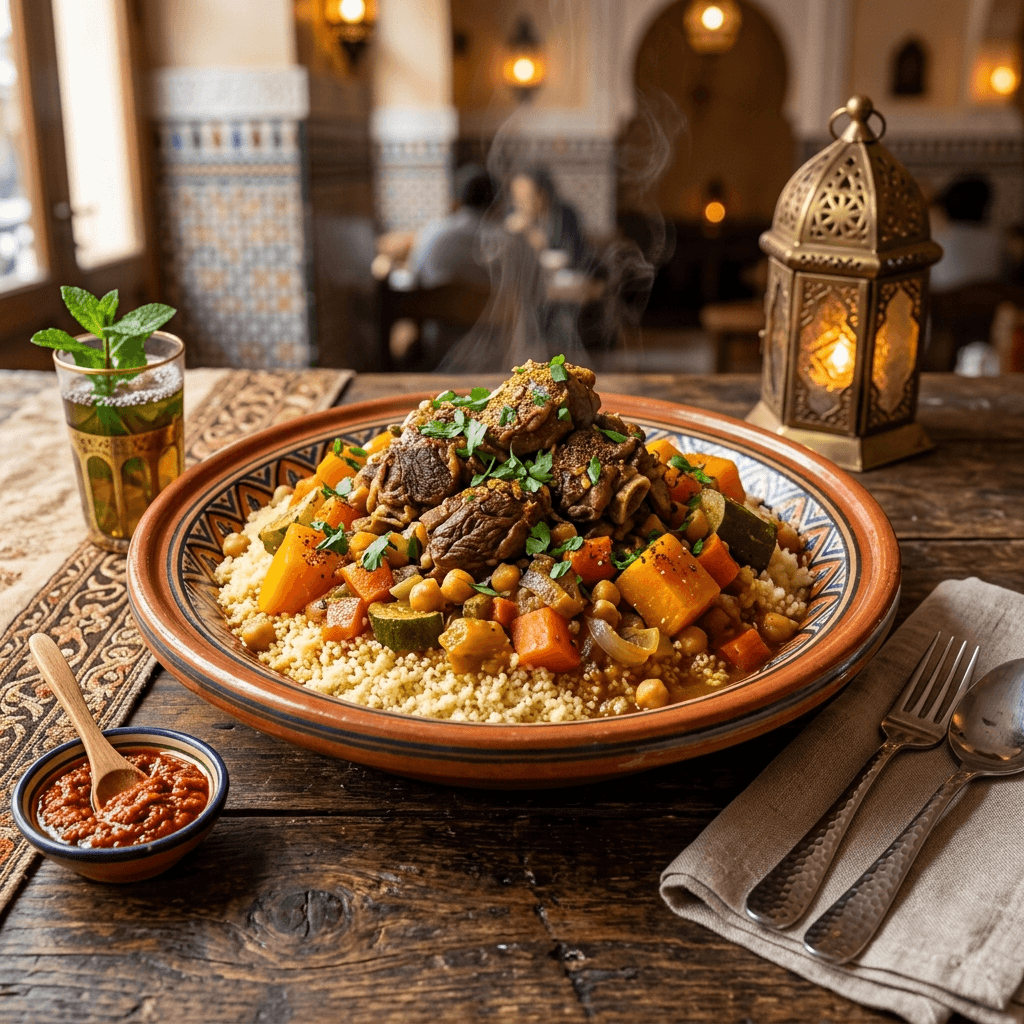

When it comes to the culinary identity of North Africa, no dish is more iconic than Moroccan couscous. Far more than just a simple grain, couscous is the heart and soul of Moroccan hospitality, a symbol of family unity, and a weekly ritual that has been preserved for centuries.
In this ultimate guide, we will explore the history, cultural rituals, regional variations, and top tips for enjoying this legendary Moroccan dish.
What is Moroccan Couscous?
Couscous consists of small steamed granules of rolled semolina (durum wheat). In Morocco, the traditional preparation is a labor-of-love process: the semolina is hand-rolled with water and flour, then steamed multiple times in a specialized double-chambered pot called a *couscoussier*.
The steam from the boiling broth in the bottom chamber rises to gently cook and fluff the couscous grains in the top chamber, infusing them with the rich aromas of spices and vegetables.
The Friday Ritual: A Cultural Tradition
If you visit Morocco, you will quickly notice that couscous is not just another item on the daily menu. Traditionally, it is prepared and eaten on Fridays, the Muslim holy day.
After Friday communal prayers, families gather around a single, large ceramic platter stacked high with steaming couscous, a mountain of tender meat, and a colorful array of slow-cooked vegetables. Eating from the same dish with your hands (traditionally using the right hand to roll the grains into small balls) is a beautiful expression of community and sharing.
Popular Variations to Try
While the basic preparation is similar, you will find delicious regional variations across Morocco:
- Couscous Seven Vegetables (Couscous aux Sept Légumes): The classic, most popular variation. It features beef, lamb, or chicken surrounded by a vibrant heap of seven vegetables—usually carrots, zucchini, cabbage, pumpkin, turnips, eggplant, and chickpeas.
- Couscous Tfaya: A spectacular sweet-and-savory masterpiece. It is topped with caramelized onions, raisins, cinnamon, and toasted almonds, often served with chicken.
- Couscous Baddaz: A unique southern variation popular in Berber regions and coastal towns like Essaouira, made with cornmeal semolina instead of wheat, and often served with fish.
Tips for Eating Couscous in Morocco
- Plan for Friday: While tourist restaurants serve couscous every day, the best, most authentic couscous is made on Fridays. Many local cafes only serve it on this day.
- Accept the Laban: Traditional couscous is almost always served with a glass of *Laban* (cold, fermented buttermilk). It is an acquired taste but acts as a perfect digestif.
- Be Polite: If you are invited to eat couscous with a Moroccan family, eat only from the section of the platter directly in front of you.
From its ancient Berber origins to its modern status as a UNESCO-recognized intangible cultural heritage, Moroccan couscous is a culinary experience that feeds both the body and the soul.