
Walk down any street in Morocco, and you will see rows of conical clay pots simmering over hot charcoal. This is the Moroccan tagine (sometimes spelled tajine), the cornerstone of Moroccan home cooking.
The word “tagine” refers to both the unique clay cooking vessel and the slow-cooked savory stew prepared inside it. Here is your ultimate guide to understanding and enjoying this mouthwatering Moroccan classic.
The Magic of the Clay Vessel
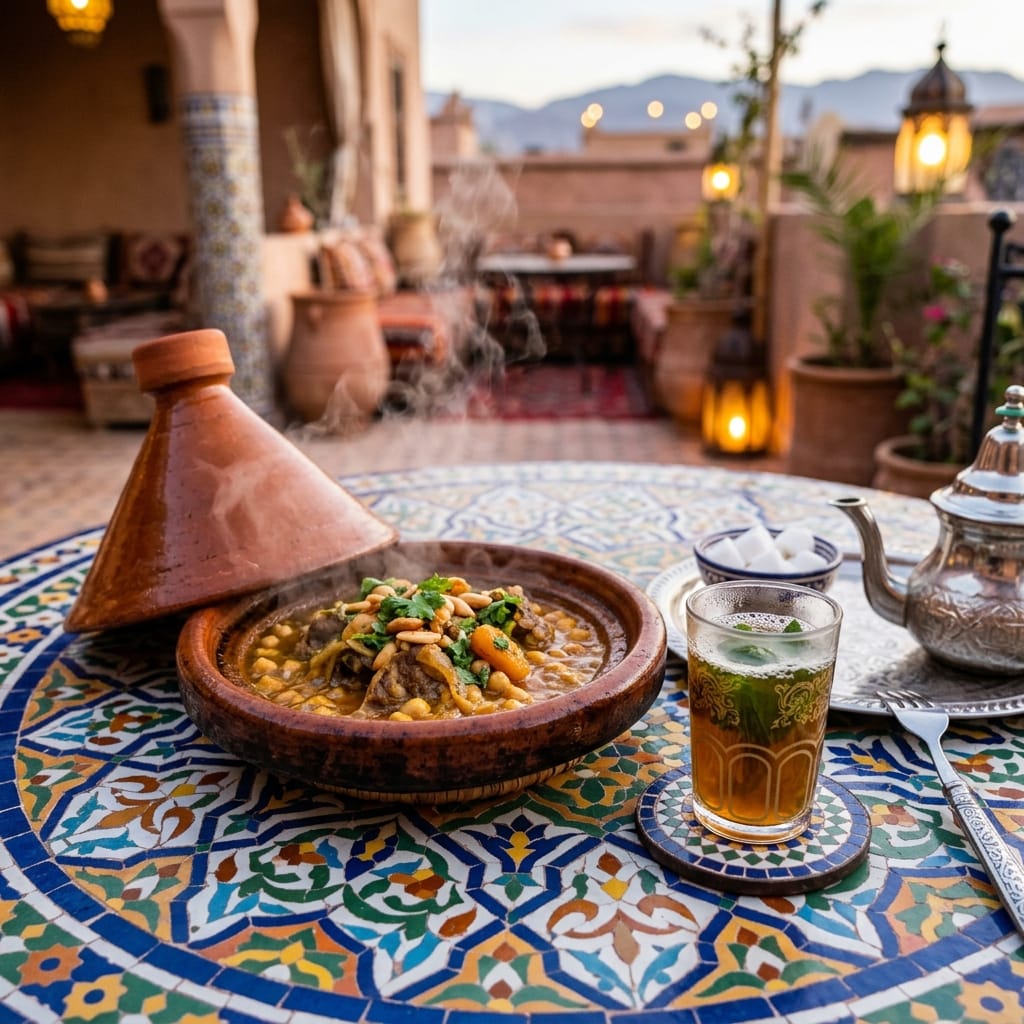
The classic tagine pot consists of two parts: a flat, circular base and a tall, cone-shaped lid. This design is highly functional:
- As the food cooks, steam rises into the cone, condenses on the cool clay walls, and drips back down into the food.
- This continuous cycle of condensation keeps the meat incredibly tender and preserves all the rich flavors of the spices and vegetables.
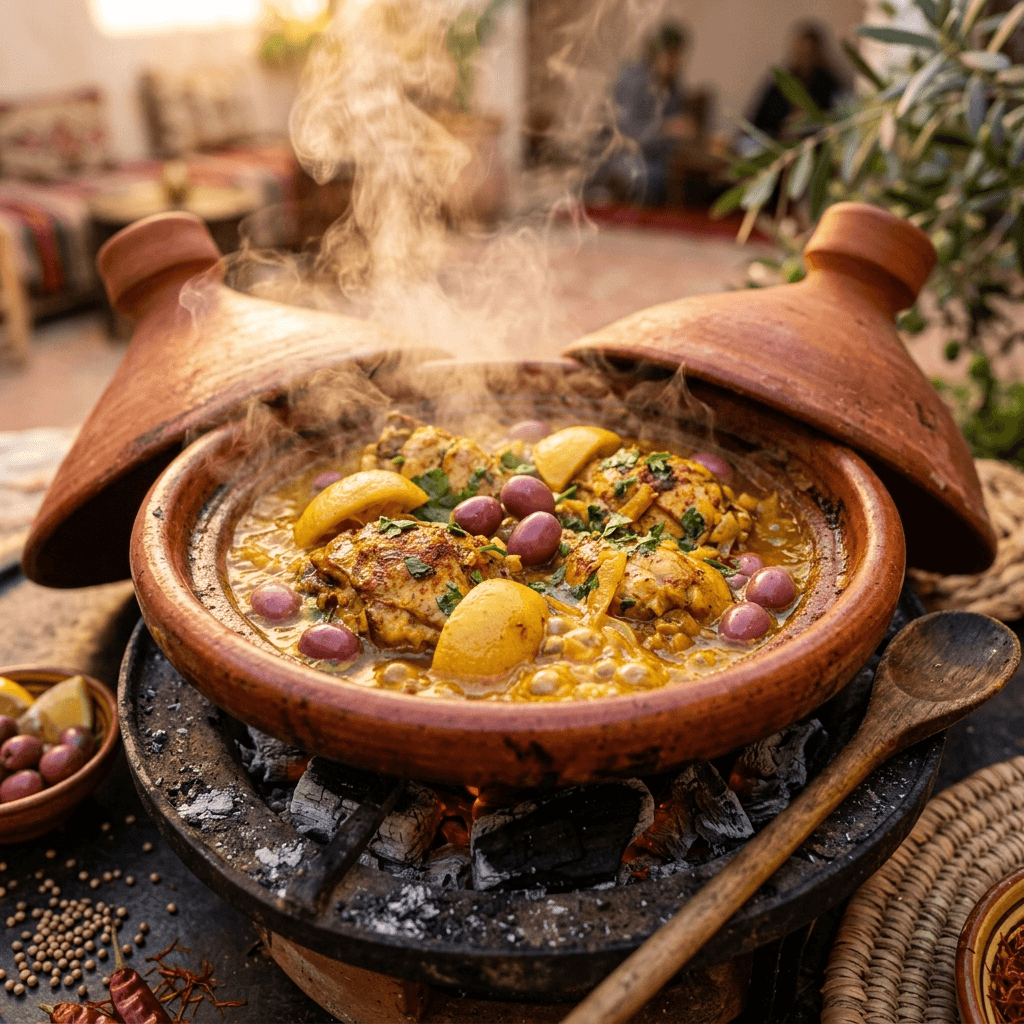
- Traditionally, tagines are cooked slowly over low heat on a clay portable stove (*majmar*) filled with hot charcoal.
Classic Tagine Varieties
Moroccan tagines are a celebration of spice, aromatics, and the pairing of sweet and savory elements. Here are the most famous tagines to try:
- Chicken with Preserved Lemons and Olives (Djaj M’qualli): Perhaps the most famous tagine. It features tender chicken slow-cooked with garlic, ginger, saffron, cured lemons, and red olives.
- Lamb or Beef with Prunes and Almonds: A rich, festive dish where tender meat is stewed with cinnamon and ginger, then topped with sweet caramelized prunes and crispy toasted almonds.
- Kefta Tagine: Comfort food at its finest. Minced beef or lamb meatballs (*kefta*) seasoned with cumin and paprika are simmered in a spicy tomato sauce, then topped with freshly cracked eggs.
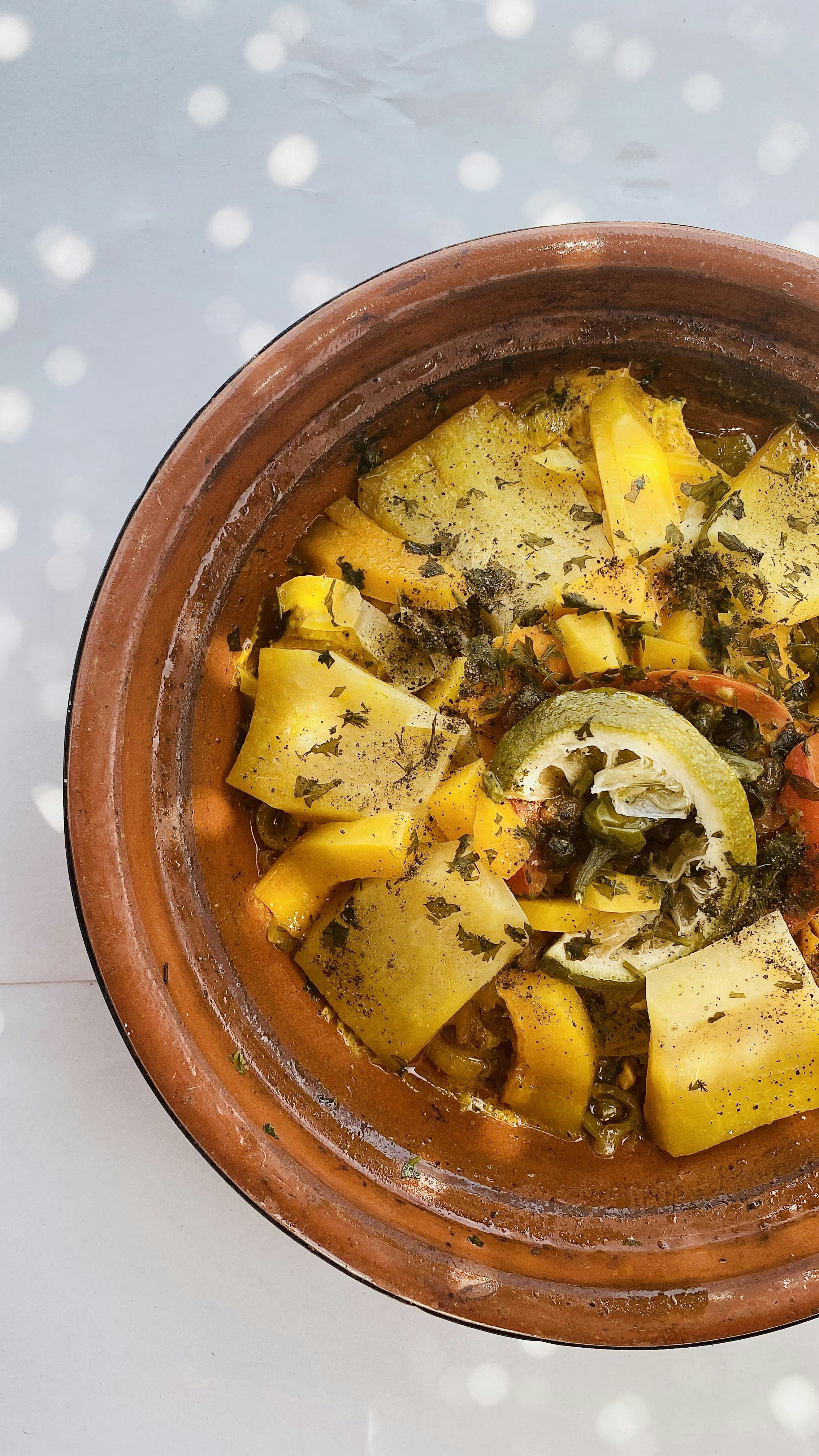
- Vegetable Tagine: A delicious vegetarian option containing layers of potatoes, carrots, zucchini, peas, and tomatoes seasoned with chermoula (a garlic-cilantro spice paste).
Spices: The Heart of the Stew
A Moroccan tagine gets its signature depth from a careful blend of spices. Common aromatics include:
- Saffron: Adds a subtle earthy flavor and beautiful golden color.
- Ginger & Turmeric: Provide warmth and color.
- Cumin & Paprika: Used heavily in meat and tomato-based tagines.
- Ras el Hanout: A complex spice blend containing up to 30 different ingredients, used to season festive stews.
How to Eat Tagine Like a Local
- Skip the Utensils: Tagine is eaten directly from the pot using crusty Moroccan bread (*khobz*) as your spoon.
- Use the Three-Finger Rule: Tear off a small piece of bread, scoop up a piece of meat and vegetables with your thumb and first two fingers, and enjoy!
- Share the Dish: Tagine is a communal meal. Eat from the section directly in front of you, leaving the center meat to be shared equally.
Simmered slowly to perfection, a hot Moroccan tagine served with fresh bread is an unforgettable culinary highlight of any trip to Morocco.