
In Morocco, bread is sacred. It is eaten at almost every meal, replacing forks and spoons to scoop up rich stews, dips, and salads. Moroccans hold such high respect for bread that it is never thrown in the trash; leftover scraps are carefully set aside for animal feed or collected separately.
From daily table loaves to spongy breakfast pancakes, here is your guide to the most popular varieties of Moroccan bread.
—
1. Khobz: The Daily Companion
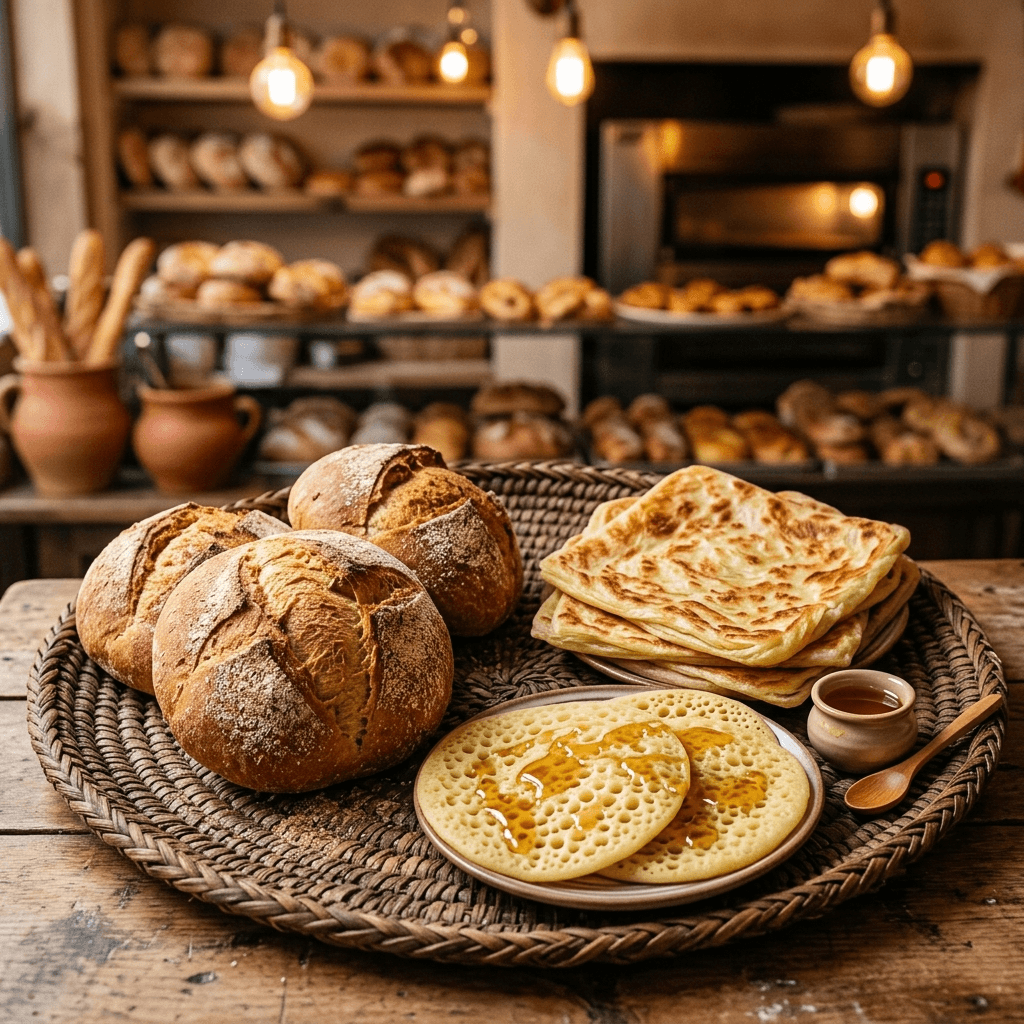
Khobz is the generic Arabic word for bread, but in Morocco, it refers to the round, flat, crusty loaves baked daily in every household and local bakery.
- The Texture: Made from wheat flour, semolina, or barley, Khobz is relatively dense with a coarse crumb, making it perfect for absorbing the thick sauces of tagines.
- The Communal Oven: Historically, households prepared their dough at home and sent it to the neighborhood public oven (*ferran*) to be baked over wood fires. While many homes now have modern ovens, the communal *ferran* is still active in many medinas.
—
2. Msemen: The Flaky Layered Pancake
Msemen is a square, multi-layered flatbread that resembles a hybrid between a pancake and a puff pastry.
- How it’s made: The semolina dough is stretched paper-thin, folded into a square envelope with layers of butter and oil, and cooked on a hot cast-iron griddle.
- How to enjoy: Served warm at breakfast or afternoon tea, typically accompanied by honey, cream cheese, or melted butter, along with a hot glass of mint tea.
—
3. Baghrir: The “Thousand-Hole” Pancake
Baghrir are spongy, yeast-leavened pancakes made from semolina.
- The Holes: Cooked on only one side, bubbles pop on the surface as the batter cooks, creating hundreds of tiny pockets. These holes act like a sponge, absorbing toppings.
- How to enjoy: Served warm, drenched in a hot syrup made of melted butter and honey.
—
4. Harcha: The Semolina Griddle Bread
Harcha is a crumbly, dense pan-bread made from semolina flour, resembling cornbread in texture but with a sweet, buttery taste.
- How to enjoy: Often split open and stuffed with honey, cheese, or jam, harcha is a favorite teatime snack.
Bread Etiquette in Morocco
- Always Use the Right Hand: In Morocco, it is customary to eat, handle, and share bread using only your right hand.
- No Leftovers: Try to tear off only what you need to avoid leaving half-eaten pieces.
Whether you are using a warm slice of Khobz to scoop up a tagine or enjoying a honey-drenched Baghrir at breakfast, Moroccan breads are a delicious window into the country’s daily culture.