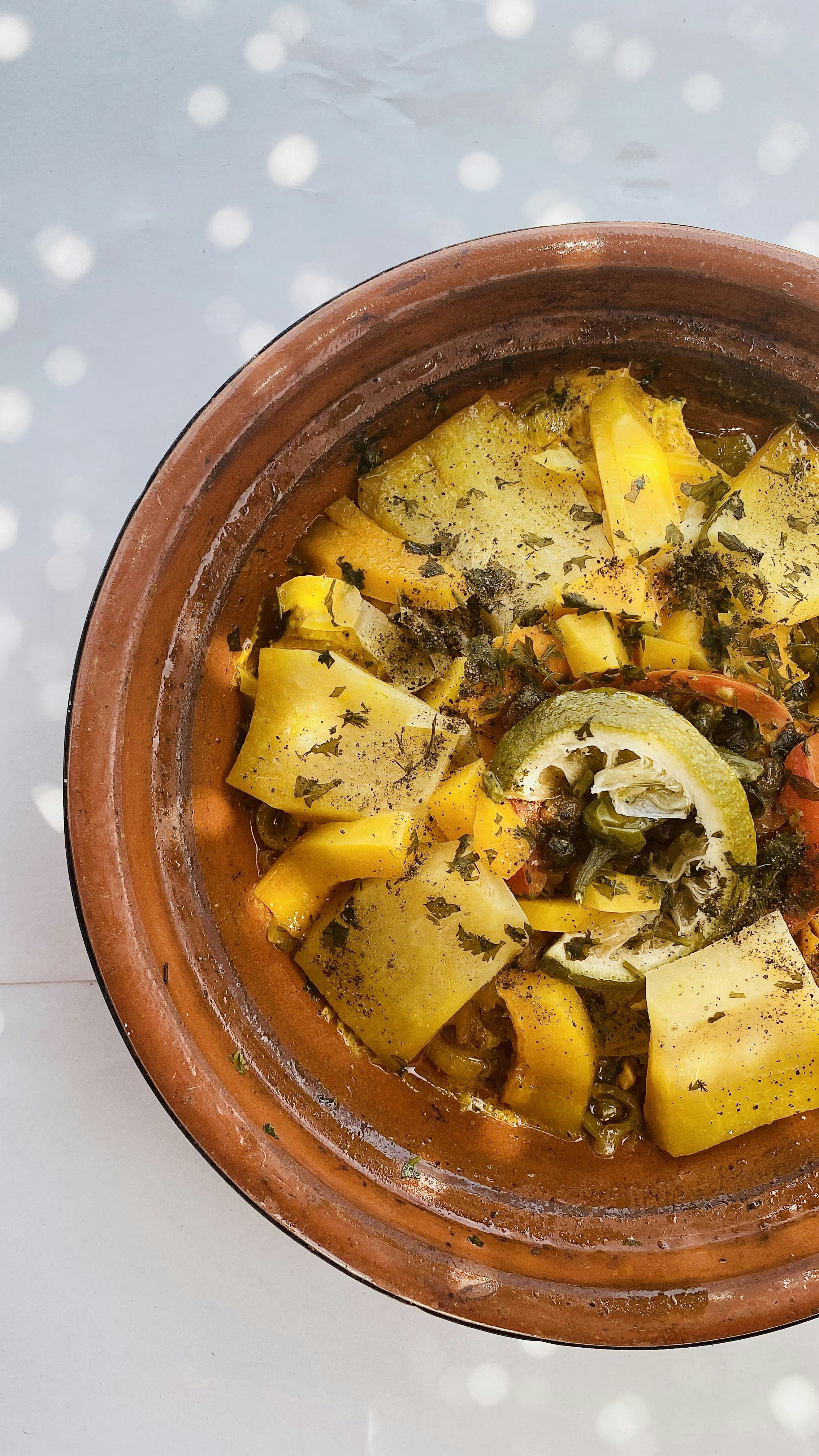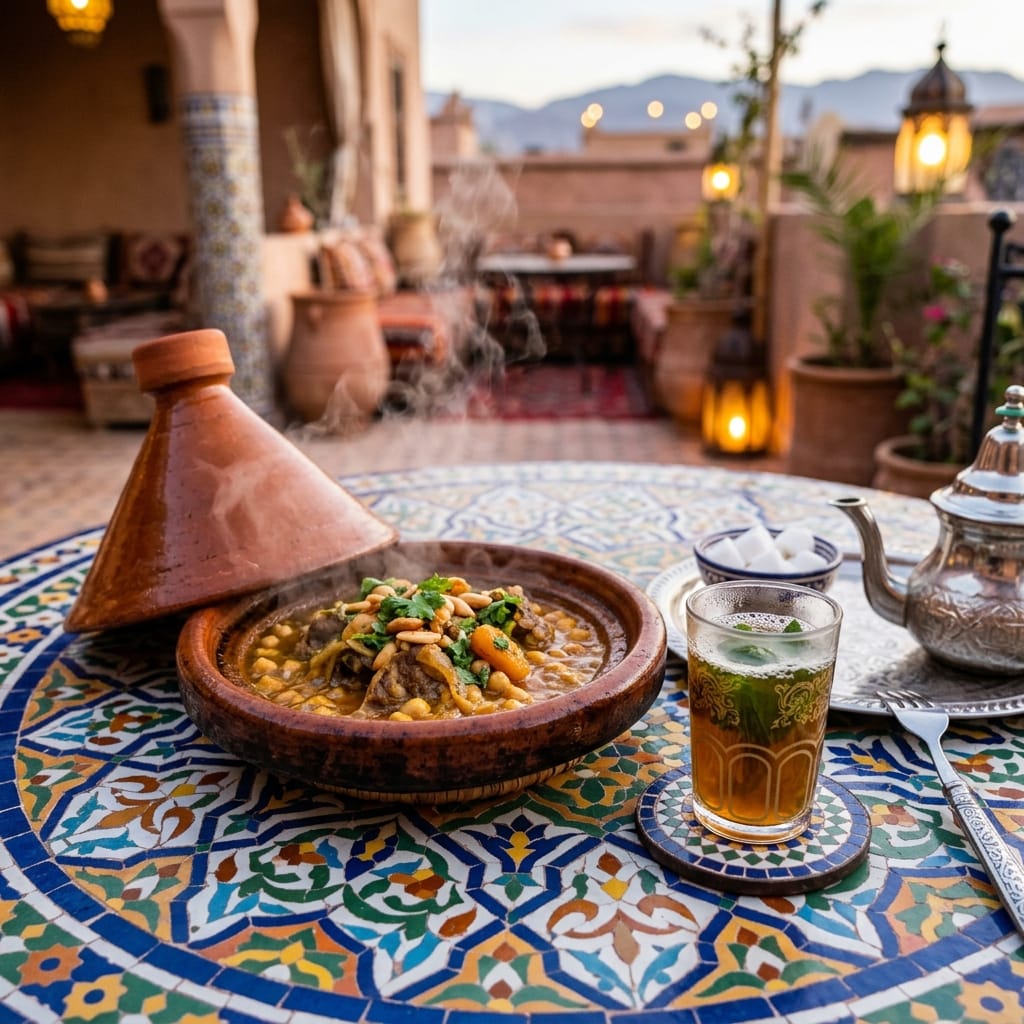

While tagines and couscous get most of the international spotlight, there is another traditional dish that Moroccans hold in incredibly high regard: Rfissa.
Ask any local to name their favorite comfort food, and Rfissa will often be at the top of the list. Traditionally prepared to celebrate births, family reunions, and special occasions, this hearty dish is a unique and delicious combination of chicken, lentils, spices, and shredded pastry-bread.
Here is the story behind this beloved Moroccan comfort food.
What is Rfissa?
At its core, Rfissa is a dish built on layers of texture and intense spice. It consists of:
- The Base (Trid): Paper-thin, shredded sheets of Moroccan pastry-bread (called *Trid* or *Msemen*). This bread is torn by hand into bite-sized shreds and arranged at the bottom of the serving platter.
- The Stew: Tender chicken slow-cooked in a rich broth heavily seasoned with saffron, ginger, turmeric, garlic, coriander, and onions.
- The Pulses & Aromatics: Chickpeas, lentils, and fenugreek seeds (*Helba*) are cooked in the broth, giving the dish its unique, deeply savory aroma and flavor.
- The Garnish: Often topped with hard-boiled quail eggs, almonds, and dates stuffed with walnuts.
Before serving, the hot, flavorful chicken broth is poured generously over the shredded bread, allowing it to soak up all the juices and become soft and savory.
The Postpartum Tradition
Rfissa is deeply tied to a beautiful Moroccan family tradition. It is custom to prepare and serve Rfissa to women who have just given birth.
Because the dish is packed with iron-rich lentils, energy-giving chicken, and healing spices like fenugreek and Ras el Hanout, it is believed to help new mothers recover their strength, boost their immune system, and promote lactation.
The Flavor Profile: A Savory Warmth
If you love warm, aromatic spices, Rfissa will be a revelation. The combination of chicken fat, lentils, and fenugreek seeds creates a deeply comforting, savory broth that is unlike anything else in Moroccan cuisine. The soft, broth-soaked bread has a texture similar to pasta, making it incredibly satisfying to eat.
Tips for Trying Rfissa
- Look for it on Special Menus: Because it takes hours of preparation, many standard tourist restaurants do not have Rfissa on their daily menu. You may need to order it in advance at a traditional riad or seek out local, family-run establishments.
- The Fenugreek Aroma: Be prepared for the aroma of fenugreek, which is very strong and can linger on your skin. Moroccans embrace this, viewing it as a sign of health and nourishment!
Rich, warm, and deeply comforting, sharing a platter of Moroccan Rfissa is an authentic taste of Moroccan family tradition.